Carnelian Private Growth & Innovation Fund: About ₹1,000 Cr first close
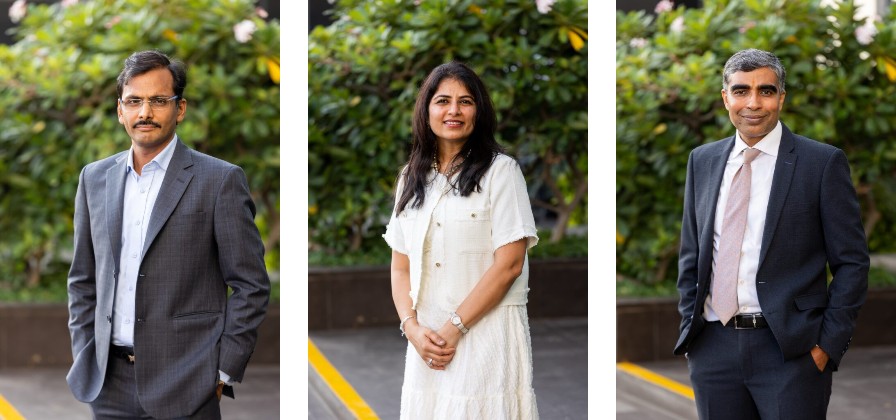
Carnelian founders: Vikas Khemani, Swati Khemani and Manoj Bahety · Image: Carnelian Capital website (team page)
Independent report content
| MANAGER | Carnelian Asset Management & Advisors Private Limited, founded 2019 by Vikas Khemani, Swati Khemani and Manoj Bahety · AUM over ₹18,300 Cr across PMS, AIFs and offshore strategies (ALTPORT gives over ₹19,200 Cr at 31 Jul 2026) (30 Jun 2026, PTI) |
|---|---|
| FUND | Carnelian Private Growth & Innovation Fund · listed by distributor ALTPORT as a Category II AIF · first close of about ₹1,000 Cr reported by Mint on 24 Sep 2026 |
| SIZE PLAN | ₹2,000 Cr including an ₹800 Cr greenshoe (so a ₹1,200 Cr base) · final close expected "by December" (Mint) · GP commitment over ₹100 Cr |
| STRATEGY | About 60% growth equity (10–25% stakes), 20–25% pre-IPO, 20–25% listed PIPE · 15–18 companies raising ₹100–300 Cr · exits around year 6–7 |
| TEAM | Umesh Agarwal, Managing Partner, Private Equity (joined June 2026; previously fund manager at 360 ONE Asset) · founders lead the firm |
| TERMS | ALTPORT listing: 15% pre-tax hurdle · 36-month commitment period · 6 years 9 months tenure · management fee 1.50–2.00% by cheque band |
| OFFICIAL RELEASE | Not located: first-close figures come from a Mint interview as syndicated by TradingView and Dealroom |
| THE ACCESS POINT The fund is reported to be raising toward a final close by December 2026, with first-close investors described as domestic family offices, UHNIs and HNIs. Typical commitments in the first close were ₹5–15 crore. Terms and access routes come from a distributor listing, not a manager release. |
|---|
Executive decision summary
| THE BOTTOM LINE | Carnelian is a seven-year-old Mumbai manager that built about ₹13,500–18,300 crore of listed-equity assets, mostly in portfolio management services and Category III funds. Its first private equity fund, the Carnelian Private Growth & Innovation Fund, is a hybrid. About 60% goes into growth-stage private companies, 20–25% into late-stage pre-IPO deals and 20–25% into listed companies through private placements (PIPEs). Mint reported on 24 September 2026 that the fund had reached a first close of about ₹1,000 crore on a ₹2,000 crore target (₹1,200 crore base plus an ₹800 crore greenshoe), with the manager committing more than ₹100 crore itself. The final close is expected by December. The manager has a clear thesis, a high alignment signal and a new private-equity head, Umesh Agarwal, who joined in June 2026. It has no private-equity track record under this fund, a mixed-asset structure that blends privately negotiated and listed holdings, and terms that have so far appeared only on a distributor's page. |
|---|---|
| WHICH INVESTOR | The fund fits you IF you want mid-market Indian growth equity run by an owner-managed equity house with real capital in the fund, accept a six-to-seven-year lock-up, and are comfortable that about a quarter of the money can sit in listed shares. Wait IF you need a published private-equity track record, the manager's own fee and terms document, and named investments before committing. |
| COMFORT FIT | The fund is a hybrid car: part growth-equity engine for the long road, part listed-PIPE motor for shorter trips. It can go further on less fuel, but it is more complex to service than either engine alone. A first close of ₹1,000 crore against a ₹1,200 crore base is a restaurant that is 83% full on opening week: busy, but the review that matters comes when the kitchen has served the whole menu. A GP commitment of more than ₹100 crore is the chef eating at the restaurant every day. IIFL's late-stage fund (Report 17) is the nearest peer: it also buys profitable mid-sized companies before IPO, but it has no listed sleeve and it closed half as much at first close. |
| THE RUPEIA NUMBER | ₹100 crore plus. What Carnelian says it is putting into its own fund, more than 5% of the ₹2,000 crore target and about 10% of the reported ₹1,000 crore first close. It is the fund's most concrete alignment signal. |
1 CLAIM REGISTER: EVIDENCE GRADING
A = government or regulator record. B = company or manager release. C = independent press. D = third-party database, distributor or aggregator.
| Claim | Source | Grade | Rupeia assessment |
|---|---|---|---|
| First close of about ₹1,000 Cr; ₹1,200 Cr base + ₹800 Cr greenshoe = ₹2,000 Cr | Mint interview (24 Sep 2026), via TradingView and Dealroom | C | Press-reported; no manager release located |
| Final close expected by December | Mint, via TradingView and Dealroom | C | Target, not an event |
| GP commitment over ₹100 Cr; cheques ₹5–15 Cr, some ₹25 Cr, one ₹120 Cr | Mint, via TradingView | C | Manager statement |
| Allocation: ~60% growth, 20–25% pre-IPO, 20–25% listed; 15–18 companies | Mint, via TradingView and Dealroom | C | Stated plan |
| Fund terms: 15% hurdle, 36-month commitment period, fee table by cheque band | ALTPORT fund page (Aug 2026) | D | Distributor listing, not an offering document |
| Category II AIF | ALTPORT | D | Not confirmed by a SEBI record Rupeia read |
| Umesh Agarwal joined June 2026 from 360 ONE Asset | ALTPORT profile | D | Distributor profile; spelling varies (Agarwal, Agrawal) |
| Firm AUM over ₹18,300 Cr, 8,600 clients (30 Jun 2026) | Outlook Business (PTI) | C | Differs from other figures by scope |
| SEBI approval for Carnelian Mutual Fund (22 Jul 2026) | Outlook Business (PTI) | C | Established |
2 FUND SNAPSHOT: CARNELIAN VS THREE PEERS
| Fund | Size and close | Mix | Cheque and horizon |
|---|---|---|---|
| Carnelian Private Growth & Innovation Fund | ~₹1,000 Cr first close; ₹1,200 Cr base + ₹800 Cr greenshoe | ~60% growth, 20–25% pre-IPO, 20–25% listed PIPE | ₹50–150 Cr (Mint) or ₹100–250 Cr (ALTPORT); exits year 6–7 |
| IIFL Late-Stage PE Fund (Report 17) | ~₹500 Cr first close; ₹1,000 Cr base + ₹1,000 Cr greenshoe | Profitable late-stage companies; IPO within three years | ₹50–100 Cr; EBITDA ₹75–100 Cr+ |
| JM Financial India Pre-IPO Fund | ₹700 Cr first close; ₹1,500 Cr target + greenshoe up to ₹1,000 Cr | Companies listing within 18 months | Cheque size not disclosed |
| Kyro India Opportunities Fund I | ₹100 Cr target | Profitable companies listing in 24–36 months | Minimum ₹1 Cr; 35% IRR target |
| RUPEIA READ Carnelian is the only fund in this group that deliberately mixes private and listed holdings, and the only one that has put 10% of its first close in as manager capital. Its portfolio stretches from a growth stake in a ₹100–300 crore raise to a minority position in a listed company, which makes it harder to compare with pure pre-IPO funds. Its first close is the largest in the group in rupee terms (JM Financial reported ₹700 crore and IIFL ₹500 crore), and its base target (₹1,200 crore) is closer to IIFL's ₹1,000 crore than to Kyro's ₹100 crore. |
|---|
3 TIMELINE: 2019–2026
| Date | Event |
|---|---|
| 2019 | Carnelian founded; first AIF (Capital Compounder Fund 1) incepted May 2019 |
| Apr 2022 | Structural Shift Fund (small and mid-cap Category III AIF) incepted |
| Jun 2023 to Jul 2025 | About seven opportunistic private investments made from the listed-equity platform (Mint) |
| Apr 2024 | Bharat Amritkaal Fund incepted |
| 15 Oct 2024 | PMS Bazaar: AUM passes ₹10,000 Cr |
| Apr 2025 | Bharat Amritkaal Fund-2 incepted |
| Jun 2026 | Umesh Agarwal joins as Managing Partner, Private Equity (ALTPORT) |
| 20 Jul 2026 | Venture Intelligence (citing Economic Times) reports Carnelian's plan for a ₹2,000 Cr PE fund |
| 22 Jul 2026 | SEBI approval for Carnelian's mutual fund business reported (PTI) |
| 20 Aug 2026 | ALTPORT publishes a review of the fund with its terms |
| 23–24 Sep 2026 | Mint interview with Umesh Agarwal: first close of about ₹1,000 Cr |
| Oct 2026 | Carnelian Mutual Fund CEO Rajkumar Dhiman in place; first NFOs launched |
| By December 2026 | Final close expected (Mint) |
4 THE MANAGER: CARNELIAN ASSET MANAGEMENT & ADVISORS
Carnelian Asset Management & Advisors Private Limited is a Mumbai-based portfolio manager and AIF manager founded in 2019 by Vikas Khemani, Swati Khemani and Manoj Bahety. Vikas Khemani is described as Founder and Chairman (Cafemutual) and earlier as CEO of Edelweiss Securities for 17 years (Zfunds). Swati Khemani is Founder and CEO. Manoj Bahety, a CA and CFA charterholder, spent 11 years at Edelweiss Securities in institutional equity research. Kunal Shah is the principal officer and a fund manager.
| Item | Detail | Source |
|---|---|---|
| Business lines | PMS (Compounder, YnG, Shift, Bespoke), four Category III AIFs, a new mutual fund, and now private equity | PMS Bazaar; Cafemutual; Outlook |
| AUM | ₹18,300 Cr+ across PMS, AIFs and offshore (30 Jun 2026); ₹13,503.69 Cr (30 Sep 2026, a different scope); about US$1.6 bn of equities (Mint) | PTI; PMS Bazaar; Mint |
| Clients | Over 8,600 clients and 710 partners (PTI, Jun 2026); 7,619 clients (PMS Bazaar, Sep 2026) | Outlook; PMS Bazaar |
| Philosophy | "We aim for alpha, not AUM." (Vikas Khemani) | Cafemutual, Oct 2026 |
| RUPEIA READ The AUM figures disagree because they measure different things (a PMS and AIF total against a listings-based total, on different dates). All of them describe a manager whose assets are almost entirely in listed equities. That is Carnelian's edge in a PIPE sleeve: it already researches hundreds of listed mid-caps. It is also the main risk in a private-equity fund: privately negotiated deals need different skills. |
|---|
5 THE PRIVATE EQUITY TEAM: UMESH AGARWAL AND THE FOUNDERS
| Years | Role (ALTPORT profile of Umesh Agarwal) | Note |
|---|---|---|
| 1996–97 | Analyst, Anand Rathi Securities | First role |
| 1998–2000 | Assistant Manager, PwC | Advisory |
| 2000–02 | AVP, ASK Raymond James | Investment banking |
| 2002–10 | VP, Ambit | Investment banking |
| 2010–16 | Executive Director, Axis Capital | Investment banking |
| 2016–19 | Head of Corporate Advisory, IIFL Wealth and IIFL Capital | Corporate advisory |
| 2019–23 | Managing Director, Axis Capital (IB Coverage) | Coverage banking |
| 2023–26 | Fund Manager, 360 ONE Asset | Previously reported also as President and Fund Manager |
| Jun 2026 | Managing Partner, Private Equity, Carnelian | Joined to lead the PE fund |
The profile says Agarwal has overseen investments of about ₹100 billion across nearly 30 companies; ALTPORT also describes 90-plus deals in investment banking. The profile is a distributor's page and says its own chronology should be rechecked. In the Mint interview Agarwal is quoted saying: "I didn't want to be a prisoner of my mandate that I am only private equity". Agarwal also said the mid-market "has become fairly less competitive".
| RUPEIA READ Agarwal's career is investment banking and then one fund-manager stint, which is the right background to source and structure mid-market deals but not a long record of holding them. Pre-IPO and PIPE experience in banking (placements and IPOs) maps well to the fund's late-stage and listed sleeves. What the public record does not give is an investment committee, a team below the role or a prior PE track record that can be tied to Agarwal personally. ALTPORT says two senior partners are expected to join. |
|---|
6 THE FIRM BEHIND THE FUND: SCALE AND PEOPLE
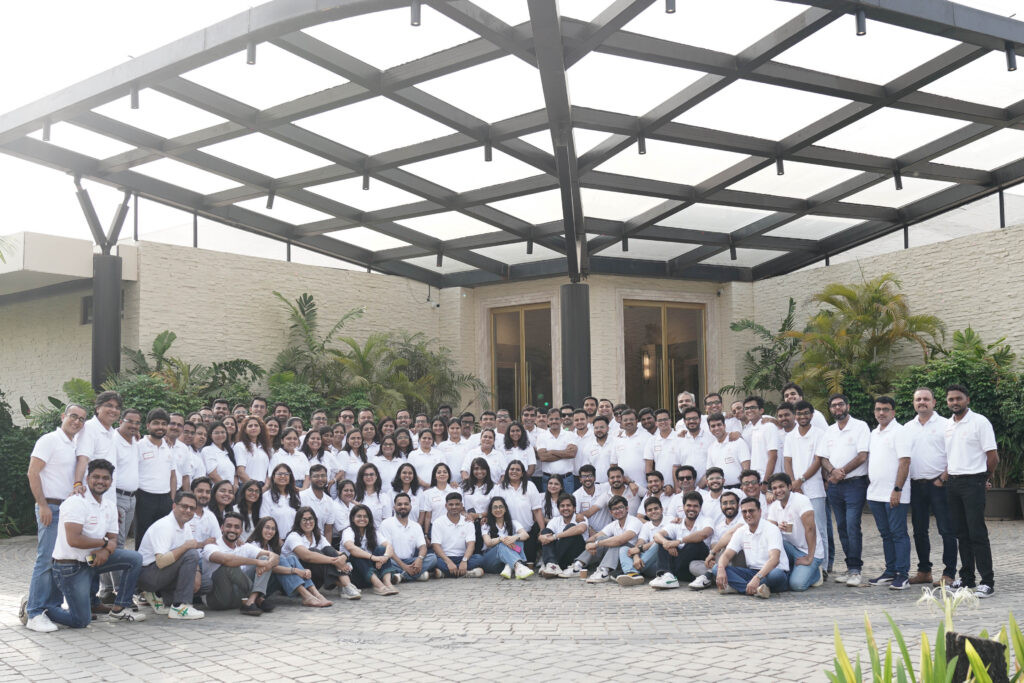
Carnelian's website carries the group photograph of staff above. The firm says it has over 710 distribution partners and, as of 30 June 2026, serves over 8,600 clients (PTI). PMS Bazaar lists four investment approaches and 7,619 clients as of 30 September 2026, with Kunal Shah as principal officer. Founder-led culture is a theme the firm stresses: in October 2026 Vikas Khemani told Cafemutual that "founder-led firms will likely grow faster" and that "AMCs that do a few products, and do them well, will win."
| Founder or leader | Role | Published background |
|---|---|---|
| Vikas Khemani | Founder, Chairman and CIO | CEO of Edelweiss Securities for 17 years (Zfunds); CA, CFA, CS |
| Swati Khemani | Founder and CEO | Co-founder; prior roles not published in sources read |
| Manoj Bahety | Co-founder and fund manager | CA, CFA; 11 years at Edelweiss Securities in institutional equity research |
| Kunal Shah | Principal officer, fund manager | Chartered Accountant; with Carnelian since inception |
| Umesh Agarwal | Managing Partner, Private Equity | Joined June 2026; investment banking and 360 ONE Asset |
| Rajkumar Dhiman | CEO, Carnelian Mutual Fund | Appointed as the mutual fund launched (Oct 2026) |
| RUPEIA READ Most of the senior names come from sell-side research and broking, not from private equity. That fits the listed funds and the PIPE sleeve and is a reason to look closely at how many people in the PE team have held a minority stake in a private company through a full cycle. The answer is not public. |
|---|
7 TRACK RECORD: LISTED FUNDS, NOT PRIVATE EQUITY
| Vehicle | Inception | 1Y | 2Y | 3Y | 5Y |
|---|---|---|---|---|---|
| Structural Shift Fund (small and mid-cap, Cat III) | Apr 2022 | 22.96% | 8.14% | 21.41% | NA |
| Capital Compounder Fund 1 (multi-cap, Cat III) | May 2019 | 14.94% | 11.81% | 23.90% | 17.79% |
| Bharat Amritkaal Fund | Apr 2024 | 5.27% | 1.52% | NA | NA |
| Bharat Amritkaal Fund-2 | Apr 2025 | 3.47% | NA | NA | NA |
The table shows figures as listed by PMS Bazaar on 30 September 2026 (CAGR for periods over a year). Zfunds shows the Structural Shift Fund at 23.65% since inception against 10.28% for the Nifty 500 (to 31 July 2026), a three-year alpha of 6.63%, volatility of 22.61% against the benchmark's 14.84% and a maximum drawdown of −24.89% from 30 January 2025 to 31 March 2026. The same fund held 63.66% in small caps. Dates and figures differ between the two aggregators (for example a 1-year return of 22.96% against 12.76%), and the sources do not reconcile them.
| RUPEIA READ These are listed-equity numbers from Category III funds. They show that Carnelian's stock-picking has produced strong three-year returns, with high volatility, and that its newest funds (Amritkaal 1 and 2) are early. None of this is private-equity performance. The firm has made about seven private investments since June 2023, but no exits, IRRs or DPIs on them have been published. |
|---|
8 THE LISTED PLATFORM: PMS, AIFS AND A MUTUAL FUND
| Business | Published detail | Source |
|---|---|---|
| Portfolio management | Compounder, YnG, Shift and Bespoke approaches; Compounder strategy about ₹2,272 Cr and Shift strategy about ₹5,864 Cr (undated) | PMS Bazaar; Zfunds |
| Category III AIFs | Capital Compounder Fund 1 (May 2019), Structural Shift (Apr 2022), Bharat Amritkaal 1 and 2 (Apr 2024, Apr 2025) | PMS Bazaar |
| Mutual fund | SEBI approval reported 22 Jul 2026; liquid fund first; small-cap NFO 16–30 Oct 2026 with a ₹5,000 Cr size cap | Outlook Business; Cafemutual |
| Portfolio rules (Compounder AIF) | 20–25 stocks; 40% sector limit; 10% single-stock limit; 30% liquid within five days | PMS AIF World |
| Next products | Flexi-cap, a specialised investment fund (SIF) or a balanced-advantage fund are planned, with no date | Cafemutual |
In the same October 2026 interview, Vikas Khemani said that mutual fund assets in India are "only about 20% of GDP" and that SIFs, specialised investment funds, "will also become big, aiming for absolute returns of 9–12%." The firm's mutual-fund chief executive said the company does not want to grow beyond what it can manage well.
| RUPEIA READ Within about three months (22 July to 30 October 2026) Carnelian has gone from a PMS and AIF house to a PMS, AIF, mutual-fund and private-equity group: a mutual fund approval (22 July), a PE fund first close (24 September), a small-cap NFO (16–30 October). That is a lot of new product for a founder team that says it prefers "a few products". Each launch uses the same founders' time and the same research bench, which is why key-person and allocation policies matter for the PE fund's investors. |
|---|
9 THE FUND: STRUCTURE AND TERMS
The following terms come from ALTPORT's fund page and review (August 2026). ALTPORT is a distributor and its pages say they are not an offering document. Rupeia treats them as indicative.
| Term | Listed detail |
|---|---|
| Name and category | Carnelian Private Growth & Innovation Fund; Category II AIF |
| Target size | ₹2,000 Cr including an ₹800 Cr greenshoe |
| Drawdown | 10% upfront; remainder as deals are approved |
| Commitment period | 36 months from first close, extendable by one year |
| Tenure | 6 years 9 months from first close, extendable by two years |
| Hurdle | 15% a year pre-tax, with catch-up |
| Management fee, commitment ₹1–4.99 Cr | 2.00% a year; "additional return" 20.00% |
| Management fee, ₹5–14.99 Cr | 1.75% a year; 17.50% |
| Management fee, ₹15 Cr and above | 1.50% a year; 15.00% |
| Fee basis | Aggregate capital commitment |
| Capital return | Endeavour to return invested capital from the fifth year |
| Co-investment | Available to select investor classes |
| RUPEIA CALCULATION Fee drag over the tenure at the lowest band (1.50% × 6.75 years) is about 10.1% of commitments; at the highest band (2.00% × 6.75) about 13.5%. Fees on commitments, not on invested capital, run through the whole tenure even when money is not fully drawn. The "additional return" column is read here as carried interest above the hurdle, which is Rupeia's inference from the label. Whether it applies on all profit after the catch-up or only above the 15% hurdle is not stated. |
|---|
10 THE FIRST CLOSE: WHAT MINT REPORTED
| Measure | Figure | Note |
|---|---|---|
| First close | About ₹1,000 Cr | Reported 24 Sep 2026 |
| Base target / greenshoe / total | ₹1,200 Cr / ₹800 Cr / ₹2,000 Cr | Greenshoe optional |
| First close as % of base / of total | 83% / 50% | Rupeia calculation |
| GP commitment | More than ₹100 Cr | Over 5% of total; ~10% of first close |
| Typical LP cheque | ₹5–15 Cr; some ₹25 Cr; one ₹120 Cr | Mint, via TradingView |
| Investors | Domestic family offices, UHNIs, HNIs; some NRIs through eligible domestic accounts | Mint |
| Final close | Expected "by December" | No year stated in the syndicated text; Rupeia reads it as December 2026 |
| RUPEIA CALCULATION The single ₹120 crore cheque is about 12% of ₹1,000 crore and the GP commitment about 10%, so two sources of money make up roughly 22% of the first close. The remaining ₹780 crore or so (1,000 − 120 − 100) from typical cheques of ₹5–15 crore implies on the order of 50–160 other investors (780 ÷ 15 and 780 ÷ 5), or about 78 at a ₹10 crore average. Dealroom's headline says "raises $210M", which does not match its own body (US$135.8M first close, US$271.6M target); Rupeia relies on the rupee figures. |
|---|
11 STRATEGY: THREE SLEEVES IN ONE FUND
| Sleeve | Share | Holding period (ALTPORT) | What it does |
|---|---|---|---|
| Growth equity | ~60% (ALTPORT: 50–60%) | 4–5 years | Stakes of 10–25% in profitable mid-market companies raising ₹100–300 Cr |
| Late-stage and pre-IPO | 20–25% | 6 months to 2 years | Shorter pre-listing deals |
| Listed PIPE | 20–25% | 2–3 years | Stakes under 5% in listed companies; ALTPORT calls it the "DPI engine" |
Mint's report adds sector detail: 65–70% in manufacturing, pharma and healthcare, with the rest opportunistic in consumer and financial services, and a gross return target of 25–30% on the growth investments. ALTPORT's review lists manufacturing (precision engineering, defence, aerospace), pharma and healthcare (CDMO, APIs), consumption and technology (AI, energy transition, recycling).
| RUPEIA READ The hybrid is deliberate: listed PIPE stakes mark to market, return cash sooner and, as ALTPORT puts it, supply the distributions that a six-year growth fund otherwise lacks. The trade-off is that the fund's reported performance will move with listed markets, and the manager's liquid-market skills are being used to offset the illiquid ones. Investors should expect their reported NAV to be noisier than a pure private-equity fund's. |
|---|
12 PORTFOLIO SIZING AND WHAT THE CHEQUES IMPLY
| Fund size | 15 companies | 18 companies | Cheque range: Mint / ALTPORT |
|---|---|---|---|
| ₹1,000 Cr (first close) | ₹67 Cr | ₹56 Cr | ₹50–150 Cr / ₹100–250 Cr |
| ₹1,200 Cr (base) | ₹80 Cr | ₹67 Cr | as above |
| ₹2,000 Cr (with greenshoe) | ₹133 Cr | ₹111 Cr | as above |
| RUPEIA CALCULATION Average position = fund size ÷ number of companies, before fees and reserves. A ₹50–150 crore cheque for a 10–25% stake implies a post-money value of about ₹200 crore (50 ÷ 25%) to ₹1,500 crore (150 ÷ 10%) for the company. Mint says target companies raise ₹100–300 crore, so a ₹100 crore cheque would be a third of a ₹300 crore raise and all of a ₹100 crore raise: the fund would often be the lead or sole investor in a round. Across three sleeves, 15–18 positions at ₹111–133 crore each is consistent with ALTPORT's ₹100–250 crore range but not with Mint's ₹50–150 crore range at a ₹2,000 crore size. The two sources disagree, and the manager has not reconciled them. |
|---|
13 WHERE THE IPO PIPELINE IS HEADING: SECTORS AND THE FUND'S FOCUS
| Sector (share of IPO fundraising, Apr–Aug 2026, Kotak Neo) | Share | Carnelian focus |
|---|---|---|
| Industrials | 25.6% | Manufacturing, precision engineering, defence, aerospace |
| Financials | 23.4% | Opportunistic only |
| Health care | 20.4% | Pharma and healthcare: CDMO, APIs, services |
| FY26 full year: financials / consumer discretionary / industrials | 32.2% / 30.9% / 12% | Consumer and manufacturing |
| RUPEIA CALCULATION Industrials and health care took 46% of IPO fundraising in April–August 2026 (25.6% + 20.4%), against about 12% for industrials in FY26 and a larger share for financials and consumer. Carnelian's planned 65–70% in manufacturing, pharma and healthcare therefore points at sectors that now rank first and third in IPO fundraising. That helps exit visibility: sectors that are listing now will have fresh valuation comparables. It also means more competition from other pre-IPO funds that read the same pipeline. |
|---|
14 DEPLOYMENT SO FAR: TWO INVESTMENTS AND A WAREHOUSE
Mint reports that the fund has made two investments without naming them. One is funded and moves into the fund at first close: a consumer and white-goods manufacturer. The other is at an advanced stage, with an exclusive term sheet signed and due diligence under way: an auto-ancillary company. Venture Intelligence wrote in July 2026 that Carnelian had identified investments to be transferred into the fund after first close.
Before the fund, Carnelian made about seven opportunistic private investments between June 2023 and July 2025 (Mint). The article lists Course5 Intelligence, Hughes Precision Manufacturing, Sabine Hospital & Research Centre, Aeroflex Industries, Yatharth Hospital & Trauma Care Services, Park Medi World and Man Industries as "the portfolio" without saying whether this is the public or private book. Some of these are listed companies, so the list is not a private-equity portfolio, and no exits, valuations or returns are published for any of them.
| RUPEIA READ Warehousing, where a manager funds a deal on its own books and transfers it into the fund at first close, is common, but it raises a pricing question: at what valuation does the asset move, and who set it? The first-close arrangement is unusual here because the manager's own capital is more than ₹100 crore. LPs should ask for the transfer price and the basis for it. |
|---|
15 THE LP BASE
The first close is described as predominantly domestic: family offices, UHNIs and HNIs, with some NRIs through domestic accounts. Carnelian's PMS and AIF clients number over 7,600 to 8,600 with 710 distribution partners. Neither Mint nor ALTPORT names an institutional investor.
| RUPEIA READ A fund that raises from family offices and HNIs can close quickly, as this one did, but has less pull on the longer-dated, institutional capital that sustains a second and third fund. The first institutional LP, if one arrives by December, would be worth more as a signal than the next ₹50 crore from private clients. |
|---|
16 CONFLICTS AND AFFILIATED VEHICLES
| Possible conflict | Why it arises | What to ask |
|---|---|---|
| PIPE sleeve vs the manager's listed funds | Carnelian's PMS and Category III AIFs may hold, or be offered, the same listed companies | Allocation policy, and whether PIPE deals are shared across vehicles |
| Warehoused deals | The manager funds deals and transfers them into the fund | Transfer price, valuation basis, independent check |
| Pre-IPO deals and public-market exits | Same team sees private and listed prices | Information barriers; who approves selling in the market |
| Management time | Founders run PMS, AIFs, a mutual fund and now PE | Key-person provisions and time commitment |
| Fees on commitment | Fee is charged on commitments, including undrawn money | Offsets and fee step-downs after the investment period |
| RUPEIA READ The manager's strength, a large listed-equity platform, is also the source of the biggest conflict question. A PIPE stake in a company that Carnelian's other funds already own is a decision about price and allocation between two sets of clients. The firm's new mutual fund (SEBI approval reported 22 July 2026; a small-cap NFO in October 2026) adds a further client set. A written allocation policy would answer most of this. |
|---|
17 WHAT THE ₹120 CRORE CHEQUE AND THE ₹100 CRORE COMMITMENT MEAN
| Source of first-close money | Amount | % of ₹1,000 Cr first close | % of ₹2,000 Cr target |
|---|---|---|---|
| GP commitment (more than) | ₹100 Cr | 10% | 5% |
| Largest single LP cheque | ₹120 Cr | 12% | 6% |
| Both together | ₹220 Cr | 22% | 11% |
| All other commitments (balance) | ~₹780 Cr | 78% | 39% |
Mint reported typical commitments of ₹5–15 crore with some at ₹25 crore. The ALTPORT fee table gives lower fees for larger commitments (1.50% a year above ₹15 crore, 1.75% for ₹5–15 crore and 2.00% below ₹5 crore).
| RUPEIA CALCULATION A ₹120 crore investor pays 1.50% a year on commitment (₹1.8 crore a year), while a ₹5 crore investor pays 1.75% (₹8.75 lakh a year) and a ₹2 crore investor 2.00% (₹4 lakh). Across the ₹780 crore of other commitments, if the average cheque is about ₹10 crore (the 1.75% band), annual management fees on that part come to about ₹13.7 crore (780 × 1.75%). The fee income on the full fund at the ₹1,000 crore first-close level would be on the order of ₹15–18 crore a year (blended 1.5–1.75%), before any carry. Management fee income of that scale is a significant new revenue line for a manager whose listed business earns fees on a ₹13,500–18,300 crore base. |
|---|
18 FUND MATHS: WHAT IT TAKES TO RETURN 3X
| Gross annual return | Over 6 years | Over 6.75 years (full tenure) |
|---|---|---|
| 15% (the hurdle) | 2.31x | 2.57x |
| 17.7% | 2.66x | 3.00x |
| 25% (low end of Mint target) | 3.81x | 4.51x |
| 30% (high end) | 4.83x | 5.88x |
| RUPEIA CALCULATION Multiple = (1 + r)^years. A 3x gross multiple over the 6.75-year tenure needs about 17.7% a year (3^(1/6.75) − 1). The manager's 25–30% gross target for growth investments would deliver 4.5–5.9x on the full tenure, but money is invested over about three years, and the PIPE and pre-IPO sleeves (40–50% of the fund) are likely to return less per year, so the blended multiple will be lower. A blended gross 3x needs the growth sleeve to do most of the work. The 15% hurdle compounds to 2.57x over the tenure, which is what LPs must earn before carry applies. |
|---|
19 GROSS TO NET TO POST-TAX: WHAT AN LP KEEPS
Terms are taken from the ALTPORT listing for a commitment of ₹15 crore or more (1.50% fee; "additional return" of 15%). The example is Rupeia's illustration with simplified timing.
| Step (₹100 committed, 6.75-year tenure) | Amount |
|---|---|
| Management fee, 1.50% × 6.75 years | ₹10.1 |
| Invested in portfolio | ₹89.9 |
| Gross proceeds at 3.0x on invested capital | ₹269.7 |
| Profit over total contributed (₹100) | ₹169.7 |
| Carry, 15% of profit (full catch-up) | ₹25.5 |
| Net to LP | ₹244.2 (2.44x on ₹100) |
| Net multiple, annualised over 6.75 years | ~14.1% (higher if capital is drawn late) |
| RUPEIA CALCULATION Net = gross proceeds − carry = 269.7 − 25.5 = 244.2; 2.44^(1/6.75) − 1 = 14.1%. Because capital is drawn over three years (10% upfront, the rest as deals are approved) the effective holding period is shorter than 6.75 years, so the true net IRR is higher, closer to the low 20s at a 4.5-year effective period (2.44^(1/4.5) − 1 = 21.9%). Category II AIFs are pass-through for tax, so tax is paid by each investor on gains at their own rates. A 3x gross outcome is a good case, not a base case, which is why the base-case net return for LPs is lower than the headline target. |
|---|
20 MARKET CONTEXT: THE 2026 IPO MARKET AND THE MID-MARKET GAP
| Indicator | Figure | Source |
|---|---|---|
| IPO fundraising, Jan–Sep 2026 | Record US$12.5 bn; proceeds +11.3%; issues down 17.9% to 220 | Free Press Journal citing LSEG (9 Oct 2026) |
| Average issue size | About US$57 mn, up from US$42 mn | Same |
| Listing premium, Aug vs Sep 2026 | Average 24.4% to 15.1%; median 21.3% to 5.9% | Same |
| Mainboard listing-day gain, FY26 vs FY25 | 8% vs 28% | Kotak Neo |
| Pre-IPO fund launches in 2026 | JM Financial ₹1,500 Cr; IIFL ₹1,000 Cr base; Kyro ₹100 Cr; Carnelian ₹2,000 Cr | Press reports |
| RUPEIA READ The record IPO year is heavily weighted to big issues: average size rose from US$42 million to US$57 million and one NSE offer made up most of September. Carnelian's bet is on the opposite end: companies raising ₹100–300 crore, which are too small for most large PE funds and too young for most IPOs. Mint quotes Agarwal saying that this mid-market has become fairly less competitive. At the same time at least three other managers launched pre-IPO or late-stage funds in 2026, so competition for the best companies in the segment is rising. |
|---|
21 WHAT THE MANAGER SAYS ABOUT STRATEGY
| Statement (Mint interview, 24 Sep 2026) | What it tells an LP |
|---|---|
| "This mid-market has become fairly less competitive" | The pitch is a gap between small funds and large buyout funds |
| "I didn't want to be a prisoner of my mandate that I am only private equity" | The listed sleeve is deliberate and valuation-driven |
| "We are very much based on first principles" | No named framework; ALTPORT describes a "MAGIC" checklist |
| The seven prior investments were "encouraging it to build a dedicated private equity strategy and team" | The fund formalises a practice that already existed |
ALTPORT's review frames the underwriting around earnings growth of 20–25% a year plus a 5–10% contribution from re-rating, which adds to the 25–30% gross target on growth investments that Mint reports. It calls the fund's focus on mid-sized companies "a structural whitespace in the market".
| RUPEIA CALCULATION If growth investments return 20–25% from earnings growth and another 5–10% from re-rating, the arithmetic total is 25–35% before costs, so the 25–30% target assumes both engines work and little leakage from entry price. For a company bought at 20 times earnings, a 5–10% annual re-rating contribution over five years needs the exit multiple to rise to roughly 25–32 times (1.05^5 = 1.28; 1.10^5 = 1.61 applied to 20). That is a stretch for a business that grows 20–25% a year, so the earnings leg has to do most of the work. |
|---|
22 SEBI AND CLASSIFICATION QUESTIONS
ALTPORT lists the fund as a Category II AIF. Rupeia did not read a SEBI registration record or private placement memorandum for the fund. A mixed vehicle of growth stakes, pre-IPO deals and listed PIPEs raises three classification questions an LP should have answered in writing: how the PPM treats the 20–25% listed sleeve, what valuation policy applies to listed and unlisted holdings, and which investment restrictions apply to stakes in a single company. The Cafemutual story headlined "files draft document with SEBI for its first fund" (7 September 2026) is about Carnelian's first liquid mutual fund, not this AIF.
| RUPEIA READ Documents decide a fund of this kind. A PIPE sleeve in a Category II AIF is a legitimate strategy only to the extent the PPM provides for it. Without a manager release, a PPM or a SEBI record in the public domain, the description of the fund rests on press and distributor accounts, which is why this note grades its terms D. |
|---|
23 CAPABILITY MATRIX: YES / NO / PARTIAL
| Capability | Status | Evidence |
|---|---|---|
| Manager alignment | YES | GP commitment over ₹100 Cr |
| Distribution and raising ability | YES | ~₹1,000 Cr first close; 7,600–8,600 clients |
| Listed-equity research platform | YES | AUM ₹13,500–18,300 Cr; strong 3-year fund returns |
| Private equity track record | NO | No exits, IRRs or DPI published |
| PE team depth | PARTIAL | Agarwal plus founders; two partners expected |
| Disclosure of terms | PARTIAL | Distributor page only |
| Investee transparency | NO | Two investments unnamed |
| Conflict policy | NO | Not published |
24 RISK ANALYSIS: RED FLAGS & KILL CONDITIONS
| Risk | Evidence | Severity | Kill condition |
|---|---|---|---|
| First-time PE manager | No PE record; seven opportunistic deals only | HIGH | First two investments mispriced or marked below cost |
| Structure and marks | Three sleeves; listed sleeve marks to market | MEDIUM | NAV driven mainly by listed sleeve moves |
| Pricing of warehoused deals | Deals transferred in at first close | MEDIUM | Transfer above independent valuation |
| Conflict with listed funds | Same manager runs PMS, AIFs, MF | MEDIUM | PIPE bought in a stock held by other Carnelian vehicles without a stated policy |
| Entry valuation | Mid-market competition rising; 3 other pre-IPO funds | MEDIUM | Average entry above 30x EBITDA |
| Key person | Founders and Agarwal central | MEDIUM | Departure of the PE head |
| Liquidity | Tenure 6.75 + 2 years | MEDIUM | Extension without LP consent |
25 SCENARIO ANALYSIS
| Scenario | What happens | Gross multiple on invested (Rupeia illustration) |
|---|---|---|
| Bull | Growth sleeve compounds at 25%+; IPO window open; PIPE re-rates | 3.5–4.5x |
| Base | Growth sleeve at 18–20%; PIPE and pre-IPO at 12–15%; one write-down | 2.0–2.6x |
| Bear | Listed markets fall; IPO window closes for 18 months; two write-downs | 1.1–1.5x |
Illustrations from the compounding table above, not forecasts and not Carnelian targets other than the 25–30% growth figure the manager quoted.
26 LP SIGNAL & RE-UP ANALYSIS
The best signal is that a ₹120 crore cheque and a ₹100 crore GP commitment are in the first ₹1,000 crore. Neither Mint nor ALTPORT says whether first-close investors are existing PMS or AIF clients, which would be the most useful re-up indicator.
| RUPEIA READ Carnelian already has thousands of clients to sell to. A final close at or above ₹1,200 crore by December, with a greenshoe use, would show that existing clients are willing to move money from listed to private strategies. If the final close slips, that would suggest the first close was driven by a handful of large cheques. |
|---|
27 INVESTOR CLASS ANALYSIS
| Investor | Fit | Why |
|---|---|---|
| HNI with long horizon | PARTIAL | Strong alignment and thesis; no PE record and terms not final |
| Family office | YES | Can negotiate co-investment; typical first-close investor |
| Institution | NO (so far) | First-time PE team; no PPM or governance pack in public |
| NRI | PARTIAL | Participation reported through domestic accounts |
| Investor needing income | NO | Returns arrive at exit; PIPE sleeve may distribute earlier |
28 COMFORT FIT: THE DECISION PAGE
| CONSIDER THE FUND IF | You want mid-market growth equity with an owner-manager who has put over ₹100 crore of their own capital in, and you accept a hybrid structure with a listed sleeve. |
|---|---|
| PREFER A PEER IF | You want pure pre-IPO exposure with a published EBITDA screen (IIFL, Report 17) or a shorter listing horizon (JM Financial). |
| WAIT IF | You need a PPM, the manager's own terms, named investments, or a PE track record before committing. |
29 THE EARLY SIGNAL: EVENTS TO WATCH
| When | Event | Why it matters |
|---|---|---|
| By December 2026 | Final close and greenshoe use | Tests demand beyond first-close relationships |
| Q4 2026 | First named investments | Shows entry price, sector and structure |
| 2027 | PE team additions (two partners expected) | Builds depth beyond one head |
| 2027 | First realisation from the PIPE or pre-IPO sleeve | First cash-on-cash evidence |
| 2026–2027 | Carnelian Mutual Fund growth | Management time and conflict test |
30 RUPEIA FINAL INDEPENDENT VIEW
Carnelian's first private equity fund has a distinctive structure, a fast first close and unusual alignment. A listed-equity manager with thousands of clients has put over ₹100 crore of its own money into a ₹2,000 crore fund, hired a veteran investment banker to lead it, and reported about ₹1,000 crore raised within about two months of the plan first being reported (20 July to 24 September 2026). The mandate is clear: profitable ₹100–300 crore companies in manufacturing, pharma, healthcare and consumer, in three sleeves.
Rupeia's view: the evidence is a press interview and a distributor listing, not a manager release or an offering document. There is no private-equity record to examine, the pricing of warehoused deals is unexplained, and a listed PIPE sleeve brings conflicts with the manager's other funds. The fund suits investors who value alignment and a clear thesis and who can wait for named investments and a final close. It does not suit investors who need a record, a PPM and published governance before they commit.
Frequently asked questions
What is the Carnelian Private Growth & Innovation Fund?
It is the first private equity fund from Carnelian Asset Management & Advisors, a listed-equity manager founded in 2019. It combines growth-stage private companies, late-stage pre-IPO deals and listed PIPE investments. ALTPORT lists it as a Category II AIF.
How much has it raised?
Mint reported on 24 September 2026 that it had reached a first close of about ₹1,000 crore. The target is ₹2,000 crore, made up of a ₹1,200 crore base and an ₹800 crore greenshoe. A final close is expected by December.
Who runs the fund?
Umesh Agarwal, Managing Partner, Private Equity, joined in June 2026 after a period as a fund manager at 360 ONE Asset and earlier investment-banking roles. The firm's founders are Vikas Khemani, Swati Khemani and Manoj Bahety.
What will it invest in?
About 60% in growth-stage companies raising ₹100–300 crore, 20–25% in late-stage and pre-IPO deals and 20–25% in listed companies through PIPEs, across 15–18 companies, with about 65–70% in manufacturing, pharma and healthcare.
How much is the manager investing?
Carnelian says it is committing more than ₹100 crore, over 5% of the ₹2,000 crore target and about 10% of the reported first close.
What are the fees and terms?
ALTPORT's listing shows a 15% pre-tax hurdle, a 36-month commitment period, a tenure of 6 years 9 months, and management fees of 1.50–2.00% a year depending on commitment size. These come from a distributor page, not a manager document.
What returns can investors expect?
No return has been delivered by this fund. Mint reports a gross target of 25–30% for the growth investments. Carnelian's listed Category III funds have posted three-year returns of 21–24% but those are not private-equity returns.
Who are the investors?
Domestic family offices, UHNIs and HNIs, with some NRIs through domestic accounts. Typical commitments were ₹5–15 crore, some ₹25 crore and one of ₹120 crore.
What are the main risks?
No private-equity track record, a hybrid structure that blends private and listed holdings, possible conflicts with Carnelian's other funds, unexplained pricing of warehoused deals and terms that have not been published by the manager.
How does it compare with IIFL and JM Financial?
IIFL's fund (Report 17) targets ₹1,000 crore plus a greenshoe with a published EBITDA screen. JM Financial's targets ₹1,500 crore for companies listing within 18 months. Carnelian is the only one with a listed PIPE sleeve and a manager commitment above ₹100 crore.
Is Carnelian also launching a mutual fund?
Yes. Outlook Business (PTI) reported on 22 July 2026 that SEBI had approved Carnelian's mutual fund business. Carnelian Mutual Fund, led by CEO Rajkumar Dhiman, began with a liquid fund and opened a small-cap fund offer from 16 to 30 October 2026 with a ₹5,000 crore size cap.
How much will Carnelian earn in fees from the PE fund?
Fees are not published by the manager. On ALTPORT's listed bands (1.50–2.00% a year on commitments), a ₹1,000 crore fund would earn on the order of ₹15–18 crore a year in management fees before any carried interest, by Rupeia's calculation.
Source log
TradingView (Mint): Carnelian launches ₹2,000 crore PE fund to target India's mid-market (24 Sep 2026)
Dealroom: Carnelian raises US$210M for its first India-focused PE fund (24 Sep 2026)
Mint: Carnelian Asset Management ₹2,000 crore private equity fund first close
Venture Intelligence: Anicut Capital targets ₹3,000 Cr across 4 funds; Carnelian Capital plans ₹2,000 Cr (20 Jul 2026)
ALTPORT: Carnelian Private Growth & Innovation Fund (fund page)
ALTPORT: Carnelian Private Growth & Innovation Fund review (20 Aug 2026)
ALTPORT: Massive expansion, Carnelian targets ₹2,000 crore PE fund (3 Aug 2026)
ALTPORT: Umesh Agrawal, fund manager profile
Outlook Business (PTI): Carnelian Asset Management gets SEBI nod to launch mutual fund business (22 Jul 2026)
Cafemutual: AMCs that do a few products and do them well will win (18 Oct 2026)
Cafemutual (ET): Carnelian files draft document with SEBI for its first fund (7 Sep 2026)
PMS Bazaar: Carnelian AIF details and returns (30 Sep 2026)
PMS Bazaar: Carnelian surpasses ₹10,000 crore AUM mark (15 Oct 2024)
Zfunds: Carnelian Structural Shift Fund
Zfunds: Vikas Khemani, fund manager profile
PMS AIF World: Carnelian Capital Compounder Fund-I
Carnelian Capital: Team page
Carnelian Capital: Home page
IIFL Capital / UNI: Maiden Late-Stage Private Equity Fund first close (22 Oct 2026)
Free Press Journal (PTI): JM Financial Asset Management raises ₹700 crore through maiden pre-IPO fund
Business Today: JM Financial launches ₹1,500 crore pre-IPO AIF (19 Feb 2026)
Inc42: Kyro Capital launches ₹100 Cr pre-IPO fund
Free Press Journal (LSEG): India's IPO boom hits record US$12.5 billion
Kotak Neo: ₹1.78 lakh crore, India's record IPO year
| DISCLAIMER This document is published strictly for informational, educational and academic record-keeping purposes. The publisher is not a SEBI Registered Investment Adviser (RIA) or Research Analyst (RA). It does not constitute personal investment advice, a financial recommendation, or an offer or solicitation to buy, sell or subscribe to any securities. Investments in the securities market are subject to market risks. Read all related documents carefully before investing. |
|---|