IIFL Late-Stage Private Equity Fund: ~₹500 Cr (15 Sep 2026) First Close
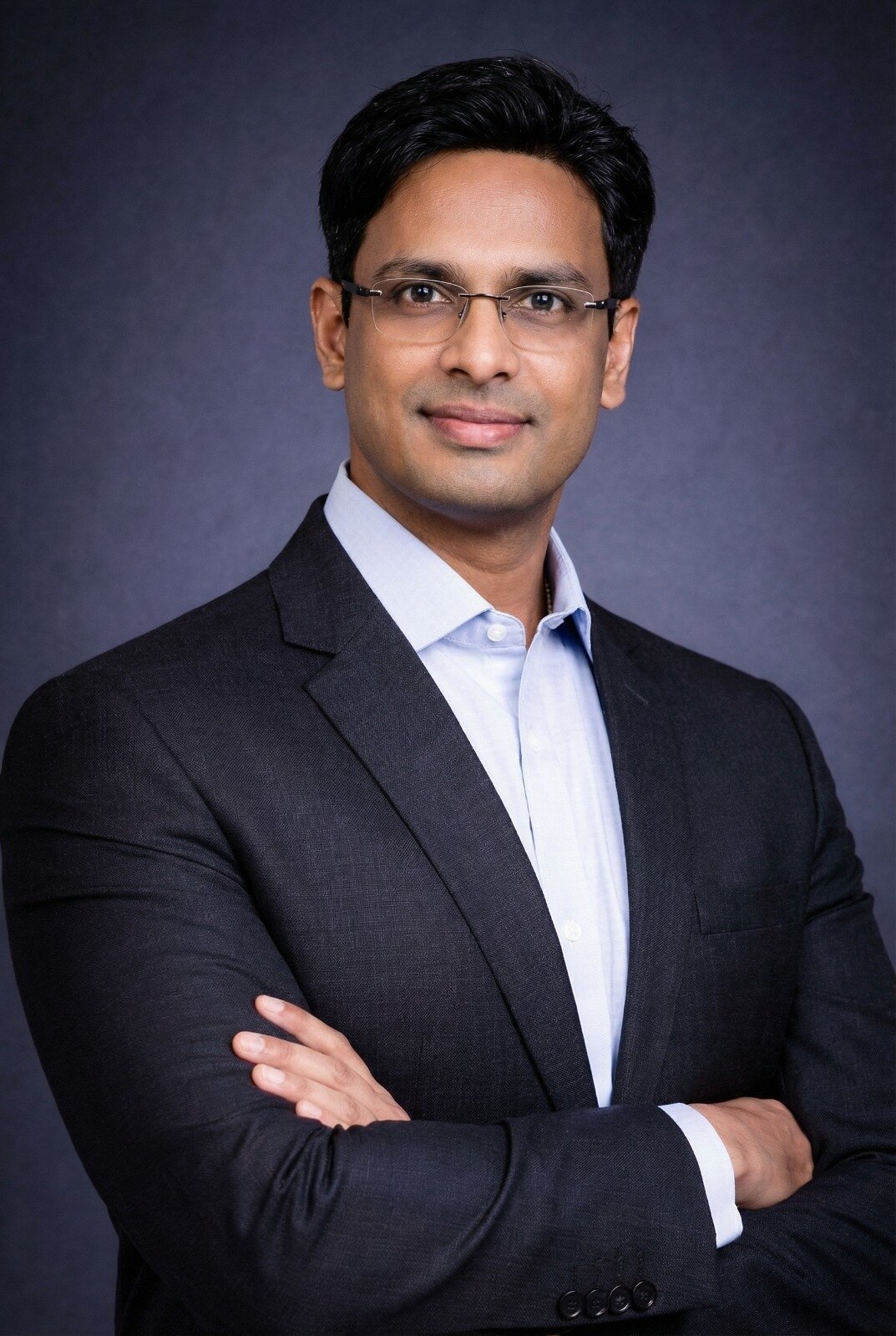
Deepak Mittal, Chief Investment Officer and Head of Private Equity, IIFL Capital Asset Management · Image: IIFL Capital, via PRNewswire release (22 Oct 2026)
Independent report content
| MANAGER | IIFL Capital Asset Management Limited (formerly IIFL Securities Alternate Asset Management), the asset-management arm of IIFL Capital Services (NSE: IIFLCAPS) |
|---|---|
| FUND | IIFL Late-Stage Private Equity Fund · first close of about ₹500 Cr on 15 Sep 2026 · reported by PTI on 14 Oct and in the manager's release of 22 Oct 2026 |
| SIZE PLAN | ₹1,000 Cr base target plus a ₹1,000 Cr greenshoe (up to ₹2,000 Cr) · final close targeted within nine months of first close |
| STRATEGY | Scaled, profitable Indian companies with EBITDA of at least ₹75–100 Cr, a top-three-to-five market position and an IPO intended within three years · cheques of ₹50–100 Cr |
| PORTFOLIO SO FAR | Two investments committed (investees not named) · seven to eight more between term sheet and diligence |
| LEAD | Deepak Mittal, Chief Investment Officer and Head of Private Equity, IIFL Capital Asset Management |
| FUND TERMS | Fees, carry, tenure, investor mix and legal structure: not disclosed |
| THE ACCESS POINT The fund stays open for subscription until its final close, which the manager targets within nine months of the 15 September 2026 first close. Access route, legal structure and minimum commitment: not disclosed in the announcements. |
|---|
Executive decision summary
| THE BOTTOM LINE | IIFL Capital Asset Management announced the first close of its maiden Late-Stage Private Equity Fund at about ₹500 crore, halfway to a ₹1,000 crore base target, with a further ₹1,000 crore greenshoe. The mandate is unusually specific: profitable companies with EBITDA of ₹75–100 crore or more, a top-three-to-five position in their category, sectors growing 15–18% a year, and an intention to list within three years, with cheques of ₹50–100 crore. Two investments are committed and seven to eight more are in diligence. What the fund has not published is as important as what it has: no investee names, no fees, no tenure, no return history for this vehicle. The manager sits inside a listed broker and investment bank that earned ₹127 crore of profit in the September 2026 quarter and is about to get Fairfax as majority shareholder. The timing is good: India raised a record US$12.5 billion in IPOs in January–September 2026. The risk is that a pre-IPO fund earns its money only when the IPO window is open, and listing gains have been uneven (median listing premium 5.9% in September 2026). |
|---|---|
| WHICH INVESTOR | The fund fits you IF you want pre-IPO equity exposure to profitable, mid-sized Indian companies, you can lock money away for five or more years, and you are content to judge a first-time platform fund on its portfolio rather than a track record. Wait IF you need published fees, tenure and investee names before committing, or you want to see the first portfolio company reach its IPO before you put money in. |
| COMFORT FIT | A pre-IPO fund is like buying a house just before the metro line opens: you pay a lower price than the finished neighbourhood commands, but only if the line opens on time. The EBITDA screen is a health check before a marathon. It says a runner is fit today; it does not say they will win the race. The first close is a restaurant's soft launch. The kitchen is open and two tables are served, but nobody has reviewed the menu yet. JM Financial's pre-IPO fund (₹1,500 crore target) is the nearest rival: same idea, shorter listing horizon of 18 months, and a first close of ₹700 crore. |
| THE RUPEIA NUMBER | ₹75–100 crore. The minimum EBITDA the manager says each investee should have at the time of investment. At a ₹50–100 crore cheque, that screen decides which Indian companies this fund can touch at all. |
1 CLAIM REGISTER: EVIDENCE GRADING
A = government, regulator or statutory filing. B = company or manager release, website or filing. C = independent press. D = third-party database, blog or aggregator.
| Claim | Source | Grade | Rupeia assessment |
|---|---|---|---|
| First close of about ₹500 Cr on 15 Sep 2026 | IIFL Capital release (PRNewswire / UNI, 22 Oct 2026); PTI (14 Oct 2026) | B | Established; manager-reported |
| ₹1,000 Cr base target, ₹1,000 Cr greenshoe, final close within nine months | IIFL Capital release | B | Targets, not commitments |
| Investee screen: EBITDA ₹75–100 Cr+, top 3–5 player, IPO within three years, ₹50–100 Cr cheques | IIFL Capital release; PTI | B | Stated policy |
| Two investments committed; seven to eight in evaluation | IIFL Capital release | B | Investees not named; amounts drawn not disclosed |
| Manager SEBI registrations (AIF, adviser, portfolio manager) | IIFL Capital release; IIFL Capital SEBI-registration page | B | Established; one AIF number printed differently on two pages |
| Q2 FY27 revenue ₹722 Cr, PAT ₹127 Cr, assets and custody ₹2,64,154 Cr | Free Press Journal; InvestyWise (28–29 Oct 2026) | C | Established (unaudited, consolidated) |
| Fairfax ₹2,000 Cr preferential issue at ₹350 and open offer for up to 26% | Angel One; Free Press Journal; Kotak Neo (May 2026) | C | Established; pre-deal stake differs by source |
| 2026 IPO data (US$12.5 bn Jan–Sep; 220 issues) | Free Press Journal citing LSEG, 9 Oct 2026 | C | Market indicator |
| Earlier IIFL pre-IPO funds and returns (2017, 2022) | DSIJ, Cafemutual, AVCJ | C | Historic; different manager entity then |
2 FUND SNAPSHOT: IIFL LATE-STAGE PE VS THREE PEERS
| Fund | Size and close | Listing horizon | Screen and cheque |
|---|---|---|---|
| IIFL Late-Stage PE Fund | ~₹500 Cr first close (15 Sep 2026); ₹1,000 Cr base + ₹1,000 Cr greenshoe | IPO intended within three years | EBITDA ₹75–100 Cr+; top 3–5 player; ₹50–100 Cr cheques |
| JM Financial India Pre-IPO Fund | ₹700 Cr first close (Sep 2026); ₹1,500 Cr target + greenshoe up to ₹1,000 Cr | Listing expected within 18 months | Sector-agnostic; all stages; cheque size not disclosed |
| Kyro India Opportunities Fund I | ₹100 Cr target; first close targeted July 2026 | Listing within 24–36 months | Profitable companies; 35% IRR target; 10% hurdle; minimum ₹1 Cr |
| IIFL Special Opportunities Funds, Series 9–10 (2022, earlier IIFL AMC) | Up to ₹4,000 Cr sought; ₹2,600 Cr raised by Mar 2022 | Pre-IPO and IPO | Externally priced deals only |
| RUPEIA READ Three funds, three timetables. JM Financial wants companies that list in 18 months, which means buying very late and earning mostly from listing-price differences. IIFL's three-year intention is a looser promise: it lets the fund buy growth-stage businesses that still need two or three reporting years before a prospectus. Kyro sits in between at 24–36 months but at 1/15th of IIFL's target size. IIFL's screen is the only one that publishes a profit floor (EBITDA of ₹75–100 crore), which is the most concrete underwriting rule in the group. |
|---|
3 TIMELINE: 2017–2027
| Date | Event |
|---|---|
| Feb–May 2017 | IIFL Special Opportunities Fund (Category II, pre-IPO and IPO) launched under the then IIFL Asset Management; US$250 million raised in about two months (DSIJ) |
| Jul 2017 | Series 2 of the same fund raises US$216 million within two months of launch (DSIJ) |
| 28 Mar 2022 | AVCJ: IIFL Private Equity seeking up to ₹4,000 Cr for Special Opportunities Fund Series 9 and 10; ₹2,600 Cr already raised |
| 20 Apr 2026 | IIFL Capital Credit Opportunities Fund announces a first close of over ₹500 Cr, with a ₹500 Cr greenshoe exercised |
| 7 May 2026 | Fairfax India announces a ₹2,000 Cr preferential investment in IIFL Capital Services at ₹350 a share |
| 1 Jun 2026 | IIFL Capital shareholders approve the preferential issue |
| 15 Sep 2026 | IIFL Late-Stage Private Equity Fund reaches first close at about ₹500 Cr |
| 14 Oct 2026 | PTI reports the first close and the ₹1,000 Cr target |
| 22 Oct 2026 | IIFL Capital distributes its first-close release (dateline Mumbai) |
| 1 Jan 2027 | Vasudev Jagannath due to join the IIFL Capital Services board as whole-time director, to be re-designated Managing Director |
| About mid-June 2027 | End of the nine-month window for final close (Rupeia calculation: 15 Sep 2026 + nine months) |
4 THE MANAGER: IIFL CAPITAL ASSET MANAGEMENT AND ITS SPONSOR
The fund is managed by IIFL Capital Asset Management Limited, formerly IIFL Securities Alternate Asset Management Limited and described in the release as the asset-management arm of IIFL Capital. The sponsor is IIFL Capital Services Limited (formerly IIFL Securities; NSE: IIFLCAPS, BSE: 542773), a Mumbai-based broker, investment bank and wealth distributor. The release lists the manager's registrations: SEBI-registered AIF manager (numbers IN/AIF3/19-20/0770 and IN/AIF2/21-22/088 as printed in the release; IIFL Capital's own registration page prints the second as IN/AIF2/21-22/0888), investment adviser INA000019956, and portfolio manager INP000009445.
The sponsor's businesses, as named in its quarterly disclosures, are retail equities, institutional equities and investment banking, and financial-product distribution. Asset management is a small part. Multibagg's report on the June 2026 quarter shows in-house portfolio-management AUM of ₹2,521 crore and AIF AUM of ₹1,881 crore, a total of ₹4,402 crore, set against ₹2,571 billion (₹2.57 lakh crore) of total AUM and custody. The report does not state that those two figures belong to the asset-management company alone.
| RUPEIA READ The pedigree is real but indirect. IIFL is a well-known Indian brand with a research, broking and investment-banking engine that sees many IPO candidates. But this is a platform launch inside a broker-led group: the people who built IIFL's earlier pre-IPO funds worked for an entity that was then called IIFL Asset Management, and the 2026 release calls this fund the maiden fund of its private-equity platform. LPs are buying a new platform with a known brand behind it, not an old team with a long record under one name. |
|---|
5 THE SPONSOR IN NUMBERS: IIFL CAPITAL IN THE SEPTEMBER 2026 QUARTER
| Measure | Q2 FY27 (quarter to 30 Sep 2026) | Comparison |
|---|---|---|
| Revenue from operations | ₹722 Cr (₹7,219 million) | +22% on a year earlier; +14% on the quarter |
| Profit after tax | ₹127 Cr (₹1,266 million) | +49% on a year earlier; about 31% lower than Q1 |
| Operating profit before tax | ₹206 Cr | +38% quarter-on-quarter; +25% year-on-year |
| Assets under management and custody | ₹2,64,154 Cr | ₹2,571 billion at 30 Jun 2026 |
| Six-month revenue and PAT (H1 FY27) | ₹1,353 Cr and ₹311 Cr | +12% and +19% |
| Net worth | ₹3,460 Cr (₹34.6 billion) | — |
| Investment banking | 28 deals in the quarter, including an NSE IPO and an Adani Enterprises QIP | 11 transactions in Q1 |
Free Press Journal and InvestyWise reported these figures on 28–29 October 2026. Q1 FY27 profit of ₹184 crore had been helped by a ₹90 crore mark-to-market gain, mostly on BSE shares (Multibagg), which explains the quarter-on-quarter fall in Q2 profit even as operating profit rose.
| RUPEIA CALCULATION Net worth of ₹3,460 crore is about 3.5 times the fund's ₹1,000 crore base target and 1.7 times the full ₹2,000 crore with greenshoe. Half-year profit of ₹311 crore is also more than half the base target. Whatever the sponsor decides to commit to its own fund (not disclosed), it has the capacity to be a visible co-investor. Sponsor commitment is the single most useful missing number in this fund's disclosure. |
|---|
6 FAIRFAX AND THE CHANGE OF CONTROL AT THE SPONSOR
On 7 May 2026 IIFL Capital Services announced that Fairfax India Holdings Corporation, through FIH Mauritius Investments, would invest ₹2,000 crore by preferential allotment at ₹350 a share, followed by a mandatory open offer. Kotak Neo reported an open offer for up to 10 crore shares, 26% of the expanded capital, at ₹350, costing up to ₹3,505 crore, and a post-deal Fairfax holding of at least 51% (up to 62.81% for FIH Mauritius alone if the offer were fully taken up). Sources differ on Fairfax's starting stake: Angel One and Free Press Journal say about 30.5%; Kotak Neo says 24.67% (FIH Mauritius 21.98% plus HWIC Asia Fund 2.69%). Founders Nirmal Jain and R. Venkataraman continue as co-promoters, and Fairfax can nominate two directors.
Shareholders approved the preferential issue on 1 June 2026. By late October, Free Press Journal reported that regulatory and shareholder approvals had been received and the allotment and open offer were being implemented. The announcement said the money would support capital markets, wealth management, asset management, institutional equities, investment banking and distribution. Whalesbook records that Fairfax first invested in IIFL Holdings in 2011.
| Item | Reported detail | Source |
|---|---|---|
| Preferential issue | ₹2,000 Cr at ₹350 (about 5.71 crore shares) | Angel One; Kotak Neo |
| Open offer | Up to 26% at ₹350; up to ₹3,505 Cr; no plan to delist | Kotak Neo |
| Post-deal Fairfax holding | At least 51% | All four reports read |
| Fairfax's relationship | Investor since 2011; described by IIFL as a partner of more than 15 years | Whalesbook; Angel One |
| Management | Jagannath to be Managing Director from 1 Jan 2027; Venkataraman stays on the board | Free Press Journal |
| Tax matter | January 2025 search under Section 132; demand of ₹124 Cr on the holding company and subsidiaries; appealed | Multibagg |
| RUPEIA READ For a fund LP, the sponsor's change of control matters in three ways. First, it brings a patient, long-term shareholder with deep pockets, which helps a new asset-management platform that needs time to build a record. Second, new owners often reset strategy and cost allocation across business lines, so the platform's place in the group is something LPs should watch. Third, the fund will be raising its second half of capital while the open offer and the management hand-over are still being completed. None of this changes the fund's mandate, but it is the context in which the final close will be judged. |
|---|
7 GP QUALITY & TEAM ANALYSIS
| Dimension | Evidence | Rupeia view |
|---|---|---|
| Named leadership | Deepak Mittal, Chief Investment Officer and Head of Private Equity (the only named fund person in the release) | Clear; team depth not disclosed |
| Platform history | Maiden fund of this PE platform; credit fund launched April 2026 under fund manager Purshotam Agarwal | New; two launches inside a year |
| Origination edge | Release cites IIFL's capabilities as a distinct advantage in backing scaled enterprises | Plausible (broker and investment-banking franchise); conflicts need a stated policy |
| Pricing discipline | No statement on valuation method or external price discovery for this fund | Not disclosed |
| Sponsor skin in the game | Not disclosed | Gap |
| Governance | Registered AIF manager; adviser and portfolio-manager licences | Standard; no fund-specific governance published |
The release quotes Mittal saying: "The first close marks the point at which this Fund moves from being a proposition to being a portfolio." It also thanks investors for confidence "in a volatile global environment". It names no co-heads, deal team or investment committee.
| RUPEIA READ The quality of a first-time platform fund usually shows in the answer to three questions: who sits on the investment committee, who makes the call when a deal comes from the sponsor's own investment-banking desk, and how much the sponsor commits. The public record answers none of the three. That is normal for a release but it means the quality of the GP cannot yet be graded above "plausible". |
|---|
8 EARLIER IIFL PRE-IPO FUNDS: THE SPECIAL OPPORTUNITIES RECORD
IIFL has run pre-IPO funds before. The pages Rupeia read describe them as managed by IIFL Asset Management (later reported as IIFL Private Equity within IIFL Asset Management). None of the pages links those funds to IIFL Capital Asset Management or to today's sponsor, and the 2026 release calls the new fund the maiden fund of its PE platform. They are therefore context, not this fund's track record.
| Fund | Size | Date | Published detail |
|---|---|---|---|
| IIFL Special Opportunities Fund, Series 1 | US$250 mn (₹1,625 Cr) | 2017 | More than half in private companies before IPO, the rest at the IPO; raised in about two months |
| IIFL Special Opportunities Fund, Series 2 | US$216 mn | Jul 2017 | Category II, close-ended; securities to list within 6–12 months |
| Special Opportunities Funds, Series 1–7 | ₹8,500 Cr combined commitments | To 2022 | "Fully deployed" (AVCJ) |
| Series 9 and 10 | Up to ₹4,000 Cr sought; ₹2,600 Cr raised | Mar 2022 | Final close of ₹3,500–4,000 Cr pencilled for end-June 2022 |
| Published return (AVCJ, 28 Mar 2022) | Figure |
|---|---|
| Average IRR across all IIFL PE strategies | Above 20% |
| Special Opportunities Series 1–5 | 17–20% |
| Special Opportunities Series 7 | 24–25% |
| Pre-IPO funds: invested to date | About ₹1,200 Cr across seven deals |
| Named pre-IPO investments | NephroPlus, Aether Industries, OmniActive Health Technologies, Care Health Insurance, Vastu Housing Finance, SK Finance |
| IIFL PE assets under management (then) | About ₹22,500 Cr |
| RUPEIA READ The earlier funds show that IIFL's pre-IPO franchise can raise large sums quickly and that its older vintages reported 17–25% IRRs, with named investee companies. Series 1 raised US$250 million in two months in 2017. But the figures are from a different entity at a different time, are not net of final fees in any source Rupeia read, and relate to funds that are not this one. They support the claim that IIFL-branded pre-IPO funds have attracted LPs; they do not support any return expectation for the 2026 fund. |
|---|
9 TRACK RECORD & DPI: WHAT CAN AND CANNOT BE CLAIMED
| Measure | This fund | Status |
|---|---|---|
| Net IRR, DPI, RVPI, TVPI | None published | Fund is weeks old |
| Capital drawn / invested | Not disclosed | Two commitments reported, no amounts |
| Realised exits | None | First close was 15 Sep 2026 |
| Valuation policy | Not disclosed | AIFs report unit valuations to depositories (per Whalesbook, from 1 May 2026) |
| Predecessor record | 17–25% IRR (older funds, other entity) | Context only |
The fund has no return record of its own. It was formed in 2026, took its first closing in September, and has not exited anything. Any return figure attached to it today, including the 17–25% earlier-fund numbers, is borrowed.
10 THE LP BASE: WHO HAS COMMITTED
Investor mix: not disclosed. The release speaks of "investors" and thanks them for their confidence. The sibling IIFL Capital Credit Opportunities Fund said its first close came from HNIs and family offices (Outlook Business and Venture Intelligence, April 2026), and IIFL Capital's business is wealth and distribution, so a similar base is likely here. That is an inference, not a published fact.
The wider context: AIF commitments in India were ₹15.7 lakh crore at December 2025, with Category II about 60% of deployed capital (Planify, citing industry data). SEBI-recognised accredited investors rose from 649 in May 2025 to over 2,081 by February 2026 (Whalesbook).
| RUPEIA READ A broker-distributed fund is only as stable as its LP base. HNI and family-office money commits more quickly than institutional money, which is why first closes can arrive early, but it can also thin out at the next fund if returns lag. Pension and insurance money, which would signal a more demanding diligence pass, is not reported. |
|---|
11 STRATEGY: A LATE-STAGE SCREEN WITH NUMBERS
| Filter | Published threshold | What it implies |
|---|---|---|
| Profitability | EBITDA of at least ₹75–100 Cr at investment | Mid-sized, already profitable; excludes loss-making new-economy names |
| Market position | Top three to five players in the category | Scale leaders in niches, not the whole market |
| Growth | Sectors growing 15–18% a year | Growth in the sector, not necessarily the company |
| IPO intention | Within about three years | Gives the manager a defined exit route |
| Cheque | ₹50–100 Cr average per transaction | 5–40 positions depending on final size |
| Instrument | Primary or secondary: not disclosed | Affects how much cash reaches the company |
The release describes target companies as "scaled-up, profitable Indian enterprises that are preparing to list on the public markets in the near term". It places the fund "between private equity and public markets", the framing Dealroom also used.
| RUPEIA READ The screen is selective on the one dimension, profit, that most pre-IPO losses come from. A company with ₹75–100 crore of EBITDA that grows at 15–18% a year does not need an IPO to survive, so the fund is unlikely to be forced to sell at any price. The weakness is that "sector growth of 15–18%" says nothing about whether the specific company takes share. |
|---|
12 THE SCREEN IN RUPEIA ARITHMETIC: WHAT A ₹100 CRORE EBITDA COMPANY COSTS
| EV / EBITDA multiple (illustrative) | EBITDA ₹75 Cr | EBITDA ₹100 Cr | ₹50 Cr cheque as % of EV (₹100 Cr EBITDA) |
|---|---|---|---|
| 15x | ₹1,125 Cr | ₹1,500 Cr | 3.3% |
| 20x | ₹1,500 Cr | ₹2,000 Cr | 2.5% |
| 25x | ₹1,875 Cr | ₹2,500 Cr | 2.0% |
| 30x | ₹2,250 Cr | ₹3,000 Cr | 1.7% |
| RUPEIA CALCULATION Enterprise value = EBITDA × multiple. The multiples are Rupeia's illustrations, not IIFL's published prices (no entry valuation is disclosed). At any multiple in the range, a ₹50–100 crore cheque buys between roughly 1.7% and 9% of a company's enterprise value, which means the fund is a minority investor in most deals and will need co-investors, a primary raise or a secondary purchase to build a meaningful stake. That matches the release's wording that deals can combine investors and structures, and it is why the fund's influence on exit timing will come from contract rights, not shareholding. |
|---|
13 THE PIPELINE: TWO COMMITTED AND SEVEN TO EIGHT IN EVALUATION
The release says the fund has committed to two companies and is evaluating seven to eight more, "ranging from term sheet negotiations to transactions under diligence". It lists the sectors in play: integrated security-as-a-service, railway and wind-energy components, specialty chemicals, defence equipment, IT-enabled services, pre-engineered buildings and consumer technology. It does not name any investee, deal date, price or structure.
| Pipeline sector named | What the IPO case typically rests on (Rupeia view) | Diligence focus |
|---|---|---|
| Security-as-a-service | Recurring contracts and customer retention | Contract tenor, churn, receivables |
| Railway and wind components | Approved-vendor status and order books | Tender dependence, working capital |
| Specialty chemicals | Export demand and process know-how | Environmental compliance, input costs |
| Defence equipment | Domestic procurement and qualification trials | Order conversion, security clearances |
| IT-enabled services | Margin and client concentration | Top-client share, attrition |
| Pre-engineered buildings | Industrial and warehousing construction cycle | Steel cost pass-through, order cancellations |
| Consumer technology | Brand and repeat purchase | Customer acquisition cost, return rates |
| RUPEIA CALCULATION Nine to ten live deals (two committed plus seven to eight in evaluation) at ₹50–100 crore each represent ₹450–1,000 crore of potential investment if all were done. That already equals or exceeds the ₹500 crore first close and brackets the ₹1,000 crore base target. In other words the manager is not short of ideas for the base fund; the binding constraint will be how many ideas turn into signed deals at a price that clears the screen. |
|---|
14 PORTFOLIO SIZING: HOW MANY COMPANIES WILL THE FUND OWN?
| Final fund size | At ₹50 Cr cheques | At ₹75 Cr cheques | At ₹100 Cr cheques |
|---|---|---|---|
| ₹500 Cr (first close only) | 10 | 6–7 | 5 |
| ₹1,000 Cr (base target) | 20 | 13 | 10 |
| ₹2,000 Cr (with greenshoe) | 40 | 26–27 | 20 |
| RUPEIA CALCULATION Positions = fund size ÷ average cheque, before fees, expenses and reserves for follow-ons, which would trim the counts by perhaps a tenth or more. The two committed deals, at ₹50–100 crore each, would use ₹100–200 crore: 20–40% of the first-close amount (Rupeia calculation; actual drawdowns not disclosed). A ₹1,000 crore fund would own 10–20 companies, enough diversification for a pre-IPO strategy; a ₹500 crore fund that stopped at first close would own 5–10. |
|---|
15 CONFLICTS AND AFFILIATED VEHICLES
Several IIFL Capital vehicles and businesses can touch the same companies. The IIFL Capital Credit Opportunities Fund (first close over ₹500 crore, a ₹500 crore greenshoe exercised, April 2026) is a separate private-credit vehicle under fund manager Purshotam Agarwal. The sponsor also runs an investment bank that completed 28 deals in the September 2026 quarter, plus a broking and distribution arm that sells AIFs and PMS to its own clients (distribution AUM of ₹574 billion at 30 June 2026, of which AIFs were 6%).
| Possible conflict | Why it arises | What a well-run platform publishes |
|---|---|---|
| Investment-banking mandates | The sponsor may advise an investee on its IPO while the fund owns shares | Wall between desks; related-party disclosure |
| Credit fund vs equity fund | Same group may lend to and invest in a company | Allocation and cross-fund rules |
| Distribution incentives | Relationship managers sell the fund to wealth clients | Fee-sharing and distributor-commission disclosure |
| Co-investment | Sponsor clients may be offered side-by-side stakes | Allocation policy and fee terms |
| RUPEIA READ The release itself says the group's capabilities give the fund an advantage. That is the same fact that creates the conflict: the sponsor's deal flow is the fund's edge and its biggest governance question. The right test is not whether the conflicts exist but whether the fund documents describe them and set rules. None of that is public. |
|---|
16 FUND MATHS: WHAT IT TAKES TO RETURN 3X
Fund terms are not disclosed, so the arithmetic below uses only the manager's own screen (sector growth of 15–18% a year) and an assumed holding period. Everything in the table is Rupeia's calculation.
| Holding period | Money multiple from 15% EBITDA growth, flat valuation multiple | From 18% growth, flat multiple | Multiple expansion needed for 3x at 15% growth |
|---|---|---|---|
| 3 years | 1.52x | 1.64x | 1.97x |
| 4 years | 1.75x | 1.94x | 1.72x |
| 5 years | 2.01x | 2.29x | 1.49x |
| 6 years | 2.31x | 2.70x | 1.30x |
| RUPEIA CALCULATION Money multiple = (1 + growth)^years, with the same valuation multiple at entry and exit, so it ignores debt, fees and dividends. A 3x gross outcome in five years requires about 24.6% a year (3^(1/5) − 1). Steady 15–18% growth gets to 2.0–2.3x. The balance must come from a higher multiple at listing than at entry (1.3–1.5x of the entry multiple) or from companies that grow faster than their sectors. For a fund buying at the top of the market, that is a demanding ask. A realistic base case is a gross 2x on the successful half of the book, with losses or flat outcomes on the rest. |
|---|
17 GROSS TO NET TO POST-TAX: WHAT AN LP KEEPS
Management fee, carried interest, hurdle, expenses and tenure are not disclosed. The table below shows how far fees can pull net returns below gross under assumed terms of a 2% annual fee on commitment and 20% carry. These are not IIFL's terms.
| Step (₹100 invested, five years, illustrative) | Amount |
|---|---|
| Gross proceeds at 2.0x | ₹200 |
| Less management fees (2% × five years) | −₹10 |
| Profit after fees | ₹90 |
| Less carried interest (20% of profit after fees) | −₹18 |
| Net to investor | ₹172 (1.72x) |
| Net IRR (single-flow approximation) | ~11.5% vs ~14.9% gross |
| RUPEIA CALCULATION Gross multiple 2.0x over five years is 14.9% a year (2^(1/5) − 1); net multiple 1.72x is about 11.5% (1.72^(1/5) − 1). On these assumed terms, roughly three and a half percentage points of annual return go to fees and carry. Category II AIFs are pass-through for tax: gains are taxed in the investor's hands and the rate depends on the holding period, the instrument and the investor's own status, so post-tax returns differ for each LP. The only fair comparison is a net-of-fee, net-of-tax return against what the same money would earn in listed small and mid-cap equities. |
|---|
18 MARKET CONTEXT: THE 2026 IPO MARKET IN NUMBERS
| Indicator | Figure | Source |
|---|---|---|
| IPO fundraising, Jan–Sep 2026 | Record US$12.5 bn; proceeds +11.3% year-on-year; issues down 17.9% to 220 | Free Press Journal citing LSEG (9 Oct 2026) |
| Average issue size | About US$57 mn, up from US$42 mn | Same |
| Q1 2026 / Q2 2026 (to mid-June) | 19 IPOs raised ₹24,772 Cr / 4 IPOs raised ₹2,422 Cr | Equirus via Free Press Journal |
| September 2026 | 34 mainboard IPOs raised ₹39,380 Cr; NSE alone ₹22,562 Cr (offer for sale) | Free Press Journal; Multibagg |
| Listing premium, Aug vs Sep 2026 | Average 24.4% to 15.1%; median 21.3% to 5.9% | Free Press Journal |
| Mainboard listing-day gain, FY26 vs FY25 | 8% vs 28% | Kotak Neo |
| Mainboard IPOs in FY26 | About 108 mainboard issues; total listings ₹1.78 lakh crore across mainboard and SME | Kotak Neo |
| SEBI-approved pipeline | About 144 approved plus 73 awaiting approval; more than 130 approved by LSEG's count | Multibagg; Free Press Journal |
| Sector mix, Apr–Aug 2026 | Industrials 25.6%, financials 23.4%, health care 20.4% | Kotak Neo |
| RUPEIA READ Record money, fewer deals, and larger issues: the window is wide but concentrated in big transactions, with NSE's single offer for sale making up most of September. For a fund with ₹75–100 crore EBITDA companies, the relevant stat is the median, not the record: listing premiums fell from 21.3% in August to 5.9% in September. The sector mix is helpful, because industrials are the largest share of 2026 issues and the pipeline sectors named by IIFL (railway, defence, buildings, chemicals) are industrial. The risk is that mid-sized companies are crowded out when index-sized offers absorb investor attention. |
|---|
19 THE EXIT WINDOW: LOCK-INS AND LISTING MECHANICS
After an IPO, shares held before the issue by non-promoters are generally locked in for six months from allotment (as described by IndiaCorpLaw and Upstox). In late 2025 SEBI approved a mechanism by which depositories mark shares as non-transferable where a lock-in cannot otherwise be created, for example for pledged shares; IndiaCorpLaw notes the six-month lock-in itself "continue[s] to apply in full". Rupeia did not locate source text on AIF-specific exemptions, so none is assumed here.
| Exit route | Mechanics | What can go wrong |
|---|---|---|
| Sell in the IPO (offer for sale) | Fund tenders shares at the issue price | Anchor demand weak; lower price band |
| Sell after lock-in | Open-market or block sales after six months | Post-listing price below issue price |
| Strategic sale | Buyer takes stake before or instead of IPO | Discount to IPO value |
| Delay | Company defers IPO | Fee drag; fund life runs out |
| RUPEIA READ A "three-year IPO intention" is not a three-year exit. Allow for a listing, then six months of lock-in, then orderly selling: a realistic cash-return horizon from entry is four to six years, which is inside a typical Category II tenure but not by a wide margin. The manager has not published the fund's life or extension rights. |
|---|
20 REGULATORY CONTEXT: VALUATIONS AND INSTITUTIONAL MONEY
Whalesbook reported on 11 March 2026 that SEBI Chairman Tuhin Kanta Pandey called for "robust valuation practices" at AIFs ahead of IPOs and warned that "weak or opaque valuations" can distort price discovery. The article is flagged by the publisher as possibly AI-assisted and cites no primary SEBI document, so Rupeia treats it as press reporting (grade D). From 1 January 2026, the RBI's Investment in AIF Directions, 2025 cap one bank or NBFC at 10% of an AIF scheme and all regulated lenders at 20% (Vinod Kothari Consultants).
| RUPEIA READ The RBI rule bites hardest on credit funds that lend to the lenders' own borrowers. Late-stage equity is less affected, because exposure held through equity shares is carved out of the provisioning test. The valuation message matters more here: a pre-IPO fund that buys shares at private-market prices and marks them up before listing will be asked how it set those prices. IIFL's 2022-era statement that it invests "only with external price discovery" was made by its predecessor team and is not a policy of this fund. |
|---|
21 CAPABILITY MATRIX: YES / NO / PARTIAL
| Capability | Status | Evidence |
|---|---|---|
| Defined investment screen | YES | EBITDA, rank, growth, cheque and IPO horizon published |
| Deal flow | PARTIAL | Two committed, 7–8 in pipeline; names not disclosed |
| Track record for this fund | NO | Formed September 2026 |
| Earlier pre-IPO funds under IIFL name | PARTIAL | 17–25% IRR reported in 2022, but by a prior entity |
| Sponsor strength | YES | ₹3,460 Cr net worth; ₹127 Cr quarterly profit; Fairfax as shareholder |
| Fee and terms transparency | NO | Not disclosed |
| Investee transparency | NO | Two investees unnamed |
| Conflict policy | NO | Not published |
22 RISK ANALYSIS: RED FLAGS & KILL CONDITIONS
| Risk | Evidence | Severity | Kill condition |
|---|---|---|---|
| IPO window risk | Listing premium median fell to 5.9% in Sep 2026 | HIGH | Median listing premium turns negative for two quarters |
| Entry price risk | No valuation policy disclosed | HIGH | First investee priced above 30x EBITDA with no external benchmark |
| First-time platform | Maiden fund of PE platform | MEDIUM | Key-person exit by the Head of PE |
| Concentration | Possibly 10–20 companies at ₹1,000 Cr | MEDIUM | Any single investee above 15% of commitments |
| Conflicts | Investment bank and distribution under one roof | MEDIUM | Investee uses the sponsor as IPO banker without disclosure |
| Sponsor change | Fairfax open offer and management hand-over | LOW | Platform strategy cut after change of control |
| Liquidity | Close-ended; tenure not disclosed | MEDIUM | Extension request without LP consent |
23 SCENARIO ANALYSIS
| Scenario | What happens | Indicative gross multiple (Rupeia illustration) |
|---|---|---|
| Bull | IPO window stays open; companies list at higher multiples than entry | 2.5–3.0x |
| Base | Half the book lists on time; others delayed or sold privately | 1.7–2.0x |
| Bear | IPO market shuts for 18 months; exits by strategic sale at discounts | 1.0–1.3x |
These are Rupeia's illustrations from the holding-period arithmetic above, not forecasts, and not IIFL targets. The fund has published no target return.
24 LP SIGNAL & RE-UP ANALYSIS
The first close is the signal available today. Reaching about ₹500 crore, half the base target, in the platform's first months suggests that IIFL Capital's distribution network can place a new PE product. It does not show re-up, since no earlier fund of this platform exists. Peers show similar speeds: JM Financial reported ₹700 crore at its first close, 47% of a ₹1,500 crore target.
| RUPEIA READ The real signal will be whether the fund reaches ₹1,000 crore within the nine-month window and whether the greenshoe is used. A first close of ₹500 crore followed by a long gap would suggest that the first wave came from relationships rather than demand for the strategy. |
|---|
25 INVESTOR CLASS ANALYSIS
| Investor | Fit | Why |
|---|---|---|
| HNI with long horizon | PARTIAL | Pre-IPO exposure with a clear screen; terms and track record not yet published |
| Family office | PARTIAL | Can negotiate terms and co-investment; will ask for investee detail |
| Institution | NO (so far) | First-time platform with no published governance pack |
| NRI | PARTIAL | Possible via AIF route; tax and repatriation paperwork |
| Investor needing income | NO | Pre-IPO equity returns arrive at exit, not as yield |
26 COMFORT FIT: THE DECISION PAGE
| CONSIDER THE FUND IF | You want pre-IPO exposure to profitable, mid-sized Indian companies, accept five-plus years of lock-up, and are comfortable investing before the platform has a record. |
|---|---|
| PREFER A PEER IF | You want a shorter listing horizon (JM Financial's 18 months) or a fund already past first close with published manager track record. |
| WAIT IF | You need published fees and tenure, named investees or a conflict policy before committing; wait for the final close and the first IPO. |
27 THE EARLY SIGNAL: EVENTS TO WATCH
| When | Event | Why it matters |
|---|---|---|
| Q4 2026 | Investees named or first investments disclosed | Shows entry sectors and structure |
| By mid-June 2027 | Final close and greenshoe decision | Tests demand beyond first-close relationships |
| 1 Jan 2027 | Jagannath becomes Managing Director of the sponsor | Management continuity for the platform |
| 2027 | First IPO filing by an investee | First real test of the exit thesis |
| 2027–2028 | Fairfax open-offer outcome and strategy | Sponsor ownership and platform priority |
28 RUPEIA FINAL INDEPENDENT VIEW
IIFL Capital Asset Management's Late-Stage Private Equity Fund has a clear, numerically specific mandate, a first close of about ₹500 crore and a strong IPO market behind it. It has no record, no named investees and no published terms. Its manager is the new asset-management arm of a profitable broker that is about to get Fairfax as majority owner.
Rupeia's view: the strategy is well defined and the market is helpful, but the evidence for the fund itself is still a first-close release. It suits investors who understand that a pre-IPO fund earns its money only when companies list at better prices than they were bought at, and who are comfortable waiting for the platform to prove that. It does not suit investors who need terms, names and numbers before they commit.
Frequently asked questions
What is the IIFL Late-Stage Private Equity Fund?
It is the maiden fund of IIFL Capital's private-equity platform, managed by IIFL Capital Asset Management. It invests in scaled, profitable Indian companies that intend to list within about three years. It reached a first close of about ₹500 crore on 15 September 2026.
How big is the fund?
The first close was about ₹500 crore. The base target is ₹1,000 crore with a further ₹1,000 crore greenshoe, so the fund could reach ₹2,000 crore. The manager targets a final close within nine months.
What kind of companies will it invest in?
The manager says it wants profitable companies with EBITDA of at least ₹75–100 crore, a top-three-to-five position in their category, sectors growing 15–18% a year and an IPO intention within three years. Average cheques are ₹50–100 crore.
Has the fund made investments?
The manager says it has committed to two companies and is evaluating seven to eight more. It has not named any of them or disclosed how much has been drawn.
Who runs it?
Deepak Mittal is Chief Investment Officer and Head of Private Equity at IIFL Capital Asset Management. The release names no other fund team members.
What returns has it delivered?
None to report. The fund is weeks old and has published no IRR, DPI or valuation. Earlier IIFL pre-IPO funds were reported in 2022 to have returned 17–25% IRRs, but those were run by a predecessor entity and are not this fund's record.
What are the fees and the minimum investment?
Management fee, carried interest, tenure and the minimum commitment have not been disclosed in the first-close announcements.
How does it compare with JM Financial's pre-IPO fund?
JM Financial's fund targets ₹1,500 crore, closed ₹700 crore at first close and invests in companies expected to list within 18 months. IIFL's targets ₹1,000 crore with a three-year IPO horizon and a published EBITDA floor.
What are the main risks?
IPO-window risk (median listing premium fell to 5.9% in September 2026), entry-price risk, a first-time platform, possible conflicts between the sponsor's investment bank and the fund, and an undisclosed fund tenure.
Who owns IIFL Capital?
Founders Nirmal Jain and R. Venkataraman are co-promoters. Fairfax India agreed in May 2026 to invest ₹2,000 crore at ₹350 a share and to make an open offer, targeting at least 51%.
Source log
UNI / PRNewswire: IIFL Capital's maiden Late-Stage Private Equity Fund announces first close at ₹500 crore (22 Oct 2026)
PRNewswire India: IIFL Capital first-close release
Rediff Money (PTI): IIFL Capital pre-IPO fund raises ₹500 cr in first close (14 Oct 2026)
Dealroom: IIFL Capital hits US$52.6m first close on maiden late-stage PE fund
IIFL Capital: SEBI registration details
Outlook Business (PTI): IIFL Capital Credit Opportunities Fund raises ₹500 crore (20 Apr 2026)
Venture Intelligence: IIFL Capital Credit Opportunities Fund raises ₹500 Cr
Cafemutual (VCCircle): IIFL hits final close of new fund for IPO and pre-IPO investments (May 2017)
AVCJ: IIFL Private Equity targets US$524m for latest India pre-IPO fund (28 Mar 2022)
DSIJ: IIFL AMC generates US$216 million in its IPO-focussed fund (22 Jul 2017)
DSIJ: IIFL AMC raises US$250 mn through IIFL Special Opportunities Fund (22 May 2017)
Free Press Journal: IIFL Capital Services reports 49% rise in Q2 profit to ₹127 crore
InvestyWise: IIFL Capital Q2 FY27 results
Multibagg: IIFL Capital Q1 FY27 and the pending Fairfax reset
Angel One: Fairfax India to invest ₹2,000 crore in IIFL Capital
Free Press Journal: Fairfax India commits ₹2,000 crore to raise stake in IIFL Capital
Kotak Neo: FIH Mauritius open offer for 26% of IIFL Capital at ₹350
Whalesbook: Fairfax India invests ₹2,000 crore in IIFL Capital, becomes co-promoter
Free Press Journal (LSEG): India's IPO boom hits record US$12.5 billion
Multibagg: India IPO surge 2026, record H1, September rush, pipeline
Free Press Journal (Equirus): IPO market slows in 2026, 23 companies raise ₹27,000 crore
Kotak Neo: ₹1.78 lakh crore, India's record IPO year
Whalesbook: SEBI pushes AIFs for valuation discipline ahead of IPOs (11 Mar 2026)
IndiaCorpLaw: SEBI's proposal to ease lock-in norms for pre-IPO investors (Nov 2025)
Upstox: SEBI eases lock-in rules, simplifies IPO disclosures
Business Today: JM Financial Asset Management launches ₹1,500 crore pre-IPO AIF (19 Feb 2026)
Free Press Journal (PTI): JM Financial Asset Management raises ₹700 crore through maiden pre-IPO fund
Cafemutual: JM Financial launches pre-IPO alternative investment fund
Inc42: Kyro Capital launches ₹100 Cr pre-IPO fund, eyes first close by July
Planify: Decoding India's best-performing AIFs (Mar 2026)
Vinod Kothari Consultants: RBI rules on investments in AIFs (Jul 2025)
| DISCLAIMER This document is published strictly for informational, educational and academic record-keeping purposes. The publisher is not a SEBI Registered Investment Adviser (RIA) or Research Analyst (RA). It does not constitute personal investment advice, a financial recommendation, or an offer or solicitation to buy, sell or subscribe to any securities. Investments in the securities market are subject to market risks. Read all related documents carefully before investing. |
|---|