Physis Capital Fund I: ₹400 Cr Final Close
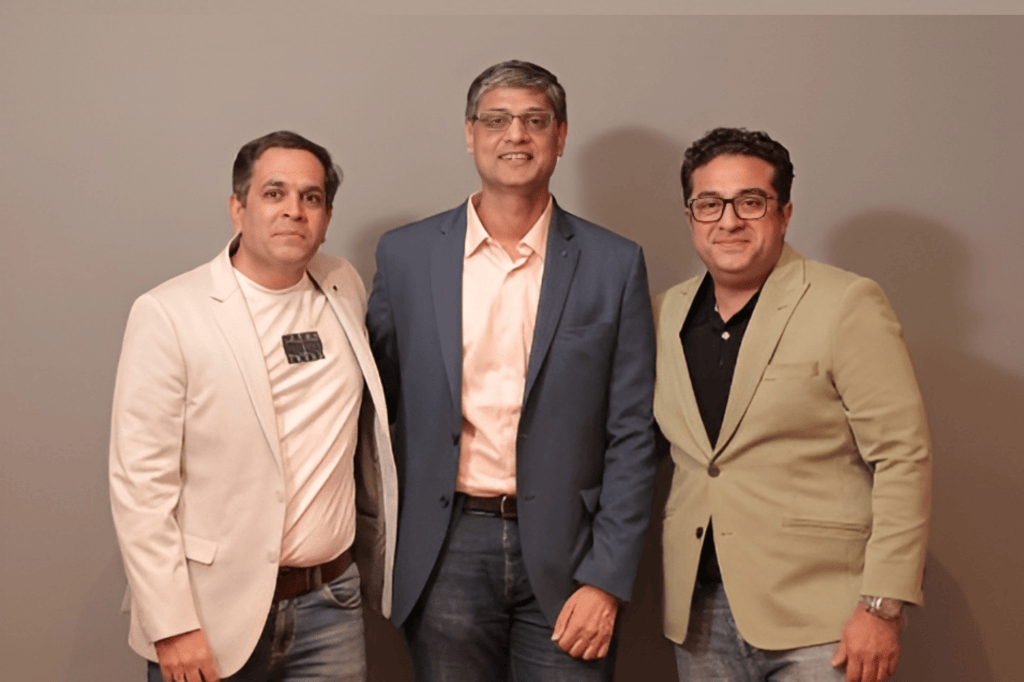
Physis Capital's founding partners at the time of the maiden-fund close · Image: Physis Capital press photo, via Entrepreneur India (May 2026)
Independent report content
| MANAGER | Physis Capital · launched in 2022 by Inflection Point Ventures (IPV) founders Vinay Bansal, Ankur Mittal and Mitesh Shah |
|---|---|
| FUND | Maiden venture fund · final close ₹400 Cr (~US$42m at mid-2026 rates; press conversions range US$41.8–48m), announced 27 May 2026 |
| PATH TO CLOSE | ₹150 Cr committed (Nov 2024) → first close above ₹200 Cr (Jun 2025) → ₹400 Cr final close (May 2026) |
| LPS NAMED | Star Union Dai-ichi Life Insurance (SUD Life); family offices of Haldiram's, Lotus Holdings, Ajmera Realty, Narayana Nethralaya and DS Group |
| STRATEGY | Pre-Series A to Series B · average cheque US$1–3m · consumer tech, fintech, deeptech · 15–20 companies by December 2026, with follow-on reserves |
| DEPLOYMENT | More than 60% deployed or committed across 10 companies at final close; balance over the following 6–8 months |
| NEXT | A "significantly larger" Fund II planned for the final quarter of 2026 |
| THE ACCESS POINT Fund I is closed to new investors. The next entry point is Fund II, which Physis plans to launch in the final quarter of 2026. Category I and II AIFs in India require a minimum commitment of ₹1 crore per investor. IPV's angel platform remains the route for smaller, deal-by-deal investing. |
|---|
Executive decision summary
| THE BOTTOM LINE | Physis Capital is the fund-management arm built by the founders of Inflection Point Ventures (IPV), one of India's largest angel investment platforms. Its maiden fund closed at ₹400 crore in May 2026, about four years after launch, with an insurer (SUD Life) and several prominent business families as named investors. The fund writes US$1–3 million cheques from pre-Series A to Series B and had placed more than 60% of its capital in 10 companies by final close. The strength is deal flow: IPV sees thousands of startups and reported 16 exits and a 41% blended IRR in FY26. The gap is that Physis itself has no realised fund-level returns yet, and IPV's figures are angel-syndicate results reported by IPV, not an audited fund record. Fund II, planned for late 2026, will be the real test of whether institutions back the platform. |
|---|---|
| WHICH INVESTOR | Physis Fund II fits you IF you want early-growth Indian venture exposure through a manager with an unusually wide deal funnel, and you accept that the first fund's returns will not be visible until around 2029–2031. Wait IF you need a realised fund-level DPI before committing. Fund I has 10 companies, no published marks and no distributions yet. |
| COMFORT FIT | Physis = IPV's deal funnel with a fund's discipline. Same founders, but one pooled vehicle with reserves instead of syndicate-by-syndicate investing. IPV = the angel network that feeds it. Hundreds of companies backed, 16 exits in FY26, with returns reported by IPV itself. MAVOF II (Report 07) = the later-stage cousin. Series B–D cheques with Korean strategic anchors; Physis stops at Series B. Inflexor Fund III (Report 13) = the deep-tech specialist. Narrower thesis, longer track record, institutional anchors. |
| THE RUPEIA NUMBER | 41%. IPV, the angel platform run by Physis's founders, reported a blended 41% IRR and 2.86x money multiple on 16 exits in FY26. It is the strongest published evidence behind Physis, and also its main caveat: those are angel-syndicate outcomes reported by IPV, not returns earned by the Physis fund. |
1 CLAIM REGISTER: EVIDENCE GRADING
A = government or regulator record. B = company or manager release. C = independent press. D = third-party database or blog.
| Claim | Source | Grade | Rupeia assessment |
|---|---|---|---|
| Final close of maiden fund at ₹400 Cr (May 2026) | Inc42; Entrepreneur India; YourStory; DealStreetAsia | C | Established |
| First close above ₹200 Cr (Jun 2025) | Inc42 | C | Established |
| ₹150 Cr committed by Nov 2024 (₹100 Cr retail + half of family-office bucket) | Entrepreneur India (Vinay Bansal) | C | Established |
| LPs: SUD Life; Haldiram's, Lotus Holdings, Ajmera Realty, Narayana Nethralaya, DS Group family offices | Inc42 (May 2026, Jun 2025) | C | Established |
| >60% deployed or committed across 10 startups | Inc42 (manager statement) | B | Manager-reported |
| Portfolio includes Momentum, Hudle, STAGE, Elevate Now, CTPL, Ben & Gaws | Inc42; Entrepreneur India | C | Established (6 of 10 named) |
| IPV: 16 exits, 41% blended IRR, 2.86x in FY26 | IPV announcement via YourStory, Entrepreneur India | B | Platform-reported; not fund returns |
| Fund II planned for Q4 2026 | Inc42 (manager statement) | B | Stated plan |
2 FUND SNAPSHOT: PHYSIS FUND I VS THREE PEERS
Physis sits between India's seed funds and its growth funds. The closest comparisons in Rupeia's coverage are three 2026 fundraises at different stages.
| Measure | Physis Fund I | Inflexor Fund III (Report 13) | IITM Unicorn Frontier Fund I (Report 01) | MAVOF II (Report 07) |
|---|---|---|---|---|
| Size | ₹400 Cr (final) | ₹1,250 Cr target; ₹400 Cr first close | ₹600 Cr base + ₹400 Cr greenshoe; ₹450 Cr first close | ₹1,800 Cr target + ₹700 Cr greenshoe; ₹1,125 Cr first close |
| Stage | Pre-Series A to Series B | Pre-Series A and Series A | Early-stage deep tech | Series B to D |
| Cheque | US$1–3m average | ₹15–45 Cr initial | Early-stage | Growth-stage |
| Companies | 15–20 | 22–25 | IIT Madras ecosystem | Concentrated growth book |
| Anchor type | Insurer + family offices + retail | SRI Fund, HDFC AMC, AIIB | Institutional and IIT network | Korean strategics (KRAFTON, Naver) + Mirae |
| Manager history | First fund; founders run IPV | Third fund since 2015 | Manager with three prior funds | Second India fund of a global sponsor |
| RUPEIA READ Physis is the smallest fund in this group and the only first-time fund. Its edge is not capital but access: the IPV platform gives it a view of a large number of early companies before most funds see them. Its risk is the mirror image. A ₹400 crore fund with 15–20 positions has little room for mistakes, and it has no earlier fund to show a realised record. |
|---|
3 TIMELINE: 2022–2026
| Date | Event |
|---|---|
| 2022 | Physis Capital launched by IPV founders Vinay Bansal, Ankur Mittal and Mitesh Shah; target corpus ₹400 Cr (~US$50m at the time) |
| 2024 | First investments, including CTPL (₹5 Cr) and Ben & Gaws |
| Nov 2024 | ₹150 Cr committed: ₹100 Cr from retail investors and half of the ₹100 Cr family-office bucket; final close targeted for early 2026 |
| Jun 2025 | First close above ₹200 Cr; SUD Life, Narayana Nethralaya and the Haldiram and Lotus family offices named; three investments made, eight deals in the pipeline |
| FY26 (to Mar 2026) | IPV reports 16 exits, including partial exits in STAGE and Hudle |
| 27 May 2026 | Final close at ₹400 Cr; more than 60% deployed or committed across 10 startups |
| Q4 2026 (planned) | Launch of a "significantly larger" Fund II |
One date is reported inconsistently. Inc42's June 2025 article also refers to a first close in May 2023, which conflicts with its own description of the June 2025 milestone as the first close. Rupeia uses the June 2025 date, which matches the sequence of commitments reported in November 2024.
4 THE MANAGER: PHYSIS CAPITAL AND THE IPV PLATFORM
Physis Capital was set up in 2022 by the three founders of Inflection Point Ventures, an angel investment platform that pools investors into deal-by-deal syndicates. Vinay Bansal is described as managing partner (general partner in earlier coverage). Ankur Mittal and Mitesh Shah are the other founding partners. Physis was created so the same team could write larger cheques from a single pooled fund, with reserves for follow-on rounds, rather than raising a new syndicate for every deal.
| Feature | IPV (angel platform) | Physis Capital (fund) |
|---|---|---|
| Vehicle | Deal-by-deal syndicates | Pooled fund with a fixed corpus |
| Decision | Each investor opts in per deal | Investment committee decides for the whole fund |
| Cheque | Angel and seed rounds | US$1–3m average; Pre-Series A to Series B |
| Follow-ons | Depend on investors re-opting in | Reserved from the corpus for the best performers |
| Capital base | Individual angels | Insurer, family offices, retail AIF investors |
| RUPEIA READ The structure is logical. An angel platform sees companies early, but cannot always follow its winners into larger rounds. A fund run by the same team can. The key question for LPs is how the two vehicles share deals, which this report discusses in the section on affiliated vehicles. |
|---|
5 GP QUALITY & TEAM ANALYSIS
| Dimension | Evidence | Rupeia view |
|---|---|---|
| Sourcing | Founders run one of India's most active angel platforms; IPV says it has backed 280+ startups | Strong; the main reason to back Physis |
| Investing experience | IPV founders have angel and syndicate experience since the platform's launch; personal investments include BharatPe | Good at early stage; less tested at Series B pricing |
| Fund-management record | First fund; no realised returns yet | Unproven |
| Portfolio support | Physis says it offers technical, operational and strategic mentoring | Standard claim; not yet measurable |
| Fundraising | Four years from launch to final close, in a weak market | Persistence shown; scale limited |
| Team depth | Three named partners; investment team not detailed in coverage | Partial |
Bansal framed the fund around founders "solving real, structural problems across India". The sector list has moved over time: fintech, SaaS, enterprise tech, edtech, deeptech and logistics in 2025, and consumer tech, fintech and deeptech for the remaining capital in 2026. That flexibility is useful for a generalist early-growth fund, but it also means LPs are backing the team's judgment rather than a narrow thesis.
6 THE IPV RECORD: WHAT THE ANGEL PLATFORM HAS RETURNED
Physis has no realised fund returns, so its most relevant public evidence is the record of the IPV platform run by the same founders. IPV published FY26 figures in May 2026.
| IPV measure | Published figure | Period / source |
|---|---|---|
| Exits | 16 (full and partial) | FY26; IPV via YourStory and Entrepreneur India |
| Blended IRR on exits | 41% | FY26 |
| Money multiple on exits | 2.86x | FY26 |
| Best performer | Secret Alchemist: 192% IRR, 4.56x | FY26 |
| Partial exits | STAGE, Fabheads, Spardha, Hudle, Freed | FY26 |
| Strategic sales | Including GeoiQ and AFK Gaming; buyers included Amazon, Lenskart and Nodwin Gaming | FY26 |
| Follow-on rounds | 17 portfolio companies; blended 84.22% IRR on secondary transactions | FY26 |
| Maturity | More than 50% of startups with 2+ years' vintage have exited or raised follow-ons | FY26 |
| Capital and reach | ₹1,200 Cr+ across 280+ startups (IPV) | May 2026 |
| Earlier year | 14 exits in 2024 at a 36% average IRR; ₹800 Cr+ across 250+ startups | Business Standard, Sept 2025 |
| RUPEIA READ These are good numbers for an angel platform, and they show the team can find companies that later raise money or get bought. But they are not a fund track record. Exit IRRs measure only the deals that were sold, not the losers still held. A 2.86x multiple on exited deals says nothing about the full portfolio. And the figures are reported by IPV, not audited. LPs should treat them as evidence of sourcing and selection, not as a forecast of Physis returns. |
|---|
7 HOW IPV'S EXITS HAPPENED: SECONDARIES AND STRATEGIC SALES
IPV's FY26 exits came through two routes. Strategic sales: companies such as GeoiQ and AFK Gaming were bought outright, with buyers that included Amazon, Lenskart and Nodwin Gaming. Secondary sales: in companies such as STAGE, Hudle, Fabheads, Spardha and Freed, IPV sold part of its holding to new investors during later funding rounds, while keeping the rest. IPV also said follow-on rounds in 17 portfolio companies produced a blended 84.22% IRR on secondary transactions.
| Exit route | How it works | What it means for Physis |
|---|---|---|
| Secondary in a funding round | New investors buy some existing shares alongside the fresh money | The most common early liquidity route in India; Physis can take partial profits without waiting for an IPO |
| Strategic acquisition | A larger company buys the startup | Works for smaller outcomes; less common for Series B companies with high valuations |
| IPO | Company lists; investors sell after lock-in | The route to large outcomes; 18 startups listed in 2025 |
| Write-off | Company fails or is sold below cost | Expected in a share of any venture portfolio |
| RUPEIA READ STAGE's March 2025 Series B illustrates the secondary route: of US$12.5 million raised, US$2.5 million was secondary, according to Inc42. That is how angel and early-fund investors get cash back years before an IPO. Physis's ability to return capital within its fund life will depend heavily on this route. |
|---|
8 TRACK RECORD & DPI: WHAT CAN AND CANNOT BE CLAIMED
| Item | Status at November 2026 |
|---|---|
| Physis Fund I DPI (cash returned) | None reported; first investments date from 2024 |
| Physis Fund I TVPI / marks | Not published |
| Up-rounds in portfolio | Not itemised by Physis; STAGE raised a US$12.5m Series B (2025) and Elevate Now an ₹18 Cr seed round (2026); IPV recorded partial exits in STAGE and Hudle in FY26 |
| Write-offs | None reported |
| Comparable prior fund | None; Fund I is the first |
For a 2024-vintage venture fund, this is normal. Indian venture funds typically show meaningful distributions only in years six to ten. The honest position is that Fund I is a blind pool in its early years, and its record will be built during the life of Fund II.
| RUPEIA CALCULATION If Physis follows the usual Indian venture timeline, Fund I's first meaningful distributions would arrive around 2029–2031, after Fund II has been raised and probably after Fund III is being discussed. A Fund II investor is therefore underwriting the team on angel-platform evidence and Fund I's marks, not on cash returned. |
|---|
9 THE LP BASE: FOUR ₹100 CRORE BUCKETS
In November 2024 Bansal described a deliberate structure: four buckets of about ₹100 crore each, from retail investors, family offices, financial institutions and government sources. By then, ₹100 crore from retail investors and half of the family-office bucket had been committed.
| Bucket | Plan (Nov 2024) | What has been published since |
|---|---|---|
| Retail investors (individuals) | ₹100 Cr | Fully committed by Nov 2024 |
| Family offices | ₹100 Cr | Half committed by Nov 2024; named: Haldiram's, Lotus Holdings, Ajmera Realty, Narayana Nethralaya, DS Group |
| Financial institutions | ₹100 Cr | Star Union Dai-ichi Life Insurance (JV of Bank of India, Union Bank of India and Dai-ichi Life) |
| Government sources | ₹100 Cr | No government LP named in published coverage |
| RUPEIA READ The LP base is broad but domestic, and weighted to individuals and family offices. The insurer is the most significant institutional signal. A first-time fund with a life insurer as LP has passed an institutional due-diligence process. The absence of a named government or development-finance anchor matters for Fund II: SIDBI's Fund of Funds for Startups, which backs many Indian venture funds, is not named among Physis's investors. |
|---|
10 WHO THE LPs ARE
| Named LP | Who they are | What they bring beyond capital (Rupeia view) |
|---|---|---|
| Star Union Dai-ichi Life Insurance (SUD Life) | Life insurer; joint venture of Bank of India, Union Bank of India and Japan's Dai-ichi Life | Institutional due diligence; potential anchor for Fund II |
| Haldiram's family office | Family behind one of India's largest snack and sweets brands | Consumer distribution and brand-building know-how |
| DS Group family office | Diversified consumer-products group | Consumer and FMCG networks |
| Lotus Herbals family office | Family behind the skincare and cosmetics brand | Beauty and personal-care expertise |
| Ajmera Realty family office | Family behind a listed Mumbai real-estate developer | Real-estate and housing network |
| Narayana Nethralaya family office | Family behind the Bengaluru eye-care hospital group | Healthcare networks, relevant to healthtech companies |
| RUPEIA READ The LP list leans towards consumer and healthcare families. That fits a portfolio with consumer internet and health companies (STAGE, Hudle, Elevate Now) and can help those companies with distribution and partnerships. It also means Fund I's LP base is relationship-driven: the platform's network brought in the capital. |
|---|
11 STRATEGY: PRE-SERIES A TO SERIES B, US$1–3 MILLION CHEQUES
| Parameter | Published (2025–2026) |
|---|---|
| Stage | Pre-Series A to Series B |
| Initial cheque | US$1–1.5m (2025); average US$1–3m (2026) |
| Follow-ons | Up to US$1–4m more for high performers (2025); reserves for "highest-conviction" bets (2026) |
| Portfolio size | 12–15 (Nov 2024) → 15–20 companies by December 2026 |
| Sectors | Consumer tech, fintech, deeptech (2026); earlier list included SaaS, enterprise tech, edtech, logistics |
| Deployment pace | >60% deployed or committed at final close; balance over 6–8 months |
A US$1–3 million cheque buys a meaningful but minority stake at pre-Series A and Series A, and a small stake at Series B. Physis's model is to enter where IPV's angel syndicates have already seen the company, and then to back the strongest ones with reserves.
| RUPEIA READ Two numbers matter. First, the portfolio target has grown from 12–15 to 15–20 companies, which spreads a ₹400 crore fund across more positions and lowers average ownership. Second, deploying the remaining ~40% in six to eight months is fast. It suggests Physis wants to be fully invested before raising Fund II, which is common, but it compresses the time available to see how the first ten companies perform. |
|---|
12 THE DEAL PIPELINE: FROM THREE COMPANIES TO TEN
In June 2025, at first close, Physis had made three investments. Bansal said there were eight deals in the pipeline, across healthtech, fintech, consumer brands and quick commerce, with term sheets likely for three or four. By the May 2026 final close the portfolio had reached ten companies. One of the additions is visible: in February 2026 Physis led an ₹18 crore seed round in Elevate Now, a weight-loss healthtech company, with IPV and Titan Capital participating.
| RUPEIA READ Leading a seed round is earlier than the "pre-Series A to Series B" mandate suggests. It shows Physis is willing to enter at the earliest institutional round when it sees a strong company, which raises its ownership in the winners. That matches the fund maths, where ownership is the sensitive input. |
|---|
13 PORTFOLIO: THE TEN COMPANIES SO FAR
Physis said it had 10 portfolio companies at final close. Six have been named in published coverage.
| Company | What it does | Published detail |
|---|---|---|
| Momentum (formerly Urban Harvest) | Supply platform for hotels, restaurants and caterers (HoReCa) | Named in May 2026 coverage |
| Hudle | Sports-technology platform for booking venues and games | IPV recorded a partial exit in FY26 |
| STAGE | Regional-language OTT streaming platform | Early Physis investment; IPV recorded a partial exit in FY26 |
| Elevate Now | Weight-loss healthtech | Named in May 2026 coverage |
| CTPL | Edtech: university admissions support | Physis invested ₹5 Cr; company says it doubled revenue annually for three years, is profitable and has raised US$4m |
| Ben & Gaws | Steel-fabrication solutions | Invested in 2024 |
| RUPEIA READ The named companies are a mix of consumer internet (STAGE, Hudle), health (Elevate Now), B2B supply (Momentum), industrial (Ben & Gaws) and education services (CTPL). That is a generalist book, consistent with IPV's broad funnel. Two of the six have already given IPV partial liquidity, a positive sign for their progress, though not a realisation for Physis. |
|---|
14 PORTFOLIO PROFILES: WHAT THE NAMED COMPANIES HAVE RAISED
| Company | Latest published round | Co-investors | Published traction |
|---|---|---|---|
| STAGE (regional-language OTT) | US$12.5m Series B, Mar 2025 (US$10m primary + US$2.5m secondary) | Goodwater Capital and Blume Ventures (leads); Physis Capital; Mumbai Angels, The Chennai Angels, Venture Catalysts, IPV | ₹180 Cr annual recurring revenue; 20m users; 4.4m+ paid subscribers (company) |
| Elevate Now (weight-loss healthtech) | ₹18 Cr seed, Feb 2026, led by Physis | IPV, Titan Capital; earlier US$2m pre-seed from W Health Ventures, Narayana Health and Swiggy co-founder Sriharsha Majety | 30,000+ paying users; ~17% average monthly revenue growth, Apr 2025–Jan 2026 (company) |
| Hudle (sports technology) | US$2.5m Series A led by Sky Impact Capital | Physis Capital; earlier rounds led by IPV and Survam Partners | Funds for expansion and product (company) |
| CTPL (university admissions) | Physis invested ₹5 Cr (2024) | Not disclosed | Revenue doubled annually for three years; profitable; US$4m raised (company) |
| RUPEIA READ STAGE is the most mature named holding: ₹180 crore of recurring revenue and 4.4 million paying subscribers make it a credible candidate for the fund's larger outcomes. Elevate Now is the clearest example of Physis leading a deal. Across all four, IPV was an earlier investor, which confirms the pipeline model: the angel platform sees the company first, and the fund follows with larger cheques. |
|---|
15 AFFILIATED VEHICLES: PHYSIS AND IPV IN THE SAME COMPANIES
STAGE and Hudle appear both in the Physis portfolio and in IPV's list of FY26 partial exits. When a fund and an angel platform run by the same people invest in the same companies, there are benefits and conflicts.
| Benefit | Potential conflict |
|---|---|
| The fund can follow on in IPV's best companies with larger cheques | Pricing: when one affiliated vehicle sells and another holds or buys, the price matters to both sets of investors |
| IPV's syndicate data improves selection | Allocation: who gets the best deals, the fund or the syndicates? |
| Shared monitoring of portfolio companies | Exit timing: one vehicle may want liquidity when the other wants to hold |
| RUPEIA READ This overlap is not a red flag in itself. Platform-plus-fund structures are common globally. But it makes governance central: a written allocation policy between IPV syndicates and the Physis fund, independent valuation of any cross-trades, and disclosure to LPs. These are the documents that distinguish a well-run affiliated structure from a risky one. |
|---|
16 GROSS TO NET TO POST-TAX: WHAT AN LP KEEPS
Physis has not published its fees, hurdle or carried interest. The illustration below uses common Indian venture terms, labelled as assumptions, to show how a gross portfolio result translates into what an individual investor keeps.
| Step (₹1 Cr commitment, illustrative) | Amount |
|---|---|
| Gross portfolio multiple on invested capital (assumed) | 4.1x |
| Distributions to LP after fees, expenses and ~20% carry | ~₹3.0 Cr (3.0x net) |
| Gain | ~₹2.0 Cr |
| Tax on long-term capital gains on unlisted shares (12.5% for residents, before surcharge and cess) | ~₹0.25 Cr |
| Post-tax proceeds | ~₹2.75 Cr (~2.75x) |
| RUPEIA CALCULATION Category I and II AIFs are pass-through vehicles for tax: capital gains are taxed in the investor's hands. For a resident individual, long-term gains on unlisted shares are taxed at 12.5% under the rates applicable from July 2024. Fees, carry and tax together turn a 4.1x gross outcome into roughly 2.75x in the investor's pocket. Over a ten-year hold, that is a post-tax IRR in the low teens, which is why venture funds must aim for large gross multiples. |
|---|
17 FUND MATHS: WHAT IT TAKES TO RETURN 3X
Physis has not published its fees or terms. The table below uses illustrative assumptions, labelled as such, to show what a ₹400 crore early-growth fund needs to achieve.
| Step | Illustrative figure (Rupeia calculation) |
|---|---|
| Fund size | ₹400 Cr |
| Fees and expenses over the fund's life (assumed ~15%) | ~₹60 Cr |
| Investable capital | ~₹340 Cr |
| Target for LPs: 3x net | ₹1,200 Cr |
| Gross proceeds needed (allowing for ~20% carried interest on gains) | ~₹1,400 Cr |
| Required gross multiple on invested capital | ~4.1x |
| Route to ~₹1,400 Cr of proceeds | What it requires |
|---|---|
| One fund-returner | A stake worth ~₹700 Cr at exit: at 5% ownership, a company valued at ~₹14,000 Cr (~US$1.5bn) |
| Plus two strong exits | Two stakes worth ~₹250 Cr each: at 5% ownership, companies valued at ~₹5,000 Cr |
| Plus the rest | The remaining 12–17 companies return ~₹200 Cr in total |
| RUPEIA CALCULATION A 3x net outcome for Fund I needs roughly one unicorn-scale exit and two mid-sized ones from 15–20 companies. That is demanding but normal for venture capital. The ownership assumption is the sensitive input: entering at Series B with US$1–3 million cheques buys small stakes, so Physis must rely on its pre-Series A and Series A entries, and on follow-on reserves, to own enough of its winners. |
|---|
18 A FOUR-YEAR FUNDRAISE: WHAT THE TIMELINE SAYS
Physis took about four years from launch to final close. Its stated timelines slipped twice: in November 2024 it expected to close by early 2026, and in June 2025 within six to nine months. The firm itself noted that the close came after "subdued" fundraising over the previous two to three years.
| RUPEIA READ Slow fundraising is the norm for first-time Indian funds in 2023–2026, not an exception. What matters is that the fund reached its full target without cutting its size. Hitting ₹400 crore with an insurer on board is a real achievement for a debut manager. The flip side is scale. A "significantly larger" Fund II will need institutional anchors that Fund I did not have, and the market will judge it on Fund I's early marks. |
|---|
19 MARKET CONTEXT: EARLY-STAGE FUNDING IN 2025–26
| Indicator (Tracxn, India tech, 2025) | Figure |
|---|---|
| Seed funding | US$1.1bn, down 30% |
| Early-stage funding (Series A–B) | US$3.9bn, up 7% |
| Late-stage funding | US$5.5bn, down 26% |
| Total | US$10.5bn, down 17%; India third globally |
Early-stage rounds, Physis's market, were the only stage that grew in 2025. Competition for capital is also high: more than 210 VC, PE and government-backed funds were launched in India from 2024 to late 2025. On the exit side, 18 startups listed in 2025 and raised about ₹41,248 crore, a record year, which gives early investors in companies such as STAGE a route to eventual liquidity.
| RUPEIA READ Physis's window is reasonable. Early-stage funding is steady, valuations at Series A have not run away, and the IPO market has shown it can absorb startups. The challenge is differentiation among 200+ new funds. IPV's deal funnel is Physis's answer. |
|---|
20 FUND II: THE RE-UP QUESTION
Physis plans to launch a "significantly larger" Fund II in the final quarter of 2026. No size has been announced.
| What Fund II investors will see | What they will not yet see |
|---|---|
| Fund I fully invested, 15–20 companies | Cash distributions from Fund I |
| Follow-on rounds and marks in Fund I companies | Audited fund-level IRR or DPI |
| IPV's continuing exit record | A full venture cycle completed by the Physis team |
| A named insurer and family offices in Fund I | A government or DFI anchor (none named so far) |
| RUPEIA READ Fund II is where Physis must convert platform credibility into institutional credibility. The strongest signals would be a returning insurer, a SIDBI or other fund-of-funds commitment, and published Fund I marks showing up-rounds in more than half the portfolio. A larger fund raised mainly from individuals would be a weaker signal. |
|---|
21 SEBI RULES THAT SHAPE A FIRST-TIME FUND
| Rule (SEBI AIF Regulations) | What it means for Physis LPs |
|---|---|
| Minimum commitment of ₹1 crore per investor (lower for the manager's employees and directors) | Fund units are for HNIs, family offices and institutions, not small investors |
| Manager or sponsor continuing interest of 2.5% of corpus or ₹5 crore, whichever is lower (Category I and II) | The team must keep its own money in the fund |
| Up to 1,000 investors per scheme | Caps how far a retail-heavy fund can spread |
| Units in dematerialised form | Holdings are recorded with a depository, which helps later transfers |
| Performance benchmarking through SEBI-recognised benchmarking agencies | Fund returns can be compared with vintage peers over time |
| RUPEIA READ These rules protect LPs in a first-time fund: the manager has money at risk, holdings are recorded in demat form, and performance will eventually be benchmarked against peers. They do not replace manager-specific disclosure, such as the allocation policy between IPV and Physis. |
|---|
22 CAPABILITY MATRIX: YES / NO / PARTIAL
| Capability | Status | Evidence |
|---|---|---|
| Deal flow | YES | IPV platform; 280+ startups backed |
| Reached full target | YES | ₹400 Cr final close |
| Institutional LP | PARTIAL | SUD Life named; no government or DFI anchor named |
| Realised fund returns | NO | First fund; no distributions |
| Follow-on reserves | YES | Stated reserves for highest-conviction companies |
| Published terms and fees | NO | Not disclosed |
| Conflict policy between IPV and Physis | PARTIAL | Overlap exists; policy not published |
| Exit capability | PARTIAL | IPV exits shown; none yet at fund level |
23 RISK ANALYSIS: RED FLAGS & KILL CONDITIONS
| Risk | Evidence | Severity | Kill condition |
|---|---|---|---|
| First-time fund | No realised record | HIGH | Fund I marks flat or down by 2028 |
| Affiliated-vehicle conflicts | STAGE and Hudle held by both platforms | MEDIUM | Cross-trades without independent valuation or LP disclosure |
| Concentration | 15–20 companies in a ₹400 Cr fund | MEDIUM | Two or more of the first ten companies fail by 2028 |
| Small ownership at Series B | US$1–3m cheques | MEDIUM | Winners held at under 3% ownership |
| Fast deployment | ~40% to be invested in 6–8 months | MEDIUM | Fund fully committed before early marks are visible |
| Fund II scale-up | "Significantly larger" fund planned | MEDIUM | Fund II launched without an institutional anchor |
| Platform-reported data | IPV figures not audited | LOW | Discrepancies between platform claims and company filings |
24 SCENARIO ANALYSIS
| Scenario | What happens | Fund I outcome (indicative) |
|---|---|---|
| Bull | Two or three portfolio companies become category leaders; one lists by 2030; IPV deal flow keeps improving | 3x+ net; Fund II scales easily |
| Base | A few companies grow strongly, several stall, two or three fail | 1.8–2.5x net over 8–10 years |
| Bear | Early-growth valuations fall; small stakes in winners; slow exits | Around 1x; Fund II stays small |
25 LP SIGNAL & RE-UP ANALYSIS
Fund I's LP list tells a story of networks rather than institutions: business families from food (Haldiram's, DS Group), consumer products (Lotus Holdings), real estate (Ajmera Realty) and healthcare (Narayana Nethralaya), plus one life insurer and a large retail bucket. Family offices often invest in managers they know personally, and they can also open doors for portfolio companies.
| RUPEIA READ Watch who returns for Fund II. If SUD Life re-ups and a fund-of-funds joins, the platform has graduated to institutional status. If Fund II relies on new retail and family-office money, it is growing on network strength, which is real but more cyclical. |
|---|
26 INVESTOR CLASS ANALYSIS
| Investor | Fit | Why |
|---|---|---|
| HNI (₹1 Cr+ commitment) | PARTIAL | Access to a broad early-growth book through a known platform; must accept a long, illiquid hold and a first-time manager |
| Family office | YES | Network value, co-investment potential with IPV, and portfolio diversity |
| Institution | PARTIAL | Wait for Fund I marks, or commit small to Fund II with co-investment rights |
| NRI | PARTIAL | Possible through the AIF route; FEMA and tax paperwork add friction |
| Smaller investors | NO (fund) | Below the ₹1 Cr AIF minimum; IPV's syndicates are the alternative |
27 COMFORT FIT: THE DECISION PAGE
| COMMIT TO FUND II IF | You value deal access, you can hold for 8–10 years, and you want exposure to a broad set of Indian early-growth companies. |
|---|---|
| WAIT IF | You need a manager with a completed fund cycle, or you want to see Fund I marks and the IPV–Physis allocation policy first. |
| AVOID IF | You need liquidity within five years or are uncomfortable with first-time manager risk. |
28 THE EARLY SIGNAL: EVENTS TO WATCH
| When | Event | Why it matters |
|---|---|---|
| Q4 2026 | Fund II launch: size and anchors | Tests institutional demand |
| By Dec 2026 | Fund I reaches 15–20 companies | Completes the portfolio |
| 2027 | Follow-on rounds in STAGE, Hudle, Elevate Now and others | First evidence of marks |
| 2027–2028 | First Physis-level partial exits | Converts platform record into fund record |
29 RUPEIA FINAL INDEPENDENT VIEW
Physis Capital is a credible first fund from a team with an unusually large deal funnel. It reached its full ₹400 crore target in a difficult fundraising market, brought in a life insurer and well-known business families, and has invested in ten companies, two of which have already given IPV investors partial exits. The core weakness is that none of this is a fund-level track record yet. IPV's 41% IRR on exits is evidence of selection skill at the angel stage, reported by IPV itself, and it does not measure the whole portfolio.
For Fund II, Rupeia's view is that Physis suits family offices and experienced HNIs who value access and can wait. Institutions should look for three things before committing: published Fund I marks, a written allocation policy between IPV and Physis, and a returning institutional anchor.
Frequently asked questions
What is Physis Capital?
Physis Capital is a venture capital firm launched in 2022 by Vinay Bansal, Ankur Mittal and Mitesh Shah, the founders of the angel platform Inflection Point Ventures. It invests from pre-Series A to Series B.
How big is Physis Capital's first fund?
The maiden fund closed at ₹400 crore in May 2026, after a first close above ₹200 crore in June 2025.
Who invested in Physis Capital's fund?
Named investors include Star Union Dai-ichi Life Insurance and the family offices of Haldiram's, Lotus Holdings, Ajmera Realty, Narayana Nethralaya and DS Group, alongside retail investors.
Which startups has Physis Capital backed?
Published names include Momentum (formerly Urban Harvest), Hudle, STAGE, Elevate Now, CTPL and Ben & Gaws. The fund had 10 companies at final close.
What is the link between Physis Capital and IPV?
The same founders run both. IPV runs deal-by-deal angel syndicates; Physis is a pooled fund that can write larger cheques and follow on in the strongest companies.
Does Physis Capital have a track record?
Fund I has no realised returns yet. The founders' angel platform IPV reported 16 exits with a 41% blended IRR in FY26, but those are platform-reported angel results, not fund returns.
When is Physis Capital Fund II?
Physis plans to launch a significantly larger Fund II in the final quarter of 2026.
Which companies did Physis Capital lead?
Physis led Elevate Now's ₹18 crore seed round in February 2026, with IPV and Titan Capital participating. It also invested in STAGE's US$12.5 million Series B and Hudle's US$2.5 million Series A.
Source log
Inc42: Growth-stage VC firm Physis Capital closes maiden fund at ₹400 Cr (27 May 2026)
Entrepreneur India: Physis Capital closes INR 400 Cr maiden fund
YourStory: Physis Capital announces final close of maiden ₹400 crore fund
DealStreetAsia: Physis Capital makes final close of debut fund
Inc42: Physis Capital raises over INR 200 Cr for maiden fund (Jun 2025)
Entrepreneur India: Physis Capital secures INR 150 Cr commitment for INR 400 Cr fund (Nov 2024)
YourStory: Physis Capital gets ₹150 Cr commitment (Nov 2024)
Venture Intelligence: Physis Capital raises ₹400 Cr for maiden VC fund
YourStory: Inflection Point Ventures records 16 exits in FY26 with IRR of 41%
Entrepreneur India: Inflection Point Ventures delivers 16 exits, posts 41% IRR in FY26
StartupTalky: IPV clocks 16 exits in FY2026
Business Standard: Inflection Point Ventures to invest in 50 startups by 2025 end
The Week (PTI): Tech startups raise US$10.5bn in 2025, says Tracxn
Entrepreneur India: 210+ funds launched since 2024 (agritech funding article)
Entrackr: 18 startup IPOs in 2025
Inc42: OTT platform STAGE bags US$12.5m (Series B)
Entrackr: Regional OTT app Stage raises US$12.5m in Series B
Tribune India: STAGE secures US$12.5m Series B
Entrackr: Elevate Now raises ₹18 Cr in seed round led by Physis Capital
Inc42: Elevate Now nets ₹18 Cr
Entrackr: Hudle raises US$2.5m in Series A led by Sky Impact Capital
Inc42: Sportstech startup Hudle bags US$2.5m
| DISCLAIMER This document is published strictly for informational, educational and academic record-keeping purposes. The publisher is not a SEBI Registered Investment Adviser (RIA) or Research Analyst (RA). It does not constitute personal investment advice, a financial recommendation, or an offer or solicitation to buy, sell or subscribe to any securities. Investments in the securities market are subject to market risks. Read all related documents carefully before investing. |
|---|