DailyObjects: ₹332 Cr (primary + secondary) Series C
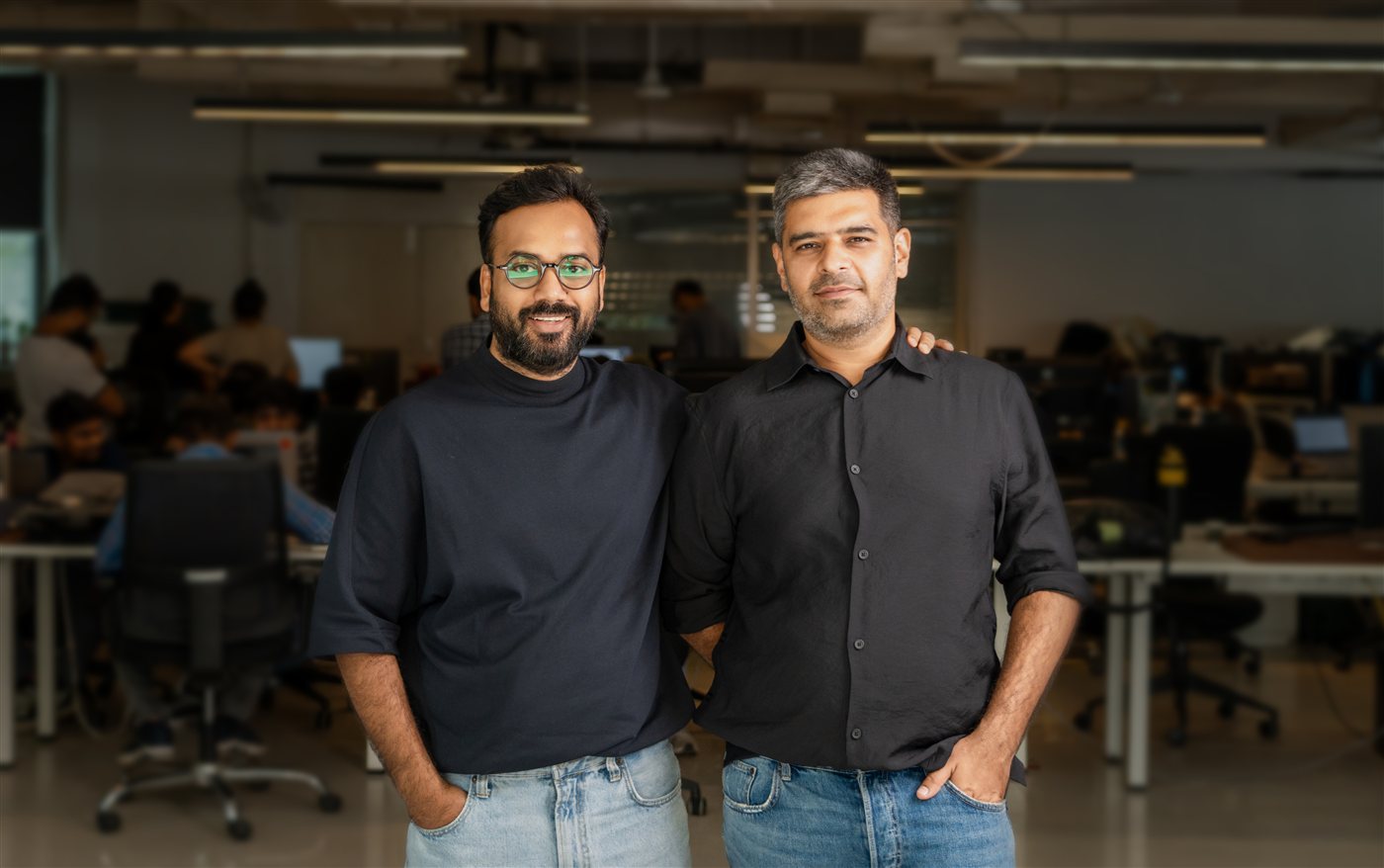
Pankaj Garg (left), Co-founder and CEO, and Saurav Adlakha, Co-founder and COO, DailyObjects · Image: DailyObjects (Series C announcement, October 2026)
Independent report content
| COMPANY | DailyObjects, Gurugram · founded 2012 by Pankaj Garg (Co-founder & CEO) and Saurav Adlakha (Co-founder & COO) |
|---|---|
| ROUND | Series C, ₹332 Cr (~US$34.3m), announced 8 Oct 2026 · mix of primary and secondary |
| LEADS | Xponentia Capital Partners, Anicut Capital, Axiom Asia Private Capital · existing: 360 ONE Asset, Trifecta Capital |
| VALUATION | ~₹1,050 Cr (~US$108m) |
| SECONDARY | Early investor Roots Ventures sold part of its stake at an 18x return and remains a shareholder |
| REVENUE | FY23 ₹63.2 Cr → FY24 ₹84.4 Cr → FY25 ~₹110 Cr → FY26 over ₹200 Cr (company) · target ₹400 Cr in FY27 |
| FOOTPRINT | ~350 retail touchpoints in 85+ cities (EBOs, Apple Premium Reseller outlets, airports) · plan for 150 EBOs over five years |
| THE ACCESS POINT DailyObjects is private. The Series C was taken by three institutional leads, with a secondary portion that let an early investor partly exit. Individuals can reach the company only through private secondary transactions or funds that hold it. Valuation reference: ~₹1,050 crore at the October 2026 round. |
|---|
Executive decision summary
| THE BOTTOM LINE | DailyObjects is one of the more capital-efficient consumer brands in India's D2C wave. It raised only about ₹100 crore of equity in its first decade, yet grew revenue from ₹63 crore in FY23 to over ₹200 crore in FY26, the company says. Its October 2026 Series C, ₹332 crore at about ₹1,050 crore, mixed new money for 150 exclusive brand outlets with a secondary sale in which early backer Roots Ventures took an 18x return on part of its stake. The brand started with phone cases and now sells tech, carry, workspace and lifestyle products through about 350 retail touchpoints, its website, marketplaces and quick commerce. The test is whether a store-led expansion can take it from near break-even to the ₹400 crore FY27 target profitably. |
|---|---|
| WHICH INVESTOR | DailyObjects fits you IF you want a fast-growing, capital-efficient Indian consumer brand at roughly 5x FY26 revenue, and you can hold private shares until a later round or listing. Wait IF you need audited FY26 profitability first. FY25 showed a ₹15.9 crore loss, and FY26 audited accounts had not been filed when the round was announced. |
| COMFORT FIT | DailyObjects = the Apple accessory aisle, designed in India. Design-led, priced above marketplace basics, sold where premium phones are sold. Its EBO plan = the Lenskart playbook. A digital brand building its own stores. Lenskart's founder Peyush Bansal is a DailyObjects investor. Marketplace accessory sellers = commodity cases. Cheaper and everywhere, but without the brand or the store network. Curefoods (Report 05) = a consumer company the IPO market priced on profit. The same lens will apply to DailyObjects later. |
| THE RUPEIA NUMBER | 18x. Roots Ventures first invested US$2 million in DailyObjects in February 2022, doubled down in the 2024 Series B, and sold part of its stake in the Series C at an 18x return while staying invested. In Indian D2C, where many 2021–22 investments are under water, a documented 18x partial exit is rare evidence of value created. |
1 CLAIM REGISTER: EVIDENCE GRADING
A = statutory filing. B = company announcement. C = independent press. D = third-party summary.
| Claim | Source | Grade | Rupeia assessment |
|---|---|---|---|
| ₹332 Cr Series C; co-led by Xponentia, Anicut, Axiom Asia; valuation ~₹1,050 Cr | Company announcement via Entrepreneur, Inc42 (8–9 Oct 2026) | B | Established |
| Roots Ventures partial exit at 18x | Company announcement; Inc42 | B | Established |
| FY23 ₹63.2 Cr and FY24 ₹84.4 Cr revenue | RoC statements via Entrackr | A | Established |
| FY25 revenue ~₹110 Cr; loss ~₹15.9 Cr | RoC statements via Entrackr and Inc42 | A | Established |
| FY26 revenue over ₹200 Cr | Company (audited accounts not yet filed) | B | Company-reported |
| FY27 target ₹400 Cr; ₹1,000 Cr ambition | CEO Pankaj Garg | B | Management target |
| ~350 retail touchpoints; 85+ cities | Company; Entrepreneur; StartupFox | B | Established |
| 360 ONE Asset and Trifecta Capital participated | Moneycontrol, via third-party summary | D | Reported |
2 COMPANY OVERVIEW & FOUNDERS
DailyObjects was founded in 2012 by Pankaj Garg and Saurav Adlakha in Gurugram. It began as an online store selling a range of smartphone and tablet accessories. It narrowed its focus to phone cases in 2014, then expanded into technology accessories, carry, workspace and lifestyle products. Its range now includes phone cases, watch bands, bags, wallets, laptop sleeves, wireless chargers and desk accessories. Its own description of its starting point is that "everyday deserves better design".
| Founder | Role | Published detail |
|---|---|---|
| Pankaj Garg | Co-founder & CEO | Leads strategy and fundraising; set the ₹1,000 crore long-term ambition |
| Saurav Adlakha | Co-founder & COO | Co-founder since 2012; runs operations |
Garg described the Series C as capital "to build a ₹1,000 Cr business over the coming years and, ultimately, a global design-led consumer brand from India". Garg said capital efficiency and profitable growth would stay central.
3 TIMELINE: 2012–2026
| Date | Milestone |
|---|---|
| 2012 | Founded by Pankaj Garg and Saurav Adlakha as an online store for smartphone and tablet accessories |
| 2014 | Narrowed focus to phone cases |
| 2012–2022 | Raised about ₹100 Cr of equity over its first decade; investors include Lenskart founder Peyush Bansal, Unilazer Ventures and redBus founder Phani Sama |
| Feb 2022 | Roots Ventures invests US$2m |
| FY23 | Revenue ₹63.2 Cr with a marginal profit (₹0.06 Cr) |
| 2023 | First offline experience store, DailyObjects "Playground", opens in Gurugram |
| FY24 | Revenue ₹84.4 Cr (+34%) |
| May 2024 | US$10m Series B led by 360 ONE Asset; Roots Ventures doubles down |
| FY25 | Revenue ~₹110 Cr; loss ~₹15.9 Cr; nine retail stores in Tier I cities |
| FY26 | Revenue over ₹200 Cr (company); close to break-even |
| 8 Oct 2026 | Series C: ₹332 Cr at ~₹1,050 Cr; Roots Ventures partially exits at 18x |
4 THE PRODUCT RANGE: FROM PHONE CASES TO A LIFESTYLE BRAND
DailyObjects' website organises its range into Tech (cases, charging solutions such as its Loop power bank), Bags & Wallets, Work Essentials (desk and workspace products), Gifting, Shop by Apple and seasonal Collections. It also runs a corporate gifting programme. The common thread is design: products in a consistent visual language, sold at prices above marketplace commodity accessories.
| Category | Examples | Why it matters |
|---|---|---|
| Tech accessories | Phone cases, watch bands, chargers, power banks | The original category; tied to premium smartphone ownership |
| Carry | Bags, backpacks, wallets, laptop sleeves | Higher ticket size; less dependent on phone-model cycles |
| Workspace | Desk organisers and accessories | Extends the brand into the home and office |
| Gifting and corporate | Curated gift sets; corporate gifting programme | Repeat B2B demand and bulk orders |
| Apple ecosystem | "Shop by Apple" range; presence in Apple Premium Reseller outlets | Puts the brand where premium buyers shop |
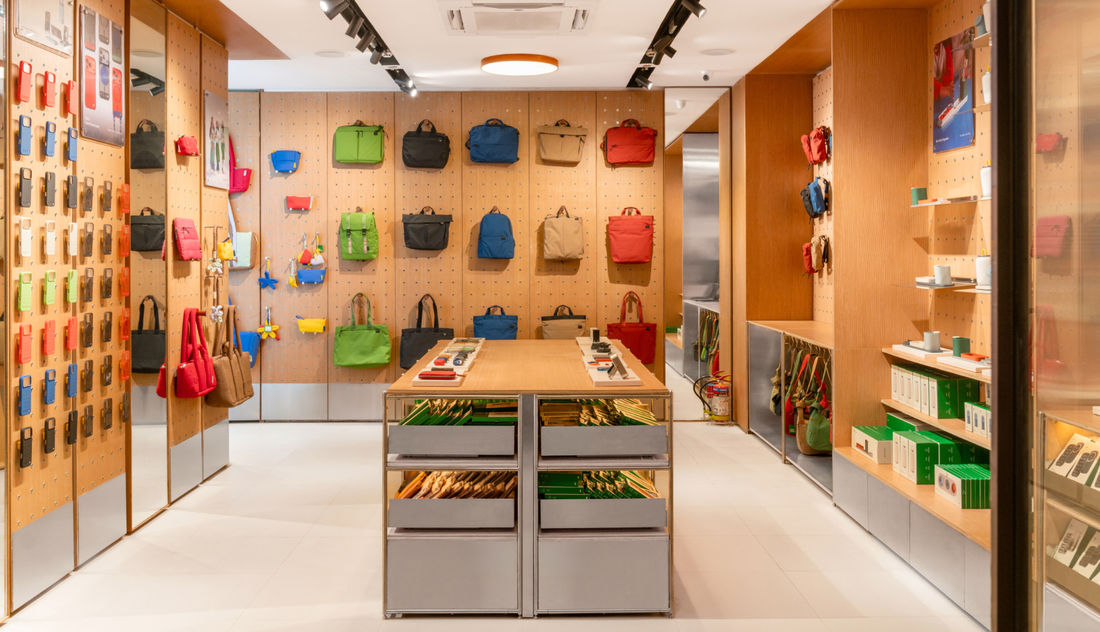
| RUPEIA READ Moving from phone cases into carry and workspace is the most important strategic change in DailyObjects' history. Phone cases depend on each new handset; bags and desk products do not. They also carry larger tickets, which makes stores economical. The store photographs show this: bags and lifestyle products take up as much wall space as cases. |
|---|
5 MAKING IT: BAGS, FACTORY AND SOURCING
DailyObjects moved into bags in FY21. When manufacturers would not take its small orders, it began making them in-house, starting with two tables. That grew into its own factory, which now employs around 600 people. Bags now make up about 40–45% of revenue and are manufactured entirely in India. The company says it works with 1,000+ Indian artisans and makers and builds locally with globally sourced materials. Whalesbook reported that about half of all products are made in India and the rest in China. The bag line, the largest category, is made in-house.
| Product milestone | Year | Published detail |
|---|---|---|
| Phone cases (focus category) | 2014 | Priced ₹800–1,200 at the time; focus for nearly five years |
| Bags (in-house manufacturing) | FY21 | Started with two tables; now ~600-person factory |
| Charging products | FY23 | Charging and STAC lines up nearly threefold since; NODE modular wireless charging system |
| Core range | 2026 | ~50 core SKUs (excluding colour and size variants) |
| RUPEIA READ In-house bag manufacturing is a quiet moat. It gives DailyObjects control over design, quality and lead times in its largest category, and it is the kind of operational depth marketplace sellers do not have. It also carries fixed costs that need volume, which the store expansion is meant to supply. |
|---|
6 RETAIL & CHANNELS: FROM ONLINE STORE TO ~350 TOUCHPOINTS
DailyObjects sells through its own website, online marketplaces, quick commerce and a growing physical footprint. The company says it has close to 350 retail touchpoints, including exclusive brand outlets (EBOs) and Apple Premium Reseller outlets, in more than 85 cities, including airports. It opened its first experience store, "Playground", in Gurugram in 2023, had nine own stores in Tier I cities by early 2026, and 18 exclusive brand outlets by October 2026, opening two to three a month.
DailyObjects exclusive brand outlet, DLF Summit Plaza, Gurugram · Image: DailyObjects store locator
DailyObjects "Playground" kiosk, Terminal 2, Kempegowda International Airport, Bengaluru · Image: DailyObjects store locator
| Channel | Role | Strategic value |
|---|---|---|
| Own website and app | Full range, direct customer data | Highest margin; brand control |
| Online marketplaces and quick commerce | Reach and convenience | Volume; commission costs |
| Apple Premium Reseller outlets | Sold next to premium phones | Puts the brand in front of high-intent buyers |
| Exclusive brand outlets (EBOs) | Full brand experience | The Series C growth engine: 150 planned over five years |
| Airport kiosks | High-footfall, premium travellers | Brand visibility |
| RUPEIA CALCULATION 150 EBOs over five years is about 30 new stores a year. DailyObjects had 18 EBOs in October 2026 and plans 30–35 openings in FY27. That is a large operational step-up: site selection, leases, staffing and inventory across many more cities. The ₹332 crore round, net of the secondary component, funds this. Store-level profitability will decide whether the expansion lifts or drags overall margins. |
|---|
7 CHANNEL MIX, CUSTOMERS AND STORE ECONOMICS (PUBLISHED)
| Measure | Published figure | Source and date |
|---|---|---|
| Sales through own channels | Nearly 70% | Inc42, Oct 2026 |
| Earlier split | >50% own website; ~30% marketplaces; 10–12% corporate gifting | Inc42, Mar 2026 |
| Quick commerce | Select SKUs on Blinkit; "unlikely to be a core channel" | Inc42, Mar 2026 |
| Average order value | ~₹2,600 (+10% YoY) | Inc42, Oct 2026 |
| Repeat customers | ~45% lifetime repeat rate; 52% of base are repeat buyers | Inc42, Oct and Mar 2026 |
| Sales from Tier II–IV cities | Tier III/IV 35–40%; Tier II 20–25% | Inc42, Oct 2026 |
| Exclusive brand outlets | 9 (Mar 2026) → 13 (Aug 2026) → 18 (Oct 2026) | Inc42; Whalesbook |
| Store profitability | Profitable from the first month; airport stores ~15% margins from month one | Founder, via Inc42 |
| Apple Premium Reseller presence | ~300 outlets | Inc42, Oct 2026 |
| US demand | ~1,000 orders a month without dedicated marketing | Inc42, Oct 2026 |
DailyObjects store, HSR Layout, Bengaluru · Image: DailyObjects store locator
| RUPEIA READ More than half of DailyObjects' sales already come from smaller cities. That is unusual for a premium accessory brand, and it explains the expansion list: Vizag, Patna, Ludhiana, Indore, Lucknow and Surat, where online demand already exists. Opening stores where online customers already are is a lower-risk retail strategy than opening in prestige locations and hoping for footfall. |
|---|
8 FINANCIAL FORENSICS
| ₹ crore | FY23 | FY24 | FY25 | FY26 | FY27 (target) |
|---|---|---|---|---|---|
| Revenue | 63.2 | 84.4 | ~110 | Over 200 (company) | 400 |
| Growth | — | +34% | +31% | ~+80–100% | ~+100% |
| Profit / (loss) | 0.06 | (3.9) first report; (10.1) later report | (15.9) | Close to break-even (company) | EBITDA profit targeted |
Two figures circulate for FY24's loss. Entrackr's first report put it at ₹3.92 crore. Later reports, including Entrackr's FY25 coverage and Inc42's financial database, cite about ₹10 crore. The later figure is consistent with the reported 58% rise in FY25's loss to ₹15.9 crore.
| RUPEIA READ Revenue roughly tripled from FY23 to FY26 (about 47% a year compounded), on about ₹100 crore of equity raised over a decade plus a US$10 million Series B. That capital efficiency is the core of the investment case. FY25 shows the cost of the pivot to stores: revenue grew 31% but the loss widened 58%. The company says FY26 was close to break-even, with EBITDA profit targeted in FY27. Audited FY26 numbers will confirm whether doubling revenue came with margin improvement. |
|---|
9 SIX YEARS OF GROWTH AND THE FY25 COST STRUCTURE
| Year | Revenue (₹ Cr) | Growth |
|---|---|---|
| FY21 | 24.1 | — |
| FY22 | 39.2 | +63% |
| FY23 | 63.2 | +61% |
| FY24 | 84.4 | +34% |
| FY25 | ~110 | +31% |
| FY26 (company) | Over 200 | ~+80–100% |
| FY25 cost line | ₹ Cr | % of revenue (Rupeia calculation) |
|---|---|---|
| Purchase of stock (procurement) | 51.5 | ~47% |
| Advertising and promotion | 26.0 | ~24% |
| Employee benefits | 17.3 | ~16% |
| Rent | 4.0 | ~4% |
| Total expenses | 124.5 | ~113% |
Entrackr reported an FY25 EBITDA margin of –10.6%, ROCE of –16.9%, cash of ₹8 crore and current assets of ₹87 crore at March 2025. DailyObjects then took ₹25 crore of venture debt from Trifecta Capital in 2026 before the Series C.
| RUPEIA READ Revenue grew more than eightfold from FY21 to FY26. The FY25 cost structure shows where margin can come from. Advertising at ~24% of revenue is high for a brand with 45–52% repeat customers, and stores that are profitable from the first month substitute for paid acquisition. Management's stated path to 15–20% operating margins over four to five years depends on exactly that shift: more owned channels and stores, less paid marketing, and a richer mix of bags and charging products. |
|---|
10 FUNDING HISTORY & INVESTOR FORENSICS
| Round | Date | Amount | Investors (published) |
|---|---|---|---|
| Early rounds | 2012–2021 | Part of ~₹100 Cr raised in the first decade (company); ₹9 Cr from Unilazer Ventures | Seedfund, Unilazer Ventures, Peyush Bansal (Lenskart), Phani Sama (redBus) |
| Growth | Feb 2022 | US$2m from Roots Ventures | Roots Ventures |
| Series B | May 2024 | US$10m | Led by 360 ONE Asset; Roots Ventures doubled down |
| Series C | Oct 2026 | ₹332 Cr (primary + secondary) | Xponentia Capital Partners, Anicut Capital, Axiom Asia Private Capital (co-leads); 360 ONE Asset and Trifecta Capital (existing) |
Founder-investor network: Lenskart's Peyush Bansal, Ronnie Screwvala's Unilazer and redBus's Phani Sama are operators who built consumer and retail businesses. Bansal's Lenskart is the leading Indian example of a digital brand scaling through its own stores, the model DailyObjects is now following.
Roots Ventures' 18x partial exit: first in at US$2 million in 2022, increased in 2024, and partly sold in 2026 at 18x on its initial investment while staying a shareholder.
New leads with different profiles: Xponentia Capital Partners (Indian private equity), Anicut Capital (Indian alternatives manager) and Axiom Asia Private Capital (Singapore-based private-capital investor).
Debt and wealth capital: 360 ONE Asset led the 2024 Series B, and Trifecta Capital provided ₹25 crore of venture debt in 2026; both are existing investors.
| RUPEIA READ A mixed primary-secondary round tells you two things. The company did not need all the money raised: part went to early investors, not the balance sheet. And new investors were willing to buy existing shares at the round price, which validates it. StartupFox's headline put it directly: "DailyObjects raised ₹332 crore, and some of it went straight out again". For an unlisted-share buyer, the secondary portion is the most useful price signal. Institutions bought existing shares at about ₹1,050 crore. |
|---|
11 THE TEAM BEHIND THE BRAND
The DailyObjects team ("People of DO") · Image: DailyObjects website, About Us
DailyObjects describes itself as a design-led company and is investing in in-house product design and R&D. The Series C explicitly funds deeper investment in product and technology, new ranges, design, materials and quality, alongside retail expansion and brand building.
12 STORE ECONOMICS: WHAT 150 EBOs COULD ADD
DailyObjects has not published per-store revenue. Rupeia illustrates what the 150-EBO plan could add at three assumed revenue levels per store. These are scenarios, not company figures.
| Assumed annual revenue per EBO | Revenue from 150 EBOs | As share of the ₹1,000 Cr ambition |
|---|---|---|
| ₹1 Cr | ₹150 Cr | 15% |
| ₹2 Cr | ₹300 Cr | 30% |
| ₹3 Cr | ₹450 Cr | 45% |
| RUPEIA CALCULATION Even at an optimistic ₹3 crore a store, 150 EBOs would supply less than half of the ₹1,000 crore ambition. Most growth still has to come from online, marketplaces, quick commerce, reseller outlets, gifting and international. Stores are a brand and margin lever, not the whole growth engine. LPs should look for store-level payback periods in the next round's materials. |
|---|
13 THE LENSKART PRECEDENT: HOW MARKETS PRICED A STORE-LED D2C BRAND
Lenskart, founded by DailyObjects investor Peyush Bansal, is the best-known Indian example of a digital brand scaling through its own stores. Its IPO (31 October – 4 November 2025) raised ₹7,278 crore at ₹402 a share. That valued the company at about ₹70,000 crore (~US$7.9 billion), roughly 10 times revenue and about 230 times core net profit. It was subscribed 28.26 times. The shares opened slightly below the issue price and closed the first day slightly above it.
| Measure | Lenskart (IPO, Nov 2025) | DailyObjects (Series C, Oct 2026) |
|---|---|---|
| Business model | Eyewear; omnichannel with large own-store network | Tech and lifestyle accessories; online-led, building EBOs |
| Valuation | ~₹70,000 Cr | ~₹1,050 Cr |
| Revenue multiple | ~10x | ~5x FY26 (company figure) |
| Profitability at the time | Profitable (core net profit) | Close to break-even (company) |
| RUPEIA READ Lenskart shows that Indian public markets will pay about 10 times revenue for a store-led consumer brand with scale and profits. DailyObjects at about 5 times FY26 revenue is priced at half that multiple, with a fraction of the scale and only just reaching break-even. If DailyObjects executes its store plan and reaches profitable scale, there is room for its multiple to expand towards listed precedents. That is the long-term case for buying at today's price. |
|---|
14 VALUATION ANALYSIS
| Basis | Revenue | Rupeia calculation (₹1,050 Cr valuation) |
|---|---|---|
| FY25 (audited) | ~₹110 Cr | ~9.5x revenue |
| FY26 (company) | Over ₹200 Cr | ~5.2x revenue or less |
| FY27 (target) | ₹400 Cr | ~2.6x revenue |
| Long-term ambition | ₹1,000 Cr | ~1x revenue |
For comparison, Curefoods (Report 05) sought about 4.4x FY26 revenue for its IPO with a ₹192 crore net loss, and institutions declined. DailyObjects was priced at a similar multiple of FY26 revenue, but with much faster growth and, the company says, close to break-even.
| RUPEIA READ At about 5x FY26 revenue, DailyObjects' round is fairly priced for a brand doubling revenue near break-even. If the FY27 target of ₹400 crore is met, the same valuation is only 2.6x forward revenue. That gives early buyers room for upside if the store roll-out works. The risk is that FY26's doubling, not yet audited, included one-off channel gains that do not repeat. |
|---|
15 WHO THE NEW INVESTORS ARE
| Investor | Type | Role in the round |
|---|---|---|
| Xponentia Capital Partners | Indian private-equity firm | Co-lead |
| Anicut Capital | Indian alternative investment manager (equity and credit) | Co-lead |
| Axiom Asia Private Capital | Singapore-based private-equity investor (fund-of-funds and direct co-investments) | Co-lead |
| 360 ONE Asset | Indian wealth and asset manager | Existing investor (reported participation) |
| Trifecta Capital | Indian venture-debt and growth investor | Existing investor (reported participation) |
The co-leads are growth and private-equity investors rather than early-stage VCs. That shifts DailyObjects' shareholder base towards investors who expect profitable growth and an exit within a typical private-equity horizon of four to six years. It is consistent with the CEO's emphasis on capital efficiency and profitable growth.
16 MARKET CONTEXT: PREMIUM PHONES DRIVE PREMIUM ACCESSORIES
| Indicator (2025) | Figure | Source |
|---|---|---|
| India smartphone shipments | ~152m units, broadly flat | IDC |
| Market value growth | +8% | Counterpoint |
| Premium (above ₹30,000) share of units | 22%; segment volume +11% | Counterpoint |
| Apple shipments in India | Record ~14m units (+16%) | IDC |
| Apple share of market value | 28% (its highest) | Counterpoint |
| RUPEIA READ India's phone market is not growing in units, but it is growing in value as buyers trade up. DailyObjects sells exactly where that trade-up happens: premium cases, chargers and bags, sold through about 300 Apple Premium Reseller outlets. A flat-volume, rising-value phone market favours premium accessory brands over cheap marketplace sellers. |
|---|
17 COMPETITIVE LANDSCAPE
| Competitor type | Their edge | DailyObjects' answer |
|---|---|---|
| Marketplace accessory sellers | Very low prices; wide availability | Design, materials, brand and store experience |
| Phone makers' own accessories | Brand trust; bundled at purchase | Wider design range; presence in Apple Premium Reseller stores |
| Global lifestyle-accessory brands | International brand equity | Indian pricing and distribution; local design |
| Other Indian D2C brands | Similar online playbooks | Store network and capital efficiency |
18 PEER BENCHMARKS: MOKOBARA AND BOAT
Two D2C brands with published FY25 accounts frame DailyObjects' position. Mokobara, the luggage and travel-accessories brand, is the closest comparable for DailyObjects' bag business. boAt (Imagine Marketing), the audio and wearables brand, is the scale benchmark for Indian consumer-tech accessories.
| FY25 | DailyObjects | Mokobara | boAt |
|---|---|---|---|
| Revenue | ~₹110 Cr | ₹230 Cr (+97%) | ~₹3,098 Cr (flat) |
| Net result | Loss ₹16 Cr | Loss ₹10 Cr | Profit ~₹60 Cr |
| Net margin (Rupeia calculation) | ~–15% | ~–4% | ~+2% |
| Main categories | Phone cases, bags, charging, desk | Luggage, bags, travel accessories | Audio ₹2,586 Cr; wearables ₹330 Cr (–40%) |
| Cash at year-end | ₹8 Cr | ₹72.5 Cr | Not in the coverage cited |
| Capital-markets status | Series C (Oct 2026) | Private | Filed for an IPO in 2025 |
| RUPEIA READ Mokobara shows what DailyObjects' bag business could become: a D2C bag brand that doubled to ₹230 crore in one year with losses small relative to revenue. boAt shows both the prize and the ceiling. India's largest D2C accessories brand reached about ₹3,000 crore of revenue and then stopped growing, with wearables sales down 40% in FY25. DailyObjects' FY26 revenue of over ₹200 crore would put it near Mokobara's FY25 scale, but at a much weaker margin. Closing that gap is what the Series C money and the store roll-out are for. |
|---|
19 RISK ANALYSIS: RED FLAG LEDGER & KILL CONDITIONS
| Red flag | Evidence | Severity | Kill condition | What would resolve it |
|---|---|---|---|---|
| Store roll-out execution | 18 EBOs (Oct 2026) → 150–160 planned | MEDIUM | New stores lose money beyond year two | Store-level economics disclosed; steady FY27 margins |
| Profitability | FY25 loss ₹15.9 Cr; FY26 audited numbers pending | MEDIUM | Audited FY26 shows a large loss | Audited break-even or better |
| Category concentration | Phone accessories tied to device cycles | LOW-MED | Phone design changes reduce accessory demand | Carry, workspace and lifestyle growth |
| Channel dependence | Apple Premium Reseller and marketplace reliance | LOW-MED | Loss of key reseller placement | EBO and own-site growth |
| Growth expectations | Target ₹400 Cr in FY27 (~2x) | LOW-MED | Growth halves | Quarterly revenue disclosure in next round |
20 SCENARIO ANALYSIS: FY27 AND BEYOND
| Scenario | What happens | Implication |
|---|---|---|
| Bull | FY27 revenue reaches ₹400 Cr with EBITDA profit; 30+ EBOs open; international pilot starts | Next round or pre-IPO at a higher valuation; ₹1,000 Cr ambition credible |
| Base | FY27 revenue ₹300–350 Cr; break-even; slower store roll-out | Valuation held; IPO later in the decade |
| Bear | Store economics disappoint; losses return; growth slows | Flat or down round; store plan scaled back |
21 WHAT AN UNLISTED-SHARE BUYER SHOULD KNOW
Reference price: the October 2026 round valued DailyObjects at about ₹1,050 crore, and institutions bought existing shares (the secondary portion) at that level. Any secondary offer should be compared with it.
Information: audited FY26 accounts were not yet filed when the round was announced. The company-reported figure (over ₹200 crore revenue, close to break-even) is the latest available.
Liquidity: there is no listing timetable. Exits come from later private rounds, secondary sales or an eventual IPO, after which pre-IPO shares are typically locked in for six months.
Transfers: private-company shares usually carry transfer restrictions in the articles of association, such as rights of first refusal. Transfers settle into demat through the company's registrar.
Upside path: if revenue reaches the ₹400 crore FY27 target at today's valuation, the implied multiple falls to about 2.6x. That is the margin of safety for a buyer at the round price.
22 INVESTOR CLASS ANALYSIS
For HNIs
Shares are available only through private secondaries. The October 2026 round set an institutional reference price at about ₹1,050 crore. Buyers should avoid paying a premium to that price before audited FY26 numbers are filed.
For family offices
DailyObjects suits family offices building a consumer-brand portfolio. A co-investment in a future round, or a secondary from early holders, is the usual entry. The store-led strategy makes it less dependent on digital ad costs than pure online brands.
For institutions
Growth-PE and alternatives managers (as with Xponentia, Anicut and Axiom Asia) are the natural next investors. A pre-IPO round becomes likely once revenue passes ₹400 crore with profit.
For NRIs
NRIs can buy unlisted Indian shares subject to FEMA pricing and reporting rules.
23 COMFORT FIT: THE DECISION PAGE
| If you want… | Best fit | Why | Caution |
|---|---|---|---|
| A capital-efficient, fast-growing Indian consumer brand | DAILYOBJECTS | ~3x revenue in three years on ~₹100 Cr equity; ~5x FY26 revenue | Audited FY26 pending |
| A store-led consumer model already listed | Listed Indian retail and D2C companies | Liquidity and audited track record | Higher valuations |
| A consumer turnaround | CUREFOODS (Report 05) | Improving operations at a reset price | Cash-constrained |
24 THE EARLY SIGNAL: EVENTS TO WATCH
| When | Event | Why it matters |
|---|---|---|
| Late 2026 | Audited FY26 accounts filed | Confirms ₹200 Cr+ revenue and break-even claim |
| FY27 | EBO openings (pace towards ~30 a year) | Execution of the Series C plan |
| FY27 | EBITDA profitability | Management target |
| FY27–28 | International market entry | Optionality beyond India |
25 RUPEIA FINAL INDEPENDENT VIEW
DailyObjects is a rare Indian D2C story with both growth and capital efficiency. It tripled revenue in three years on modest equity, near break-even by the company's account, and gave an early investor an 18x partial exit at a round priced at about 5x FY26 revenue. The Series C funds a bold shift to 150 exclusive stores, following the playbook of its investor Peyush Bansal's Lenskart.
Two things will decide the next valuation. The audited FY26 numbers must confirm the reported doubling. And the new stores must make money at the store level before they make up a large share of revenue.
| THE RUPEIA NUMBER 18x: the return Roots Ventures realised on part of its DailyObjects stake in the Series C, while staying invested. |
|---|
| RUPEIA VERDICT A well-run, fairly priced growth brand. For secondary buyers, the round price (~₹1,050 crore) is the anchor; avoid premiums until audited FY26 accounts are filed. For long-term investors, the EBO roll-out in FY27 is the key execution test. |
|---|
Frequently asked questions
How much did DailyObjects raise in its Series C?
₹332 crore (about US$34.3 million), announced on 8 October 2026, through a mix of primary and secondary transactions.
What is DailyObjects' valuation?
About ₹1,050 crore (about US$108 million) at the Series C.
Who invested in DailyObjects' Series C?
Xponentia Capital Partners, Anicut Capital and Axiom Asia Private Capital co-led. Existing investors 360 ONE Asset and Trifecta Capital were reported to participate.
What return did Roots Ventures make?
Roots Ventures partially exited at an 18x return on its initial investment and remains a shareholder.
What is DailyObjects' revenue?
₹63.2 crore in FY23, ₹84.4 crore in FY24, about ₹110 crore in FY25, and over ₹200 crore in FY26 according to the company. It targets ₹400 crore in FY27.
Who founded DailyObjects?
Pankaj Garg (Co-founder & CEO) and Saurav Adlakha (Co-founder & COO), in 2012 in Gurugram.
How many stores does DailyObjects have?
About 350 retail touchpoints in 85+ cities, including EBOs, Apple Premium Reseller outlets and airport kiosks. It plans 150 EBOs over five years.
Who are DailyObjects' closest peers?
Mokobara, a D2C luggage and bags brand, reported FY25 revenue of ₹230 crore and a ₹10 crore loss. boAt, the audio and wearables brand, reported about ₹3,098 crore of FY25 revenue and a return to profit. DailyObjects reported about ₹110 crore of FY25 revenue and a ₹16 crore loss.
Source log
Entrepreneur India: DailyObjects raises ₹332 Cr in Series C round
Inc42: D2C lifestyle brand DailyObjects raises ₹332 Cr to expand offline presence
Entrackr: DailyObjects raises ₹332 Cr in Series C round
Entrackr: DailyObjects' revenue spikes 34% to ₹84 Cr in FY24
Entrackr: DailyObjects posts ₹110 Cr revenue in FY25
Inc42: DailyObjects eyes doubling FY26 revenue to ₹230 Cr
Inc42: How DailyObjects is charging up to the ₹400 Cr revenue mark
Whalesbook: DailyObjects targets ₹400 Cr revenue by FY27, plans 150 stores
StartupFox: DailyObjects company profile
Bhavya Sharma & Associates: DailyObjects raises ₹332 crore (round summary)
DailyObjects: About us (team photo)
DailyObjects: Store locator (store photos)
DailyObjects: homepage (product categories, corporate gifting)
Chittorgarh: Lenskart Solutions IPO details
TechCrunch: Lenskart recovers from tepid open to close first day slightly above IPO price
Treelife: Lenskart IPO, the hype vs the reality
Wikipedia: Axiom Asia
Inc42: DailyObjects eyes doubling FY26 revenue (channel mix, stores, costs)
IDC: India smartphone market flat at 152 million units in 2025
Counterpoint via Fonearena: India smartphone market 2025
GSMArena: 1 in 5 smartphones shipped in India in 2025 were premium (Counterpoint)
Entrackr: Mokobara revenue doubles to ₹230 Cr in FY25
Storyboard18: boAt returns to profit in FY25, revenue tops ₹3,000 crore
Entrackr: boAt makes turnaround in FY25 with ₹60 Cr profit
| DISCLAIMER This document is published strictly for informational, educational and academic record-keeping purposes. The publisher is not a SEBI Registered Investment Adviser (RIA) or Research Analyst (RA). It does not constitute personal investment advice, a financial recommendation, or an offer or solicitation to buy, sell or subscribe to any securities. Investments in the securities market are subject to market risks. Read all related documents carefully before investing. |
|---|