Pixxel: US$100m Series C
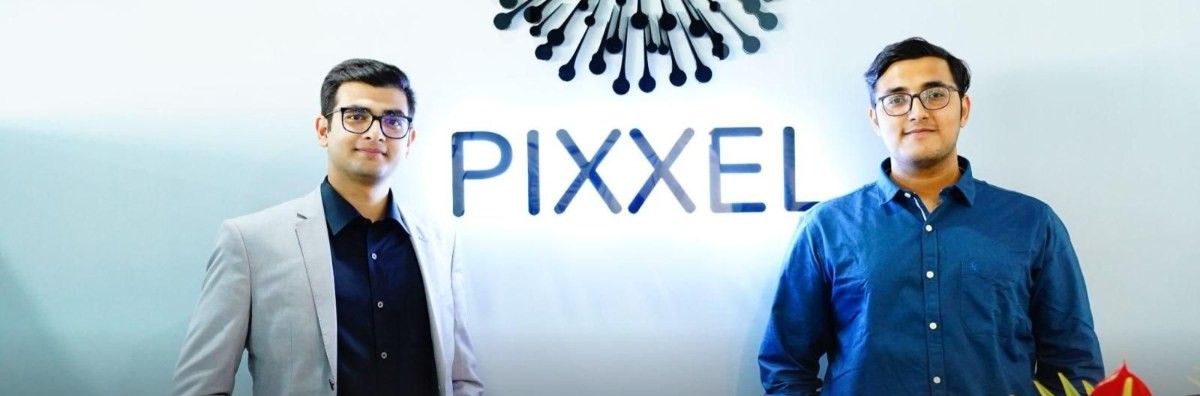
Pixxel co-founders Awais Ahmed and Kshitij Khandelwal · Image: YourStory
Independent report content
| ROUND | Series C · US$100m · announced 7 Sep 2026 · India's largest spacetech round to date |
|---|---|
| LEADS | Temasek and Seraphim Space (co-leads) |
| CO-INVESTORS | New: 360 ONE Asset, IMM Investment (Korea) · Returning: Radical Ventures, growX ventures, M&G Catalyst |
| TOTAL RAISED | US$195m across seed, Series A, B, B-extension and C |
| VALUATION | Company has not stated it; media reports place it at US$450–500m |
| INDIA ENTITY REVENUE | FY25 ₹39.3 Cr (FY24 ₹30.6 Cr); net loss ₹30.8 Cr · much revenue booked in US, Europe, Middle East, SE Asia and Australia subsidiaries |
| ASSETS IN ORBIT | Six Firefly hyperspectral satellites: 5 m resolution, 135+ bands, 24-hour revisit |
| CONTRACTS | US NRO (2023, 2026) · NASA CSDA (2024) · India MoD iDEX (2023–25) · IN-SPACe national EO constellation (2026) |
| COMPANY | Founded 27 Feb 2019 by Awais Ahmed (CEO) and Kshitij Khandelwal (CTO) · 280+ employees |
| THE ACCESS POINT Pixxel is a private company. The Series C was taken by institutions (Temasek, Seraphim, 360 ONE Asset, IMM Investment). Individual investors can only reach Pixxel through private secondary transactions in its shares, or through funds that hold it. Seraphim Space Investment Trust, listed in London, disclosed a US$25 million follow-on investment in Pixxel in August 2026. |
|---|
Executive decision summary
| THE BOTTOM LINE | Pixxel sells hyperspectral data from its own satellites in orbit to the US intelligence community and NASA. Six Firefly satellites have been imaging since 2025. They produce what Pixxel calls the world's highest-resolution commercial hyperspectral imagery: 5 metres per pixel across 135+ colour bands. The US$100 million Series C funds the next leap. Honeybee adds short-wave infrared (SWIR) for minerals and gas detection, alongside radar and very-high-resolution optical sensors. Pixxel's Indian accounts show only ₹39 crore of revenue, but most of its sales are booked outside India. Its customers include the US National Reconnaissance Office (NRO), NASA, India's Ministry of Defence and IN-SPACe. The open questions are whether Honeybee launches on its 2027 schedule, and whether Pixxel can compete with Planet and Wyvern as it moves from one sensor type to several. |
|---|---|
| WHICH INVESTOR | Pixxel fits you IF you want exposure to Indian space technology through a company already selling to governments in two countries, are comfortable with private-company illiquidity, and can access a secondary transaction or a fund that holds it. Look elsewhere IF you need near-term profitability (losses are still widening) or listed liquidity. Seraphim Space Investment Trust (London) is a listed vehicle with disclosed Pixxel exposure. |
| COMFORT FIT | Pixxel = an MRI scanner in orbit. Where ordinary satellites take photographs, it reads the chemistry of what is on the ground. It is already installed in leading hospitals (NRO, NASA); the next model adds new scan modes (SWIR, radar). Skyroot Aerospace = the ambulance. It gets payloads to orbit. It is scarce and strategic, and was valued at twice Pixxel's reported range on less capital (see Report 04). SatSure = the diagnostics lab. It turns satellite data into lending and agriculture decisions, and is Pixxel's partner in the national constellation (see Rupeia's SatSure IC Note). Planet Labs = the hospital chain. Listed, global, with hundreds of satellites. It is now adding its own hyperspectral scanner (Tanager), the competitor Pixxel has to beat. |
| THE RUPEIA NUMBER | 1 of 8. In September 2024, NASA picked eight companies for the US$476 million on-ramp of its Commercial SmallSat Data Acquisition programme: BlackSky, ICEYE US, MDA, Pixxel, Planet, Satellogic, Teledyne Brown Engineering and Tomorrow.io. Pixxel was the only Indian company, and Inc42 reported it was the first Indian startup NASA had selected. It sits on a list that includes listed companies such as Planet, BlackSky, MDA and Satellogic. That qualification, more than any revenue figure, explains why Temasek co-led a US$100 million round. |
1 CLAIM REGISTER: EVIDENCE GRADING
Every material claim in this note is graded by the strength of its published source. A = government, regulator or customer record. B = statutory filing or financial statement. C = independent press. D = company announcement.
| Claim | Source | Grade | Rupeia assessment |
|---|---|---|---|
| US$100m Series C co-led by Temasek and Seraphim; total raised US$195m | Pixxel release (7 Sep 2026); Business Standard; Deccan Herald | C | Established. Seraphim also disclosed a US$25m follow-on in an Aug 2026 filing. |
| Six Firefly satellites in orbit | eoPortal launch records; SpaceX Transporter-12 (Jan 2025) and NAOS (Aug 2025) missions | A | Established. Phase I complete. |
| World's highest-resolution commercial hyperspectral constellation (5 m) | Pixxel; eoPortal specs | D | Company claim. Wyvern's Dragonettes image at 5.3 m, so the lead is narrow. |
| Selected for NASA CSDA (US$476m programme) | Via Satellite; NASA award list | A | Established. One of eight vendors; the US$476m is the programme ceiling across all vendors. |
| US NRO contracts (2023 and 2026) | Pixxel releases; ANI/Tribune (May 2026) | C | Established. Values not published. |
| Selected to lead India's 12-satellite national EO constellation | Pixxel release (21 Jan 2026); SatSure release; IN-SPACe | A | Established. Consortium to invest ₹1,200 Cr+ over five years. |
| India entity FY25 revenue ₹39.3 Cr; net loss ₹30.8 Cr | Financial statements via Inc42 | B | Established. |
| Most revenue is booked in overseas subsidiaries | CEO Awais Ahmed to Inc42 | D | Company statement; consistent with US government contracts. |
| Valuation US$450–500m | Media reports | C | Reported, not company-confirmed. |
| First Honeybee satellite in 2027 | Series C release | D | Forward schedule. Inc42 separately reports a Honeybee Zero technology demonstrator slated for 2026. |
2 COMPANY OVERVIEW & FOUNDING STORY
Pixxel was founded on 27 February 2019 by Awais Ahmed and Kshitij Khandelwal, then students at BITS Pilani. Ahmed grew up in Chikkamagaluru, Karnataka. At BITS Ahmed joined Team Anant, the student nanosatellite team in ISRO's student satellite programme. Ahmed was a founding member and engineering lead of Hyperloop India, the only Indian team to reach the finals of SpaceX's Hyperloop Pod Competition in 2017. In 2019 Pixxel was the only Asian space startup selected for the Techstars Starburst Space Accelerator in Los Angeles.
Its mission is to "build a health monitor for the planet". The company designs its own onboard computer, software, structural systems and hyperspectral camera, and buys standard parts such as sensors and actuators. It operates from Bengaluru and the Los Angeles area (El Segundo, California), has subsidiaries across several regions, and employs more than 280 people. In October 2026 it set up Pixxel Federal to expand its US government operations.
What hyperspectral imaging is, and why it matters
A normal satellite camera records three colour bands (red, green, blue). Pixxel's Fireflies record 135+ narrow bands, and Honeybee will record about 250. Every material reflects light in its own pattern across those bands, so each pixel becomes a chemical fingerprint. That lets customers detect crop disease and soil nutrients, oil and gas leaks, minerals such as lithium and cobalt, water quality and camouflaged objects. Ahmed compares it to an X-ray for the planet.
3 TIMELINE: 2019–2026
| Date | Milestone |
|---|---|
| 27 Feb 2019 | Pixxel founded; selected for Techstars Starburst Space Accelerator (Los Angeles) |
| 19 Aug 2020 | Seed round (~US$8m): Lightspeed India Partners, Blume Ventures, growX ventures, Techstars, Omnivore |
| Jan 2021 | First office, Indiranagar, Bengaluru |
| 28 Mar 2022 | Series A (US$25–27m) led by Radical Ventures, with In-Q-Tel, Seraphim Space, Sparta, Lightspeed and Blume |
| 1 Apr 2022 | Shakuntala (TD-2) launched on SpaceX Transporter-4: 6U CubeSat, ~10 m, ~151 bands |
| Aug 2022 | Accenture invests; DataFarming partnership for Australian agriculture |
| 26 Nov 2022 | Anand (TD-1) launched on ISRO's PSLV-C54: ~30 m, ~159 bands |
| 27 Feb 2023 | First-light imagery released; Aurora analytics platform announced |
| Mar 2023 | Five-year contract from the US National Reconnaissance Office (NRO) |
| 1 Jun 2023 | Series B (US$36m) with Google and existing investors |
| Jun–Jul 2023 | MoU with MNCFC (Ministry of Agriculture); iDEX Prime (Space) grant for Indian Air Force miniaturised satellites |
| Jan 2024 | MegaPixxel satellite manufacturing facility opens in Bengaluru (30,000+ sq ft); William McCombe appointed CFO |
| Feb 2024 | DIU–iDEX Maritime ISR Challenge first prize at the INDUS-X summit (oil-spill detection) |
| 5 Aug 2024 | Aurora public launch |
| 9 Sep 2024 | Selected for NASA's US$476m CSDA programme |
| 9 Dec 2024 | Series B extension (US$24m): M&G Catalyst, Glade Brook; Series B total US$60m |
| Jan 2025 | Fireflies 1–3 launched on SpaceX Transporter-12; MoU with SI Imaging Services (Korea) |
| 18 Mar 2025 | Firefly first light |
| Jun 2025 | iDEX SPARK grant for MWIR and hyperspectral payloads for Air Force satellites |
| 26–27 Aug 2025 | Fireflies 4–6 launched on SpaceX's NAOS mission, completing Phase I |
| 21 Jan 2026 | Pixxel-led consortium signs IN-SPACe agreement for India's national EO constellation |
| Mar–May 2026 | Satellite bus for Cosmoserve's debris-removal demo; NSIL partnership; orbital data-centre demo with Sarvam AI; new NRO contract |
| Jul 2026 | MoU with Tamil Nadu Agricultural University |
| 7 Sep 2026 | Series C, US$100m, co-led by Temasek and Seraphim |
| 29 Oct 2026 | Pixxel Federal established for US government operations |
4 CORE TECHNOLOGY: FROM DEMO SATELLITES TO HONEYBEE
| Satellite | Launched | Mass | Resolution | Spectral bands | Role |
|---|---|---|---|---|---|
| Shakuntala (TD-2) | 1 Apr 2022, SpaceX Falcon 9 | <15 kg (6U CubeSat) | ~10 m | ~151 (VNIR) | Technology demonstrator |
| Anand (TD-1) | 26 Nov 2022, ISRO PSLV-C54 | ~15–16.5 kg | ~30 m | ~159 (VNIR) | Technology demonstrator |
| Firefly 1–6 | Jan and Aug 2025, SpaceX Falcon 9 | ~50–60 kg | 5 m | 135+ (470–850 nm, VNIR) | Commercial constellation; ~40 km swath; 24-hour revisit; ~550 km sun-synchronous orbit |
| Honeybee | First satellite expected 2027 | ~60 kg | 5 m | ~250 (470–2,500 nm, VNIR + SWIR) | Next-generation constellation; 40 km VNIR swath, 10 km SWIR swath |
Why SWIR matters. Firefly sees visible and near-infrared light. Honeybee adds short-wave infrared, where minerals, hydrocarbons and methane show their strongest signatures. That opens mining exploration and gas-leak detection, which are among the highest-value commercial hyperspectral markets. It is also where Planet's Tanager competes.
Manufacturing and software
MegaPixxel (opened January 2024, Bengaluru): a 30,000+ sq ft facility for satellite assembly, integration and testing. The Series C funds expanded manufacturing in both India and the US.
Aurora / Earth Observation Studio (public launch August 2024): software that combines imagery with AI models, so users can ask questions of satellite data in plain English.
Satellite buses and missions for others: Pixxel is supplying the satellite bus for Cosmoserve's debris-removal demonstration (March 2026) and building India's first orbital data-centre demonstrator with Sarvam AI (May 2026).
| RUPEIA READ Pixxel has moved from a single-satellite startup to a vertically integrated space company in four years. It now designs, builds, launches, operates and sells analytics, and builds satellites for others. That breadth explains the Series C size. It also means capital needs will stay high, since each new sensor (SWIR, SAR, very-high-resolution optical) is effectively a new product line. |
|---|
5 SCHEDULE CREDIBILITY: PLANNED VS ACTUAL
Space companies are judged on whether satellites fly when promised. Pixxel's published plans and actual launches show how to read its Honeybee schedule.
| Plan (as published) | Source of plan | What actually happened |
|---|---|---|
| Constellation of 20–24 satellites in 2024–25 | eoPortal mission description | 6 commercial satellites in orbit by Aug 2025 |
| Six Fireflies in 2025, then 18 more by 2026 | Earlier company plans (Wikipedia) | Six Fireflies in 2025; next generation (Honeybee) now targeted for 2027 |
| Fireflies 4–6 "before mid-2025" | Pixxel first-light release, Mar 2025 | Launched 26–27 Aug 2025, about two months late |
| Four launches attempted, 2022–2025 | Launch records | All four successful (2 demo satellites, 2 Firefly batches) |
| RUPEIA READ Pixxel's satellites have worked every time they have flown: four launches, four successes. Its schedules have slipped and its constellation has stayed smaller than early plans, which is common for rideshare-dependent smallsat companies. LPs and shareholders should read "first Honeybee in 2027" as a target with typical smallsat slippage of a few months, and track the Honeybee Zero demonstrator as the leading indicator. |
|---|
6 FUNDING HISTORY & INVESTOR BEHAVIOUR FORENSICS
| Round | Date | Amount | Investors (published) |
|---|---|---|---|
| Pre-seed | Jul 2019 | ~US$0.7m | — |
| Seed | Aug 2020 | ~US$8m (incl. extensions) | Lightspeed India Partners, Blume Ventures, growX ventures, Techstars, Omnivore |
| Series A | Mar 2022 | US$25–27m | Radical Ventures (lead), In-Q-Tel, Seraphim Space, Sparta LLC, Lightspeed, Blume, Relativity Space representative |
| Strategic | Aug 2022 | Not stated | Accenture |
| Series B | Jun 2023 | US$36m | Google, with existing investors |
| Series B extension | Dec 2024 | US$24m | M&G Catalyst, Glade Brook Capital Partners |
| Series C | Sep 2026 | US$100m | Temasek and Seraphim (co-leads); 360 ONE Asset, IMM Investment (new); Radical Ventures, growX, M&G Catalyst (returning) |
| Total | ~US$195m |
What the investor pattern shows
Seraphim: in at Series A, followed on, co-led Series C. The London-listed space specialist disclosed a US$25m follow-on in an August 2026 regulatory filing, a month before co-leading the round. A specialist investor raising its exposure at a higher price is the strongest insider signal in the round.
In-Q-Tel (2022) to NRO (2023). In-Q-Tel, the US intelligence community's strategic investor, joined the Series A. A year later the NRO awarded Pixxel a five-year contract. A strategic investor first, then a government contract, is the classic path into the US defence and intelligence market.
Radical Ventures led the Series A and returned for the C. Two rounds of conviction from the original lead.
Korea alignment: a January 2025 MoU with SI Imaging Services (a Satrec Initiative subsidiary) to sell Pixxel data in South Korea was followed by IMM Investment, a Korean investor, joining the Series C.
Indian wealth capital: 360 ONE Asset's entry gives Pixxel an Indian institutional shareholder ahead of any future Indian listing.
Not named in the Series C release: Lightspeed, Blume and Google, all earlier backers, were not listed among Series C participants (the release says "and others").
| RUPEIA READ Pixxel's capital stack is unusually strategic for an Indian startup. A US intelligence investor (In-Q-Tel), a global technology company (Google), a consulting distributor (Accenture), a listed space fund (Seraphim) and a sovereign investor (Temasek) all backed it at different stages. Each opened a different door: US government, cloud distribution, enterprise sales, space-sector credibility and growth capital. |
|---|
7 WHAT EACH SERIES C INVESTOR BRINGS
| Investor | Type and home | Role | What it adds for Pixxel |
|---|---|---|---|
| Temasek | Singapore state investment company | Co-lead (new) | Long-horizon growth capital; global network; a sovereign signal for future government customers |
| Seraphim Space | UK space-specialist investor (listed trust) | Co-lead (returning since Series A) | Sector expertise; deepest space-investor network; disclosed US$25m follow-on |
| 360 ONE Asset | Indian wealth and asset manager | New | Indian institutional shareholder; route to Indian capital ahead of any listing |
| IMM Investment | South Korean private-equity and VC firm | New | Korean market link, alongside the SI Imaging Services distribution MoU |
| Radical Ventures | Canadian AI-focused VC | Returning (Series A lead) | AI and analytics expertise for Aurora and onboard processing |
| M&G Catalyst | UK impact and growth investor | Returning (Series B extension) | Climate and sustainability investor base |
| growX ventures | Indian early-stage VC | Returning (since seed) | Continuity from the earliest round |
8 FINANCIAL FORENSICS: WHAT THE INDIAN ACCOUNTS SHOW
| India entity (₹ Cr) | FY23 | FY24 | FY25 |
|---|---|---|---|
| Operating revenue | 15.3 | 28.7 | — |
| Total revenue (incl. other income) | — | 30.6 | 39.3 |
| Total expenses | 26.5 | 51.0 | — |
| Net loss | ~10.2 | 20.4 | 30.8 |
| Employee costs as % of expenses | 47% | 51% | — |
Operating revenue grew 87% in FY24 to ₹28.7 crore. Reported revenue grew 28% in FY25 to ₹39.3 crore. Losses rose faster: from about ₹10 crore in FY23 to ₹30.8 crore in FY25. Employee costs were about half of all expenses in FY24. During FY24 the India entity raised ₹185.4 crore (~US$21.9m) through a rights issue to its existing shareholders.
Why the Indian numbers understate the business. Ahmed told Inc42 that much of Pixxel's revenue is booked through subsidiaries in the US, Europe, the Middle East, Southeast Asia and Australia, and that FY26 revenue expanded significantly. Its largest published customers (NRO, NASA) are US government agencies, contracted through its US operations, now organised as Pixxel Federal.
| RUPEIA CALCULATION Pixxel has raised about US$195 million. The India entity's FY25 revenue of ₹39.3 crore is roughly US$4.6 million. If India were the whole business, that would be 40+ times revenue in capital raised, a ratio no growth investor would accept. The ratio only makes sense because group revenue sits mostly outside India. The India entity houses engineering and manufacturing (MegaPixxel), while much of the revenue sits in overseas subsidiaries, including the US. Investors in Indian unlisted Pixxel shares should understand which entity they own. |
|---|
9 CUSTOMER & CONTRACT INTELLIGENCE
| Customer / programme | Country | What it is | Date | Published detail |
|---|---|---|---|---|
| National Reconnaissance Office (CSPO) | US | Five-year commercial hyperspectral capabilities contract (Strategic Commercial Enhancements BAA) | Mar 2023 | Modelling, simulation and data evaluation |
| National Reconnaissance Office (CSPO) | US | Strategic Commercial Enhancements Commercial Solutions Opening contract | May 2026 | Integrating hyperspectral data into NRO's remote-sensing architecture; managed by Pixxel Federal |
| NASA CSDA | US | Commercial SmallSat Data Acquisition On-Ramp 1 | Sep 2024 | One of 8 vendors; US$476m programme ceiling; runs to Nov 2028 |
| Ministry of Defence, iDEX Prime (Space) | India | Miniaturised multi-payload satellites for the Indian Air Force | Jul 2023 | Grant |
| DIU (US) – iDEX (India) Maritime ISR Challenge | US–India | Ocean oil-spill detection | Feb 2024 | First prize, INDUS-X summit |
| iDEX SPARK | India | MWIR and hyperspectral payloads for Air Force miniaturised satellites | Jun 2025 | Grant agreement |
| IN-SPACe EO-PPP | India | Build, operate and commercialise India's national 12-satellite EO constellation | Jan 2026 | Consortium with Dhruva Space, PierSight, SatSure; ₹1,200 Cr+ investment over 5 years; optical, multispectral, SAR and hyperspectral |
| MNCFC, Ministry of Agriculture | India | Agricultural monitoring MoU | Jun 2023 | — |
| Tamil Nadu Agricultural University | India | MoU | Jul 2026 | — |
| SI Imaging Services (Satrec Initiative) | South Korea | Data distribution | Jan 2025 | MoU |
| Commercial partners | Global | Rio Tinto, DataFarming (Australia), European Space Imaging, Sanborn, SkyFi, Procalculo | 2022–26 | 50+ customers; 90+ resellers |
| RUPEIA READ Pixxel's customer book has three layers. US national-security buyers (NRO, NASA) give it scale and credibility. Indian sovereign programmes (iDEX, IN-SPACe) give it a protected home market. Commercial resellers and enterprises in mining and agriculture give it breadth. The IN-SPACe constellation is the most strategic: Pixxel becomes the lead builder of India's own national EO system, a role usually held by a state agency. |
|---|
10 PIPELINE-TO-REVENUE: HOW PIXXEL MAKES MONEY
| Revenue stream | Evidence | Nature of revenue | Rupeia view |
|---|---|---|---|
| Imagery and data (Firefly, then Honeybee) | NASA CSDA, NRO, resellers, 50+ customers | Recurring data purchases and subscriptions | Core engine; scales with satellites in orbit |
| Government contracts | NRO (2023, 2026), iDEX grants | Multi-year contracts and grants | High-quality but lumpy; concentration risk |
| Sovereign systems | IN-SPACe constellation; "sovereign EO systems" for civil, defence and intelligence users | Large build-and-operate projects | Largest single opportunity; needs capital |
| Satellite buses and missions for others | Cosmoserve debris-removal bus; Sarvam orbital data centre | Engineering and manufacturing contracts | Uses MegaPixxel capacity; new line |
| Software and analytics (Aurora / EO Studio) | Public launch Aug 2024 | Software subscriptions | Higher margin; early |
Firefly imagery provides today's base revenue. The Series C is aimed at the two streams that need the most capital and carry the largest contracts: Honeybee data and sovereign systems.
11 NEW MISSIONS IN 2026: BEYOND IMAGERY
In 2026 Pixxel signed four agreements that take it beyond selling imagery. Together they show it becoming a satellite platform company.
Pathfinder: India's first orbital data-centre satellite (with Sarvam AI)
Announced in May 2026. Pixxel will design, build, launch and operate a 200 kg-class satellite carrying data-centre-class GPUs of the same generation used for frontier AI on the ground. Sarvam AI provides the AI stack, with model training and inference running in orbit. The satellite also carries a Pixxel hyperspectral camera, so Sarvam's models can process imagery on board. Pixxel says it could reach orbit as early as Q4 2026.
Satellite bus for Cosmoserve (March 2026)
Pixxel is supplying the satellite bus (the platform that carries power, propulsion, computing and communications) for Cosmoserve's space-debris removal demonstration. Cosmoserve also flew a technology payload on Skyroot's Vikram-1 in July 2026 (see Report 04).
NewSpace India Limited partnership (April 2026)
Pixxel signed a partnership with NSIL, the commercial arm of India's Department of Space. NSIL markets ISRO-built systems and services, so the partnership connects Pixxel with India's state space supply chain.
Pixxel Federal (October 2026)
A dedicated unit for US government work. The May 2026 NRO contract was already being executed by the Pixxel Federal team.
| RUPEIA READ Pathfinder is more than a publicity project. Hyperspectral satellites produce very large data volumes, and downlinking it all is a bottleneck. Processing images in orbit and sending down only answers ("crop stress here", "methane leak there") is the logical next step. Pathfinder tests that with Sarvam's Indian AI models. Combined with the Cosmoserve bus deal, it shows Pixxel selling its satellite platform, not just its pictures. That is a second business line that uses the MegaPixxel factory. |
|---|
12 WHO BUYS HYPERSPECTRAL DATA, AND FOR WHAT
| Buyer | Use cases Pixxel cites | Example from Pixxel's record |
|---|---|---|
| Governments (civil) | Agriculture, forestry, water management, environmental monitoring | MNCFC (Ministry of Agriculture) and TNAU MoUs; IN-SPACe constellation |
| Defence and intelligence | Material identification, maritime surveillance, oil-spill detection | NRO contracts; iDEX grants; DIU–iDEX maritime challenge win |
| Mining | Mapping minerals such as lithium and cobalt at the surface | Rio Tinto partnership; sample imagery of Western Australia's Granny Smith and Super Pit gold mines |
| Agriculture and insurance | Crop disease, soil nutrients, crop insurance, plantation management | DataFarming (Australia); Indian agricultural agencies |
| Energy and industry | Gas and oil leaks, infrastructure monitoring, environmental compliance | Enterprise customers via 90+ resellers |
| Science and research | Earth-system research | NASA CSDA; Indian Institute of Astrophysics MoU |
The breadth of buyers is the commercial case for hyperspectral imaging. The same satellite pass over a region can be sold to an agriculture ministry, a mining company and a defence agency, each analysing different bands. Pixxel's customers already span North America, Europe, the Middle East, Australia, Southeast Asia and India.
13 MARKET & COMPETITIVE ANALYSIS
Commercial hyperspectral imaging has moved from experiment to competition in two years. The main players, as listed in industry directories in 2026:
| Company | Home | System | Published status / specs | How it differs from Pixxel |
|---|---|---|---|---|
| Pixxel | India / US | Firefly; Honeybee next | 6 satellites; 5 m; 135+ VNIR bands; 24-hour revisit | — |
| Planet Labs (NYSE: PL) | US | Tanager | Tanager-1 operational; Tanager-2 headed for Transporter-18; NASA evaluation task order (Oct 2026) | Listed; hundreds of other satellites; Tanager covers short-wave infrared |
| Wyvern | Canada | Dragonette; Rosette next | 5 satellites; 5.3 m VNIR; ~2.1-day average revisit | Closest like-for-like; sells imagery, not analytics |
| Orbital Sidekick | US | GHOSt | Operating constellation | Focus on pipelines, infrastructure and emissions |
| Kuva Space | Finland | Hyperspectral smallsats | Listed among commercial operators | European player |
| GHGSat | Canada | Gas-specific sensors | Operating | Narrow focus on greenhouse gases |
| RUPEIA READ Pixxel's resolution lead over Wyvern (5 m vs 5.3 m) is small, and Wyvern has a similar fleet size. Pixxel's real lead is elsewhere. It has qualified with US national-security buyers (NRO twice, NASA CSDA) and holds an Indian sovereign franchise (IN-SPACe), and no competitor has both. Its exposure is SWIR. Until Honeybee flies in 2027, Planet's Tanager, which already covers short-wave infrared, leads on methane and minerals. |
|---|
Indian space ecosystem position
Inc42 lists Skyroot, Dhruva Space, Agnikul Cosmos, Bellatrix Aerospace, Digantara and GalaxEye among Indian spacetech peers, with "some overlaps" in focus areas. Pixxel partners with two (Dhruva and SatSure) in the national constellation. India opened 100% foreign investment through the automatic route for certain space segments in 2024. That made it easier for Pixxel to take foreign capital like Temasek's.
14 INDIA'S SPACE VALUE CHAIN: WHERE PIXXEL SITS
| Layer | Indian company | Relationship to Pixxel |
|---|---|---|
| Launch | Skyroot Aerospace (orbital since Jul 2026); Agnikul Cosmos | Potential launch providers; Pixxel has launched on SpaceX and ISRO so far |
| Satellite platforms and missions | Dhruva Space | IN-SPACe consortium partner |
| Radar (SAR) imaging | PierSight; GalaxEye | PierSight is a consortium partner; SAR is also on Pixxel's Series C roadmap |
| Hyperspectral imaging | Pixxel | — |
| Analytics and applications | SatSure | Consortium partner; turns EO data into lending and agriculture decisions |
| Space situational awareness | Digantara | Adjacent; tracks objects in orbit |
| Debris removal | Cosmoserve | Customer for Pixxel's satellite bus |
The IN-SPACe consortium is in effect a vertical slice of Indian commercial space. Pixxel builds and leads, Dhruva supplies platforms and operations, PierSight brings radar, and SatSure brings analytics. For an investor building a portfolio of Indian space exposure, these companies are complements more than competitors. Pixxel sits at the centre as the consortium lead.
15 MOAT ANALYSIS: WHAT PROTECTS PIXXEL, AND FOR HOW LONG
| Moat | Evidence | Strength | Half-life |
|---|---|---|---|
| US national-security qualification | NRO (2023, 2026), NASA CSDA, Pixxel Federal | HIGH | Long: qualifications compound and are slow for rivals to earn |
| Indian sovereign franchise | IN-SPACe constellation lead; iDEX grants; NSIL partnership | HIGH | Long: national programmes run 5+ years |
| In-house payload and bus design | Camera, computer, structure designed in-house; MegaPixxel | MEDIUM-HIGH | Medium: protects cost and iteration speed |
| Resolution lead (5 m) | Wyvern at 5.3 m | LOW | Short: rivals are close |
| Data archive since 2022 | Demo satellites from 2022; Fireflies since 2025 | MEDIUM | Grows each year in orbit |
| SWIR capability | Honeybee (2027) | Not yet | Starts when Honeybee flies |
| Distribution | 90+ resellers; 50+ customers | MEDIUM | Medium |
16 THE FOUNDERS' PATH: WHAT THEY BUILT BEFORE PIXXEL
Pixxel's founders came to the company with student-era engineering wins, not industry careers. Awais Ahmed grew up in Chikkamagaluru district in Karnataka. Ahmed has said an interest in science began with encyclopaedias a travelling salesman brought to the village. At BITS Pilani Ahmed worked with ISRO scientists through Team Anant, the student nanosatellite team. Ahmed was a founding member and engineering lead of Hyperloop India, the national team that reached the finals of the SpaceX Hyperloop Pod Competition in 2017. Kshitij Khandelwal, co-founder and CTO, also studied at BITS Pilani.
They founded Pixxel in February 2019. The same year it became the only Asian space startup selected for the Techstars Starburst Space Accelerator in Los Angeles, the origin of its US presence. The first satellite, Shakuntala, carries Ahmed's mother's name. Pixxel later used the name for The Shakuntala Initiative, listed on its website. Both founders have been named to the Forbes 30 Under 30 list (2021) and the Hurun India Future Unicorn Index (2024). Ahmed was also named to MIT Technology Review's Innovators Under 35 (2023) and Fortune's 40 Under 40 (2022).
| RUPEIA READ The founders' continuity is a strength. Both co-founders are still running the company seven years in, as CEO and CTO, and have added a CFO (2024), a CRO and a public-sector team around them. There are no reported co-founder departures. For a hardware company whose core asset is an in-house camera design, continuity of the technical founder matters. |
|---|
17 TEAM, GOVERNANCE & PEOPLE
| Person | Role | Background (published) |
|---|---|---|
| Awais Ahmed | Co-founder & CEO | BITS Pilani; Team Anant (ISRO student satellite programme); founding member and engineering lead, Hyperloop India (SpaceX Hyperloop finalist, 2017); MIT Technology Review Innovators Under 35 (2023); Fortune 40 Under 40 (2022) |
| Kshitij Khandelwal | Co-founder & CTO | BITS Pilani; Forbes 30 Under 30 (2021, with Ahmed) |
| William McCombe | Chief Financial Officer | Appointed January 2024 |
| Ryan McKinney | Chief Revenue Officer | Spokesman on the 2026 NRO contract |
| Allyson Jenkins | VP, Public Sector | Leads US government work; spokesman on NRO |
Recognition includes the World Economic Forum Technology Pioneers (2024), TIME Best Inventions (2023) and Fast Company's Top Ten Most Innovative Space Companies (2023). A CFO hired in 2024, a US public-sector team and a separate Pixxel Federal unit show a company organising itself for US government revenue and, eventually, public-market reporting.
18 POLICY FRAMEWORK: WHAT INDIA'S SPACE RULES ALLOW
India opened its space sector to private companies through IN-SPACe and the Indian Space Policy 2023. The Union Cabinet then liberalised foreign investment in February 2024, effective 16 April 2024.
| Activity | Automatic route (no approval) | Above the automatic limit |
|---|---|---|
| Components, systems and sub-systems for satellites, ground and user segments | Up to 100% | — |
| Satellite manufacturing and operation; satellite data products; ground and user segments | Up to 74% | Government approval needed |
| Launch vehicles, associated systems, spaceports | Up to 49% | Government approval needed |
Pixxel's Indian business sits mainly in the 74% category (satellite manufacturing and operation, data products). The rules matter for its cap table: Temasek, Seraphim, IMM and other foreign investors can hold up to 74% of an Indian satellite operator without approval. Launch companies such as Skyroot fall under the tighter 49% limit (see Report 04).
19 VALUATION ANALYSIS
| Measure | Figure | Rupeia calculation |
|---|---|---|
| Reported valuation (media) | US$450–500m | — |
| Series C size | US$100m | ~17–22% of the company, depending on pre- or post-money basis |
| Total capital raised | US$195m | Valuation is ~2.3–2.6x capital raised |
| Skyroot Aerospace (May 2026) | US$1.1bn on US$160m+ raised | ~6.9x capital raised |
| RUPEIA READ At 2.3–2.6 times capital raised, Pixxel's reported valuation is conservative for a company with US national-security contracts. Skyroot trades at about seven times capital raised. The gap reflects two things. Launch capability is scarcer than imaging. And Pixxel's valuation must absorb heavy future spending on Honeybee, SAR and optical sensors. If Honeybee launches on time and the IN-SPACe constellation is delivered, the multiple has room to rise. |
|---|
20 SCENARIO ANALYSIS: WHAT MOVES THE NEXT VALUATION
| Scenario | What happens | Reference point for valuation |
|---|---|---|
| Bull | Honeybee Zero and the first Honeybee fly on schedule; Pixxel Federal wins further US contracts; IN-SPACe constellation milestones met; Pathfinder works in orbit | Moves towards scarcity pricing; Skyroot trades at ~6.9x capital raised |
| Base | Honeybee in 2027; steady NRO, NASA and Indian sovereign revenue; losses stabilise | Valuation continues to track capital raised (~2.3–2.6x today) |
| Bear | Honeybee slips past 2027; Planet Tanager and Wyvern win the SWIR and commercial contracts; losses keep widening | Flat or down round; investors pay for contracts, not technology |
| RUPEIA READ The scenarios turn on one event: Honeybee. Firefly's performance is already established by the NRO and NASA contracts. SWIR is where the largest commercial markets (minerals, methane) and the strongest competitor (Planet) sit. A successful Honeybee Zero demonstration would be the single most important de-risking event before the next round. |
|---|
21 REGULATORY & EXPORT-CONTROL SURFACE
India: satellite operations are authorised through IN-SPACe. Since 2024, 100% foreign direct investment is allowed through the automatic route in certain space segments, which eased Temasek's and IMM's entry.
United States: work for the NRO and other agencies is run through Pixxel Federal (set up in October 2026). Separating US government work into a dedicated unit is standard for companies serving US intelligence and defence customers.
Data sovereignty: Pixxel's Indian sovereign role (IN-SPACe) and its US national-security role run in parallel. Both governments will expect their data and systems to be separated, which the two-entity structure is designed to handle.
22 EXIT ANALYSIS
| Exit route | Precedent | Fit for Pixxel |
|---|---|---|
| IPO (US) | Planet Labs is listed on NYSE | Possible given US revenue base and Pixxel Federal |
| IPO (India) | Indian spacetech listings are still rare; Indian investors (360 ONE) now on cap table | Possible for the India entity or a re-domiciled group |
| Strategic acquisition | Defence and EO consolidation globally | National-security qualifications make it a strategic asset |
| Secondary sale | Seraphim's rising stake shows secondary demand | Most likely interim liquidity for early holders |
23 RISK ANALYSIS: RED FLAG LEDGER & KILL CONDITIONS
| Red flag | Evidence | Severity | Kill condition | What would resolve it |
|---|---|---|---|---|
| Honeybee timing | Series C release: first Honeybee in 2027; Inc42: Honeybee Zero demo in 2026 | MEDIUM | Slip beyond 2027 while Tanager scales | Honeybee Zero flies and calibrates |
| Widening losses | India net loss ₹10 Cr → ₹20.4 Cr → ₹30.8 Cr (FY23–25) | MEDIUM | Losses grow faster than group revenue | FY26 group revenue growth the CEO described |
| Customer concentration | Largest named customers are two US agencies | MEDIUM | Loss or non-renewal of NRO work | More commercial and Indian sovereign revenue |
| Multi-sensor expansion | SAR and very-high-resolution optical added to roadmap | MEDIUM | Capital spread too thin across sensors | Phased roll-out tied to contracts |
| Narrow resolution lead | Wyvern 5.3 m vs Pixxel 5 m | LOW-MED | Rival undercuts on price | Differentiate on SWIR, analytics, government access |
| Two-government structure | US national-security and Indian sovereign roles | LOW-MED | Conflicting requirements | Pixxel Federal separation |
24 INVESTOR CLASS ANALYSIS
For HNIs
Pixxel shares are unlisted. They change hands only in private secondary transactions, settled into demat once the company's registrar processes the transfer. Buyers should know which entity's shares they are buying, given that much revenue sits outside India. A listed route exists through Seraphim Space Investment Trust in London, which has disclosed investments in Pixxel.
For family offices
Family offices can reach Pixxel through private secondaries and through funds that hold it. Its Series C brought in 360 ONE Asset as an Indian institutional shareholder. Pixxel also fits a broader space-sector allocation alongside Skyroot (launch) and SatSure (analytics). Together the three cover the Indian space value chain.
For institutions
The Series C was institutional (Temasek, Seraphim, IMM). The next round, or a pre-IPO round, is the natural entry point. The 2026 contracts and Honeybee schedule set the timing.
For NRIs
US-based NRIs can follow Pixxel's US government business directly. Any investment in the Indian entity's shares follows FEMA rules for unlisted securities.
25 COMFORT FIT: THE DECISION PAGE
| If you want… | Best fit | Why | Caution |
|---|---|---|---|
| Indian space exposure with paying government customers today | PIXXEL | NRO, NASA, iDEX, IN-SPACe | Private; losses widening |
| The scarcest Indian space capability (launch) | SKYROOT | Only private Indian company in orbit with its own rocket | Valued ~90x FY26 revenue |
| Space analytics tied to Indian lending and agriculture | SATSURE | Banks use its crop intelligence; Pixxel consortium partner | Smaller scale |
| Listed space exposure | SERAPHIM SPACE INVESTMENT TRUST or PLANET LABS | Daily liquidity | Global, not India-specific |
26 THE EARLY SIGNAL: EVENTS TO WATCH
| When | Event | Why it matters |
|---|---|---|
| Late 2026 | Honeybee Zero technology demonstrator | First proof of SWIR in orbit |
| 2027 | First Honeybee satellite | Opens minerals and methane markets |
| 2026–27 | First contracts announced through Pixxel Federal | Scale of the US government business |
| 2026–31 | IN-SPACe constellation milestones | Pixxel's Indian sovereign franchise |
| FY26 filings | India-entity and group revenue | Tests the CEO's statement of significant FY26 growth |
27 RUPEIA FINAL INDEPENDENT VIEW
Pixxel has done what few Indian deep-tech companies have done. It built hardware in India, put it in orbit and sold the data to the most demanding government buyers in the world. Six Fireflies are working. The NRO has contracted it twice, NASA selected it alongside listed US companies, and India picked it to lead its national constellation. The US$100 million Series C and a reported US$450–500 million valuation look measured against that record.
The next 18 months are about execution. Honeybee needs to fly and calibrate, losses need to start trailing revenue, and the move into SAR and optical imaging needs to follow contracts rather than run ahead of them.
| THE RUPEIA NUMBER 1 of 8. Pixxel was the only Indian company among the eight NASA selected for its US$476 million commercial smallsat data programme, alongside Planet, BlackSky, ICEYE, MDA, Satellogic, Teledyne Brown and Tomorrow.io. |
|---|
| RUPEIA VERDICT A high-quality, government-validated space company at a fair reported price. The key milestone is Honeybee in 2027. For investors who can access unlisted shares, Pixxel is the most commercially proven Indian Earth-observation company. For everyone else, the listed route runs through Seraphim Space Investment Trust in London. |
|---|
Frequently asked questions
How much did Pixxel raise in its Series C?
US$100 million, announced 7 September 2026, co-led by Temasek and Seraphim Space. Total funding is about US$195 million.
What is Pixxel's valuation?
Pixxel has not stated it. Media reports place it at US$450–500 million.
Who are Pixxel's investors?
Temasek, Seraphim Space, 360 ONE Asset, IMM Investment, Radical Ventures, growX ventures, M&G Catalyst, Glade Brook, Google, In-Q-Tel, Lightspeed, Blume Ventures, Sparta, Techstars, Omnivore and Accenture, among others.
What is Pixxel's revenue?
Its India entity reported ₹39.3 crore in FY25 (₹30.6 crore in FY24) with a net loss of ₹30.8 crore. Much of the group's revenue is booked in overseas subsidiaries.
How many satellites does Pixxel have?
Six Firefly hyperspectral satellites in orbit (launched January and August 2025), plus two earlier demonstration satellites, Shakuntala and Anand.
What is Honeybee?
Pixxel's next-generation constellation, adding short-wave infrared with about 250 spectral bands at 5 m. The first Honeybee satellite is expected in 2027.
Who are Pixxel's customers?
The US National Reconnaissance Office, NASA's CSDA programme, India's Ministry of Defence (iDEX), IN-SPACe, agricultural agencies, and 50+ commercial customers through 90+ resellers.
Who founded Pixxel?
Awais Ahmed (CEO) and Kshitij Khandelwal (CTO), in February 2019, while students at BITS Pilani.
Can I buy Pixxel shares?
Pixxel is unlisted. Shares change hands only in private secondary transactions. Seraphim Space Investment Trust, listed in London, holds Pixxel among its investments.
Source log
Pixxel: raises $100 million in Series C (7 Sep 2026)
Pixxel: About us (company timeline)
Pixxel: Pixxel-led consortium signs agreement with IN-SPACe
Business Standard: Pixxel raises $100 mn, India's largest spacetech fundraise
Inc42: From Firefly to Honeybee, how Pixxel is widening what satellites can see
eoPortal: Pixxel hyperspectral imaging constellation
Wikipedia: Pixxel
Tribune/ANI: Pixxel wins US NRO contract (May 2026)
Business Wire: NRO awards Pixxel five-year hyperspectral data contract (2023)
Via Satellite: NASA selects 8 companies for commercial smallsat services
Business Wire: Pixxel's Firefly satellites achieve first light
SatNews: Pixxel has launched Firefly hyperspectral satellites
PR Newswire: SatSure joins Pixxel, PierSight and Dhruva Space consortium
YourStory: Pixxel sees 2X revenue growth in FY24
The Kredible: Pixxel posts 86% revenue growth in FY24
Via Satellite: Pixxel expands Series B with $24M
YourStory: Pixxel Series A led by Radical Ventures (2022)
Business Wire: Pixxel appoints William McCombe as CFO
Evertiq: Pixxel raises $100 million in Series C
Laffaz: Pixxel raises $100M Series C led by Temasek, Seraphim
NewSpace Economy: Directory of hyperspectral satellite operators (May 2026)
BARSC: NASA puts Planet's Tanager hyperspectral data to the test
UP42: Wyvern and the power of hyperspectral imagery
Rupeia: SatSure IC Note
Sarvam AI: Sarvam x Pixxel partnership
CRN Asia: Pixxel partners Sarvam to build India's first orbital data-centre satellite
Digit: Pixxel and Sarvam are building India's first orbital data-centre satellite
India Briefing: India revises FDI policy for the space sector
EY: FDI policy liberalised in the space sector (Mar 2024)
Entrepreneur India: The satellite heroes (Pixxel founders)
Awaz The Voice: Why Pixxel co-founder Awais Ahmed named his first satellite Shakuntala
| DISCLAIMER This document is published strictly for informational, educational and academic record-keeping purposes. The publisher is not a SEBI Registered Investment Adviser (RIA) or Research Analyst (RA). It does not constitute personal investment advice, a financial recommendation, or an offer or solicitation to buy, sell or subscribe to any securities. Investments in the securities market are subject to market risks. Read all related documents carefully before investing. |
|---|