IITM Unicorn Frontier Fund I: ₹600 Cr base + ₹400 Cr greenshoe
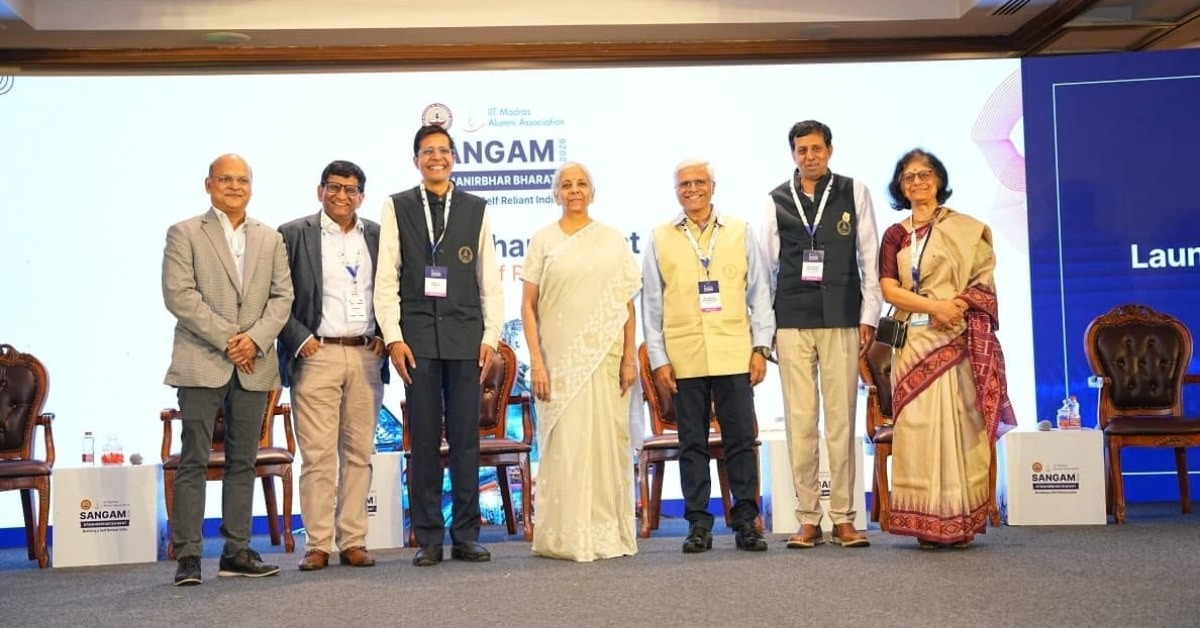
Participants at the first-close event of the IIT Madras and Unicorn India Ventures fund, as published with Inc42's report · Image: Inc42
Independent report content
| FUND | IITM Unicorn Frontier Fund I · SEBI Category II AIF · 10+2-year term |
|---|---|
| PARTNERS | IIT Madras (strategic anchor) · IIT Madras Research Park · Unicorn India Ventures (investment manager) |
| FUNDRAISE | Announced Feb 2026 at ₹600 Cr · First close ₹450 Cr on 26 Sep 2026 · Final close targeted Dec 2026 |
| STRATEGY | IP-led, engineering-heavy startups at TRL 3–4 · 24–30 companies · 60% initial cheques, 40% follow-on reserve |
| DEPLOYED | ~₹55 Cr across 4 startups: Hathor, Quanastra, Triolt Energy, Carbelim |
| MANAGER RECORD | Fund I ₹100 Cr (exited) · Fund II ₹300 Cr · Fund III ₹1,200 Cr (fully invested) · ~50 companies across funds |
| PEERS COMPARED | UIV Fund III · Inflexor Technology Discovery Fund (Fund III) · Bluehill.VC Fund I · Asiana–JC Capital fund |
| THE ACCESS POINT Unlike most funds Rupeia covers, this one is still raising. The first close was ₹450 crore against a ₹600 crore base and a ₹1,000 crore ceiling, with the final close set for December 2026. New LPs (family offices, HNIs and institutions) can still commit at the SEBI minimum of ₹1 crore. That window closes within weeks, not years. |
|---|
Executive decision summary
| THE BOTTOM LINE | This is the first venture fund in India built as a formal partnership between a top research university and a professional VC manager. IIT Madras brings the deal flow: an incubator with 567 startups, a combined valuation above ₹74,000 crore and two unicorns. Unicorn India Ventures brings a 10-year record across three funds, including an early cheque in Open, India's 100th unicorn. The fund closed ₹450 crore about seven months after it was announced in February 2026 and has already backed four hard-science companies. Two things decide whether it works. First, can it bring in institutional money before December? Second, can UIV run a new fund alongside a ₹1,200 crore Fund III that has just finished investing? |
|---|---|
| WHICH INVESTOR | Commit to this fund IF you are a family office or HNI who wants early-stage deep-tech exposure, can lock capital away for 10–12 years, and values first access to IIT Madras lab spin-outs over brand-name GP pedigree. Look at a peer instead IF you want larger, later cheques in deep tech (Inflexor Fund III writes ₹15–45 crore initial cheques), or a manager with a longer record of cash returned (UIV's own Fund III is closed, but its LPs got the same team with a broader sourcing base). |
| COMFORT FIT | IITM Unicorn Frontier Fund I = Tata Nexon EV from the factory floor. Built on home-grown engineering, backed by the institution that trained the engineers, new on the road but with a proven drivetrain. UIV Fund III = Mahindra XUV700. Same manufacturer, bigger and fully loaded, already sold out. Inflexor Fund III = Toyota Fortuner. Larger cheques, institutional anchors (SRI Fund, HDFC AMC), built for a longer, heavier load. Bluehill.VC Fund I = Royal Enfield Himalayan. A smaller maiden fund for the frontier terrain, nimble but untested. |
| THE RUPEIA NUMBER | More than ₹150 crore of the ₹450 crore first close came from IIT Madras alumni. That is about one rupee in three. No other Indian deep-tech fund has raised a third of its first close from one university's graduates. It shows a fund being underwritten by people who know the labs, the professors and the founders personally. That is the strongest form of insider conviction a new fund can show. It is also the fund's biggest concentration. |
1 FUND SNAPSHOT: IITM FRONTIER FUND I VS THREE PEERS
| Dimension | IITM Frontier Fund I | UIV Fund III | Inflexor Fund III | Bluehill.VC Fund I |
|---|---|---|---|---|
| Fund size | ₹600 Cr base + ₹400 Cr greenshoe | ₹1,200 Cr (₹1,000 Cr + ₹200 Cr greenshoe) | ₹1,250 Cr target | ₹350 Cr target |
| Status (Nov 2026) | First close ₹450 Cr (26 Sep 2026); final close Dec 2026 | Final close Feb 2026; fully invested | First close ₹400 Cr (Jul 2026) | ₹225 Cr raised by Jul 2025; final close planned end-2025 |
| Manager | Unicorn India Ventures | Unicorn India Ventures | Inflexor Ventures | Bluehill.VC |
| Stage | Early stage, TRL 3–4 | Seed to pre-Series A, deep tech | Early-stage technology | Frontier tech, early stage |
| Planned portfolio | 24–30 companies | 24 investments (UIV site) | 22–25 companies | — |
| Cheque size | ~₹8–10 Cr average first cheque (launch); ₹15–25 Cr per company (Inc42) | Seed to pre-Series A | ₹15–45 Cr initial cheques | — |
| Sectors | Defence, space, semiconductors, manufacturing tech, robotics, AI infrastructure, healthtech | Semiconductors, defence, space, robotics, energy | Technology discovery (deep tech) | Frontier technology |
| Anchor / key LPs | IIT Madras alumni (₹150 Cr+), family offices | SIDBI, SBI, NABARD, Kerala, MP, Odisha govts; 33% international | Self-Reliant India Fund, HDFC AMC | — |
| Sourcing edge | IIT Madras incubator and Research Park | UIV network | Inflexor network | Bluehill network |
| Category | SEBI Cat II AIF | SEBI Cat II AIF | SEBI AIF | SEBI AIF |
A fifth fund launched in the same window shows how crowded the space has become. Asiana Fund and Taiwan's JC Capital launched a ₹1,000 crore fund on 18 September 2026, eight days before IITM's first close. It targets advanced manufacturing and robotics, semiconductors and computing, materials and sustainability, and aerospace and defence. Four of its sectors overlap with IITM Frontier Fund I.
| RUPEIA READ Among new deep-tech funds of 2026, IITM Frontier Fund I is mid-sized. It sits between Bluehill's ₹350 crore maiden fund and Inflexor's ₹1,250 crore target. Its distinguishing feature is not size but sourcing: it is the only fund in the set with a contractual link to a university incubator. |
|---|
2 HOW THE FUND CAME TOGETHER: A TIMELINE
| Date | Event | Source |
|---|---|---|
| 2025 | IIT Madras announces, at its alumni conference Sangam 2025, its intention to catalyse a venture fund | IIT Madras press release |
| Feb 2026 | IIT Madras Research Park and UIV announce a ₹600 crore deep-tech fund at E-Summit 2026 | IIT Madras press release; YourStory |
| Feb 2026 | UIV announces the ₹1,200 crore final close of its Fund III | Inc42; Entrepreneur India |
| Mid-2026 | SEBI approval for the fund, as a scheme under UIV's Category II AIF registration | Business Standard; UIV fund table |
| 18 Sep 2026 | Asiana Fund and JC Capital launch a competing ₹1,000 crore deep-tech fund | Inc42 |
| 26 Sep 2026 | First close at ₹450 crore announced at Sangam 2026 in Bengaluru, with Finance Minister Nirmala Sitharaman present; four investments disclosed | IIT Madras; Inc42; ETtech |
| Dec 2026 | Target date for the final close | Inc42; DT Next |
IIT Madras did not simply lend its name to a manager. According to YourStory, IIT Madras Research Park reviewed more than 30 fund management teams before picking Unicorn India Ventures. The fund was then launched at E-Summit, IIT Madras' own entrepreneurship festival. It closed at Sangam, the annual conference of the IIT Madras Alumni Association, then in its 7th edition with the theme "Atmanirbhar Bharat: Building a Self-Reliant India". The choice of venue explains the LP base: the people in the room were the people writing the cheques.
The fund reached its first close about three months after SEBI approval. For a first-time vehicle in a new format, that is fast.
3 GP QUALITY & TEAM ANALYSIS
Unicorn India Ventures: the investment manager
Unicorn India Ventures (UIV) was founded in 2015 by Anil Joshi and Bhaskar Majumdar. Its SEBI registration number for Funds I and II, IN/AIF1/15-16/0159, dates to financial year 2015-16. The firm's advisory entity is Unicorn India Ventures Advisors LLP, with offices listed in Mumbai, London and Delaware. UIV reports about 50 portfolio companies across its funds, with a combined valuation of roughly US$4–5 billion.
| Partner | Background (published) | Role at IITM Frontier Fund I |
|---|---|---|
| Anil Joshi | One of India's angel-investing pioneers; led Mumbai Angels and Bangalore Angels; member of IVCA's VC Council (2022–26) | Co-founder, UIV; named fund manager in UIV's SEBI disclosures |
| Bhaskar Majumdar | B.Tech, Mechanical Engineering, IIT Kharagpur; Harvard Business School; 25+ years in business leadership roles across Asia, Europe and the US | Co-founder & Managing Partner, UIV; named fund manager; public face of the fund |
IIT Madras: the strategic anchor
| Person | Role | Part in the fund |
|---|---|---|
| Prof. V. Kamakoti | Director, IIT Madras | Announced the first four investments at Sangam 2026; links the fund to the goal of a "Startup Nation" by 2047 |
| Natarajan (Nat) Malupillai | Group CEO, IIT Madras Research Park & Incubation Cell | Led the manager selection; describes the fund as "right-sized, patient capital" for deep-tech founders |
| Prof. Ashwin Mahalingam | Dean, Alumni and Corporate Relations, IIT Madras | Leads the alumni relationship that delivered ₹150 Cr+ of commitments |
Under the partnership, IIT Madras Research Park and UIV work together on portfolio construction. IIT Madras provides technical validation and lab access. UIV runs the investment process, raises institutional capital and plans exits. A "significant portion" of the portfolio is expected to come from the IIT Madras ecosystem, and the rest from India's wider deep-tech base.
Team stability and attribution
UIV has been run by the same two founders since 2015, and both are named as fund managers on every UIV scheme in its SEBI disclosure table. No senior departures have been reported. Fund I's best-known result, Open, and Fund III's semiconductor and space bets were made under the same leadership that now runs IITM Frontier Fund I. Attribution risk, the question of whether the people who made the old returns are still at the firm, is therefore low.
| RUPEIA READ The real team question is bandwidth, not stability. UIV is a two-founder firm that has now raised ₹1,200 crore (Fund III, February 2026) and ₹450 crore and counting (this fund, September 2026) within eight months. Fund III's 24 companies need board time, follow-on decisions and exit work at the same moment this fund needs its first 25 deals. How UIV adds investment staff in 2026–27 is the single most important execution signal for LPs. |
|---|
4 TRACK RECORD ATTRIBUTION & DPI QUALITY
UIV has run three funds before this one. Each step has been roughly three to four times larger than the last, and the strategy has narrowed from broad digital technology to deep tech.
| Fund | Size | Vintage | Category | Investments | Status |
|---|---|---|---|---|---|
| Fund I | ₹100 Cr (first close ₹40 Cr) | Deployed 2016–2022 | Cat I AIF | 17 companies, seed and pre-Series A, 5 sectors | Exited (UIV) |
| Fund II | ₹300 Cr (first close ₹90 Cr, 2020) | Launched Mar 2020 | Cat I AIF | 20 companies, 6 sectors | Fully invested; exits under way |
| Fund III | ₹1,200 Cr | Launched 2023; final close Feb 2026 | Cat II AIF | 24 investments, 6 sectors | Fully invested |
| IITM Frontier Fund I | ₹600 Cr + ₹400 Cr greenshoe | 2026 | Cat II AIF | 4 so far; 24–30 planned | Raising |
Fund I: the cash-returned record
Fund I is the only UIV fund with a complete exit history. UIV lists seven full exits from it.
| Company | Sector | Exit route / round | Year (UIV) |
|---|---|---|---|
| Open (Open Bank) | Fintech | Secondary at Series C and D; Open became India's 100th unicorn and first neobank unicorn | 2018 |
| Sequretek | Cybersecurity / AI software | Secondary at Series B | 2017 |
| Olyv (SmartCoin) | Fintech lending | Secondary at Series D+ | 2017 |
| Pharmarack | Health / pharma distribution software | Acquired | 2016 |
| NeuroEquilibrium (FutureCure) | Healthtech | Secondary at Series B | 2016 |
| Genrobotics | Robotics / deep tech hardware | Secondary at Series B / pre-Series B | 2018 |
| Inntot Technologies | Digital radio / software | Acquired | 2018 |
BW Disrupt and Inc42 also reported that UIV sold its stakes in six startups to a US-based investor for about ₹50 crore. The companies included Genrobotics, Sequretek, Clootrack, Inntot and NeuroEquilibrium. That one transaction doubled the money of the fund's LPs. In the same coverage, Bhaskar Majumdar said three of the fund's 17 companies had been written off. In 2022, UIV also announced a partial exit from Sascan Meditech at about 6x its investment while keeping a stake. UIV has publicly cited an IRR of more than 60% for its early fund.
| RUPEIA DPI VERDICT Fund I's numbers are small (₹100 crore) but the cash is real. A ₹50 crore secondary sale that returned 2x to LPs is a documented cash event, not a paper mark. What matters for this fund is the habit. UIV has repeatedly sold stakes early through secondaries and partial exits instead of waiting a decade for IPOs. Deep-tech companies take longer to mature, so an exit habit that returns cash in years 5–8 protects the IRR of a 10+2-year fund. The limit of the record is scale: the largest documented cash event is ₹50 crore, while this fund may be ₹1,000 crore. |
|---|
Fund II and Fund III: the deep-tech pivot
Fund II launched in March 2020 with what UIV calls a sharper, sector-by-sector thesis. By December 2023 it had exited 2 of its 20 companies. Fund III was launched in 2023 to target ₹1,000 crore. It exercised a ₹200 crore greenshoe to close at ₹1,200 crore in February 2026, above target. Fund III is where UIV became a deep-tech specialist. Named portfolio companies include semiconductor designers Netrasemi and Vervesemi, spacetech companies TakeMe2Space, OrbitAID and BonV Aero, underwater-robotics maker EyeROV and Qube Health. UIV also co-invested with Zerodha's Rainmatter in a US$3 million round in precision-manufacturing startup Venttup.
| Fund III LP | Type |
|---|---|
| SIDBI | Government development bank (Fund of Funds for Startups) |
| State Bank of India | Public-sector bank |
| NABARD | Government development bank (agriculture and rural) |
| Government of Kerala | State government |
| Government of Madhya Pradesh | State government |
| Government of Odisha | State government |
| International LPs (33% of fund) | Mainly US-based family offices and institutions |
| RUPEIA READ Fund III's LP list is the template for the institutional money IITM Frontier Fund I still needs. SIDBI, SBI and NABARD have already underwritten UIV once. If any of them commits to this fund before December, it is a re-up by an institution that has seen UIV's deep-tech portfolio from the inside. That is a stronger signal than a new LP. |
|---|
5 FUND III READ-ACROSS: WHAT UIV'S LATEST PORTFOLIO SHOWS
Fund III is the closest preview of how UIV will run IITM Frontier Fund I: same team, same deep-tech thesis, invested between 2023 and 2026. The published funding histories of its companies show what happens after UIV writes the first cheque.
| Company | What it does | UIV's role | What happened next (published) |
|---|---|---|---|
| Netrasemi | Edge-AI semiconductor (system-on-chip) design | Led a ~US$1.2M Seed Plus round (Dec 2024) | Raised a ~US$12.2M Series A in 2025 led by Zoho Corporation, with UIV and Maithan Alloys participating |
| TakeMe2Space | Spacetech (in-orbit computing and space access) | Investor in seed round | Seed of ~US$5M published Jan 2026 alongside Chiratae Ventures and Artha Venture Fund |
| EyeROV | Underwater remotely operated vehicles (marine robotics) | Investor | ~US$2.66M total raised (CB Insights) |
| OrbitAID | Spacetech | Fund III investment (UIV site) | Named by YourStory among UIV's most recent investments |
| BonV Aero | Aerospace | Fund III investment | Named by YourStory among UIV's most recent investments |
| Vervesemi | Semiconductors | Fund III investment (UIV site) | Listed in UIV portfolio |
| Venttup | Precision-manufacturing marketplace | Co-investor with Zerodha's Rainmatter | US$3M round |
| Qube Health | Healthtech | Fund III investment (UIV site) | Listed in UIV portfolio |
| RUPEIA READ Netrasemi is the template. UIV led its seed-plus round. About eight months later, Zoho Corporation, a strategic technology company, led a Series A roughly ten times larger, with UIV following on. That is the sequence a deep-tech LP wants: an early cheque, a strategic co-investor, and a valuation step-up that later supports a secondary sale. TakeMe2Space shows the same pattern with Chiratae, a tier-one VC. UIV's seed picks are being validated by the next round's investors. |
|---|
Fund III's sector list (semiconductors, defence, space, robotics, energy) is almost identical to the IITM fund's. There is a practical consequence. UIV will have two funds with overlapping mandates investing at the same time. For a deal that fits both, LPs should expect UIV's allocation policy to put early-stage, IITM-sourced companies in the IITM fund and later or outside companies in Fund III. The Fund III portfolio also gives the IITM fund a ready network of founders and co-investors in exactly its target sectors.
6 THE SOURCING ENGINE: IIT MADRAS' STARTUP ECOSYSTEM
The fund's main claim to an edge is its access to IIT Madras' startup pipeline, so that pipeline deserves the same scrutiny as a GP's track record.
| Metric | Figure | Date / source |
|---|---|---|
| Startups incubated by IIT Madras Incubation Cell (IITMIC) | 567 | April 2026, 13th year of IITMIC |
| Combined valuation of incubated startups | Over ₹74,000 crore (~US$8 billion) | April 2026 |
| Earlier count | 511 startups; ₹53,000 crore valuation | Late 2025, IIT Madras press release |
| VC money raised by incubated startups | ₹17,310 crore (~US$2 billion) | Late 2025 |
| M&A exits | 13 | Late 2025 |
| Patents filed by startups | 700+ | Late 2025 |
| Direct jobs created | 11,000+ | Late 2025 |
| Unicorns | 2: Ather Energy and Uniphore | IITMIC / Inc42 |
| IPOs | 1: Ather Energy | IITMIC |
| FY26 intake | 112 startups selected from 1,200+ applications | FY 2025-26 |
| Deep-tech startups incubated at IITMRP | 480+, of which 190 commercially active | Inc42, Sep 2026 |
| Pre-incubator (Nirmaan) | 268 teams supported; 45+ ventures graduated | IIT Madras |
Combined valuation rose from ₹53,000 crore to ₹74,000 crore in about six months. The institute's stated aim is to incubate at least 100 deep-tech startups a year. With 112 selected in FY26, it is already there.
| RUPEIA CALCULATION The fund plans 24–30 companies over about four years, or 6–8 new investments a year. IIT Madras incubates 100+ startups a year. If, as planned, a "significant portion" of the fund comes from the IITM ecosystem, the fund needs to back roughly 3–5% of each year's incubator intake. That is selective enough to be meaningful, and the pipeline is deep enough that the fund will not run short of deals. |
|---|
IIT Madras' two best-known outcomes show what the pipeline can produce. Ather Energy, incubated at IIT Madras, became a unicorn and listed on the stock exchanges in 2025. Uniphore, a conversational-AI company, also reached a unicorn valuation. Both took roughly a decade or more from founding to unicorn. That is the time horizon a 10+2-year fund is built for.
7 STRATEGY TRUTH VS PORTFOLIO REALITY
The useful question for any fund is whether the deals it actually does match what it told LPs it would do. This fund has done four deals, enough for a first test.
| Promise to LPs | What the first four deals show | Match? |
|---|---|---|
| IP-led, engineering-intensive companies | All four are hardware or hard-science companies: rocket engines, quantum detectors, battery cells, algae-based carbon capture | Yes |
| TRL 3–4: proof of concept to lab validation | All four are pre-scale technology companies; Triolt had raised only ~US$80,000 before this round | Yes |
| Sectors: defence, space, semiconductors, manufacturing, robotics, AI infra, healthtech | Space (Hathor), quantum/photonics (Quanastra), energy storage for drones and EVs (Triolt), climate (Carbelim) | Partly. Two of four (batteries, carbon capture) sit outside the headline sector list, though Triolt serves drones and defence |
| Export, import-substitution and domestic-capability test | Rocket engines, single-photon detectors and Li-ion cells are all import-substitution plays for India | Yes |
| "Significant portion" from IITM ecosystem | Triolt's founders hold IIT Madras PhDs; Hathor is Chennai-based; Quanastra is from Delhi-NCR | Yes, with outside deals as promised |
| 24–30 companies; 60% initial, 40% follow-on | 4 companies, ~₹55 crore (~12% of first-close money) | On track |
The cheque-size question
Published cheque sizes differ by source. At launch the fund described an average first cheque of about ₹8–10 crore. Inc42's first-close report gave ₹15–25 crore per company. The first four deals averaged about ₹13.75 crore.
| Corpus scenario | Initial-cheque pool (60%) | Per company at 25 cos | Follow-on reserve (40%) |
|---|---|---|---|
| First close ₹450 Cr | ₹270 Cr | ₹10.8 Cr | ₹180 Cr |
| Base ₹600 Cr | ₹360 Cr | ₹14.4 Cr | ₹240 Cr |
| With greenshoe ₹1,000 Cr | ₹600 Cr | ₹24 Cr | ₹400 Cr |
| RUPEIA READ The two published ranges are not a contradiction. They describe the fund at different sizes. At ₹600 crore, the maths gives initial cheques of ~₹14 crore, almost exactly what the first four deals averaged. The ₹15–25 crore range only works if the greenshoe is used. In other words, the fund is already writing cheques sized for its ₹600 crore base. If the final close falls short of ₹600 crore, either cheque sizes or the number of companies must come down. |
|---|
| RUPEIA SCORE: STRATEGY 8.5/10 Deployment matches the promise on stage, IP-intensity and import substitution. The half-point deductions are for sector breadth: seven named sectors plus climate is wide for a ₹600 crore fund. |
|---|
8 SCENARIO ANALYSIS: THREE FINAL-CLOSE OUTCOMES
The fund's plan depends on where the final close lands in December 2026. Rupeia models three outcomes using the published 60/40 split between initial cheques and follow-on reserves, and the ~₹13.75 crore average first cheque of the first four deals.
| Scenario | Final close | Initial pool (60%) | Companies at ₹13.75 Cr | Follow-on reserve (40%) | Reserve per company |
|---|---|---|---|---|---|
| Below base | ₹500 Cr | ₹300 Cr | ~22 | ₹200 Cr | ~₹9 Cr |
| Base | ₹600 Cr | ₹360 Cr | ~26 | ₹240 Cr | ~₹9 Cr |
| Base + half greenshoe | ₹800 Cr | ₹480 Cr | ~35 (or ~25 at ₹19 Cr) | ₹320 Cr | ~₹13 Cr at 25 cos |
| Full greenshoe | ₹1,000 Cr | ₹600 Cr | ~44 (or ~25 at ₹24 Cr) | ₹400 Cr | ~₹16 Cr at 25 cos |
| RUPEIA CALCULATION At the ₹600 crore base, today's cheque size delivers almost exactly the 24–30 companies promised. Above ₹600 crore, the fund cannot keep both its cheque size and its company count. It would have to raise average first cheques towards the ₹15–25 crore range Inc42 reported. A larger fund therefore means fewer, bigger bets per company, not a broader portfolio. That changes the risk profile: higher ownership in winners, but more capital tied up in each early-stage company. |
|---|
The follow-on reserve matters most in deep tech. Companies like Hathor (rocket engines) and Triolt (battery cells) need large sums to move from prototype to production. A reserve of ₹9 crore per company at base size is enough to defend ownership in a Series A. It is not enough to lead one. The best companies will need co-investors, which is where UIV's planned co-investment capital comes in.
9 PORTFOLIO DEEP DIVE: THE FIRST FOUR INVESTMENTS
The fund deployed nearly ₹55 crore across four startups before its first close. It did not disclose individual cheque sizes.
1. Hathor: semi-cryogenic and cryogenic rocket engines (Chennai)
Hathor develops semi-cryogenic and cryogenic rocket engines for small and medium satellite launch vehicles. These engines burn refined kerosene or liquid hydrogen with liquid oxygen. They are more propellant-efficient than solid rocket motors and can be throttled and restarted. Skyroot's Vikram-2, targeted for 2027, needs a cryogenic upper stage (see Report 04). The demand case is visible: India's first private orbital rocket flew in July 2026, and the next generation of Indian launchers needs exactly this kind of engine.
2. Quanastra: superconducting single-photon detectors (Delhi-NCR)
Quanastra builds superconducting nanowire single-photon detectors (SNSPDs), custom cryogenics and photonics hardware. SNSPDs count individual particles of light. They are core components in quantum key distribution (quantum-secure communication), quantum computing experiments and deep-space optical links. Quanastra fits the fund's domestic-capability test directly. The FM's remarks at the first-close event named quantum technology as an area that needs more investment.
3. Triolt Energy: high-performance lithium-ion cells
Triolt develops lithium-ion battery cells for drones and fast-charging electric mobility. Its founders are Ananya Gangadharan and Raghu Sripada, both IIT Madras PhDs, and Rajesh Thomas, an IISc PhD. Before this round, CB Insights records only about US$80,000 raised across four small rounds. The IITM fund's cheque is therefore Triolt's first institutional-scale capital. Drone cells serve India's defence and unmanned-systems programmes, which the FM singled out at the event for more domestic hardware investment.
4. Carbelim: microalgae carbon capture and air purification
Carbelim builds bio-integrated carbon-capture and air-purification systems using proprietary microalgae. Its products include AirForest and the PureAir Tower for urban settings. The company is led by Dr Karthika Gopi, a PhD in algal biotechnology. Carbelim is the portfolio's climate bet and its least direct fit with the defence-space-semiconductor thesis.
| Company | Technology | Base | Who buys it | Thesis fit |
|---|---|---|---|---|
| Hathor | Semi-cryogenic and cryogenic rocket engines | Chennai | Small and medium launch-vehicle makers | Space; import substitution |
| Quanastra | SNSPDs, cryogenics, photonics | Delhi-NCR | Quantum labs, defence, research institutions | Quantum / semiconductor-adjacent |
| Triolt Energy | High-performance Li-ion cells | IIT Madras-linked | Drone makers, EV makers, defence | Energy storage for drones and defence |
| Carbelim | Microalgae carbon capture | — | Cities, campuses, industry | Climate (outside headline sector list) |
10 EXIT PATHWAYS FOR INDIAN DEEP TECH
A deep-tech fund is only as good as its exits, and Indian deep-tech exits are still few. These are the routes the fund can use, and the published precedents for each.
| Exit route | Published Indian precedent | Fit for this fund |
|---|---|---|
| IPO | Ather Energy (IIT Madras-incubated) listed in 2025; ideaForge (drones) listed in 2023 | Long-dated; realistic for 1–3 winners in years 8–12 |
| Secondary sale to later-stage investor | UIV sold six Fund I stakes for ~₹50 Cr, doubling LP money; Open stake sold at Series C/D | UIV's strongest habit; the most likely route for early DPI |
| Partial exit | UIV's ~6x partial exit from Sascan Meditech (2022) | Returns cash while keeping upside |
| Strategic acquisition | Pharmarack and Inntot acquired (UIV Fund I); 13 M&A exits from IITMIC startups | Defence, space and semiconductor companies are natural buyers |
| RUPEIA READ The fund's exit profile will look more like UIV Fund I (secondaries and acquisitions) than like a consumer-internet fund (IPOs). That is a strength. Indian deep-tech IPOs remain rare, while defence and space consolidation is creating strategic buyers. LPs should expect DPI to arrive in tranches from year 5 onward, not in one IPO-driven spike. |
|---|
11 HOW CAPITAL AND RETURNS FLOW: THE 10+2-YEAR TIMELINE
The fund is structured as a 10+2-year fund: a ten-year term with up to two years of extension. LPs commit at the close but pay in instalments through capital calls as the manager invests. Rupeia maps that structure onto the fund's published plan of 24–30 companies.
| Phase | Approximate years | What happens | Cash for an LP |
|---|---|---|---|
| First close and early deals | 2026 | ₹450 Cr committed; 4 companies, ~₹55 Cr invested before first close | First capital calls |
| Initial investing | 2026–2030 | 6–8 new companies a year until 24–30 are reached | Regular capital calls; no distributions |
| Follow-on investing | 2028–2032 | 40% reserve deployed into the best performers' Series A and B rounds | Further calls; first partial or secondary exits possible |
| Harvest | 2031–2036 | Secondary sales, strategic acquisitions, possible IPOs | Distributions begin in earnest |
| Extension | 2036–2038 | Up to two years to exit remaining holdings | Final distributions |
This produces the J-curve every venture LP sees. Reported value dips in years 1–4 as fees are paid and young companies are held at cost or written down. It rises from year 5 as winners raise at higher valuations and the first exits return cash. UIV's record of secondary sales from year 5 onward (Fund I) suggests distributions can start before the harvest phase.
| WHAT AN LP SHOULD PLAN FOR A ₹1 crore commitment is not a ₹1 crore cheque on day one. It is a promise to pay up to ₹1 crore over roughly 4–6 years, on the notice period set in the fund's contribution agreement. Missing a capital call carries penalties under the fund's contribution agreement. Rupeia's Perspective guide on missed AIF capital calls explains the consequences. |
|---|
12 POLICY TAILWINDS AND MARKET CONTEXT
Fund of Funds for deep tech: in February 2026 the Union Cabinet approved a state-backed fund of funds of about US$1.1 billion to invest through private VCs in deep-tech and manufacturing startups (TechCrunch). It was first outlined in the January 2025 Budget. SIDBI, which manages the existing fund of funds, already backs UIV Fund III.
India Deep Tech Investment Alliance: in September 2025, US and Indian VCs formed an alliance pledging more than US$1 billion for Indian deep tech over the next decade (TechCrunch).
Government focus areas: at the first-close event, Finance Minister Nirmala Sitharaman called for more investment in AI infrastructure, semiconductors and quantum technology, and in defence production, especially unmanned systems and drones. Three of the fund's four investments sit in those areas.
Deal volume: the India Deep Tech Alliance counted US$2.1 billion across 289 deep-tech deals in 2025.
More capital is chasing the same companies. In the 12 months to September 2026, UIV Fund III (₹1,200 crore), Inflexor Fund III (₹1,250 crore target), the Asiana–JC Capital fund (₹1,000 crore) and this fund (up to ₹1,000 crore) together put up to ₹4,450 crore of new money into Indian deep tech. In a crowded market, entry prices rise. The fund's answer is earlier entry. It invests at TRL 3–4, before most of these peers.
13 CAPABILITY MATRIX: YES / NO / PARTIAL
| Capability | IITM Frontier I | UIV Fund III | Inflexor III | Bluehill I |
|---|---|---|---|---|
| Formal university sourcing partnership | YES | NO | NO | NO |
| Manager with 2+ earlier funds | YES | YES | YES | NO |
| Documented cash exits by the manager | YES | YES | ? | NO |
| Open to new LPs (Nov 2026) | YES | NO | YES | ? |
| Government / DFI anchor in the current fund | NO | YES | YES | ? |
| Alumni-led LP base | YES | NO | NO | NO |
| TRL 3–4 (earliest stage) focus | YES | PARTIAL | ? | ? |
| Space and defence exposure | YES | YES | ? | ? |
| Semiconductor exposure | PARTIAL | YES | ? | ? |
| Explicit follow-on reserve (40%) | YES | ? | ? | ? |
| Large initial cheques (₹15 Cr+) | PARTIAL | NO | YES | NO |
| International LPs | NO | YES | ? | ? |
YES = published. PARTIAL = present in part. NO = absent. ? = not published.
| RUPEIA CAPABILITY READING IITM Frontier Fund I wins on sourcing, stage and openness. It loses, for now, on institutional anchoring and international LPs, both of which UIV's Fund III already has. The matrix shows a fund with a unique front end (deal flow) and a standard back end (UIV's exit habits). What it lacks is the institutional capital that would confirm its scale. |
|---|
14 RISK ANALYSIS: RED FLAGS & KILL CONDITIONS
| Red flag | Evidence | Severity | Kill condition | What would resolve it |
|---|---|---|---|---|
| Institutional gap | First close mainly alumni and family offices; institutions "expected" by final close | MEDIUM | Final close in Dec 2026 with no bank, DFI or insurer LP | Any of SIDBI, SBI, NABARD or a bank committing |
| Base-size shortfall | ₹450 Cr raised vs ₹600 Cr base; cheques already sized for ₹600 Cr | MEDIUM | Final close below ₹600 Cr | Final close at or above ₹600 Cr |
| GP bandwidth | Two-founder firm running Fund III (24 cos) and a new fund at once | MEDIUM | Slow deployment (fewer than 6 deals a year) or Fund III follow-ons starved | New investment hires announced; steady deal flow in 2027 |
| Single-ecosystem sourcing | "Significant portion" from IITM ecosystem | LOW-MED | Portfolio over-concentrated in one incubator's cohort | Mix of IITM and outside deals continues (2 of 4 so far from outside Chennai) |
| Sector breadth | 7 named sectors plus climate for 24–30 companies | LOW | Portfolio spread at 2–3 companies per sector | Clear clustering in 3–4 sectors by deal 12 |
| Exit horizon | TRL 3–4 entry; Ather took 10+ years to IPO | MEDIUM | No partial or secondary exits by year 6 | UIV-style secondaries from year 5 |
| Peer crowding | ₹4,450 Cr of new deep-tech fund capital in 12 months | LOW-MED | Rising entry prices at Series A | Earlier-stage entry keeps prices disciplined |
15 LP SIGNAL & RE-UP ANALYSIS
| Signal | IITM Frontier Fund I | What it means |
|---|---|---|
| Insider conviction | ₹150 Cr+ from IIT Madras alumni | People with direct knowledge of the labs and founders committed first |
| Speed | First close ~3 months after SEBI approval | Fast for a first-time vehicle |
| Manager re-ups | UIV's past LPs (SIDBI, SBI, NABARD, three states) not yet named | The key signal to watch before December |
| Ceiling | Greenshoe of ₹400 Cr built in | Manager expects demand above base |
| Co-investment | UIV plans additional capital through co-investments | Large LPs may get deal-by-deal access |
| RUPEIA LP VERDICT Adequate now, potentially strong. Alumni money is conviction capital, but it is not repeatable. Graduates will not re-up the way a pension fund does. The re-up signal that matters is whether Fund III's institutions come in. |
|---|
16 TAX TREATMENT: HOW RETURNS ARE TAXED
As a SEBI Category II AIF, the fund has pass-through status under Section 115UB of the Income-tax Act (carried into the Income-tax Act, 2025). Income other than business income is taxed in the investor's hands as if the investor held the underlying shares directly. Budget 2025 amended the definition of "capital asset" so that securities held by Category I and II AIFs are capital assets from 1 April 2025. Gains on the fund's exits are therefore capital gains, not business income.
| Income type | Treatment for a resident individual | Note |
|---|---|---|
| Long-term gain on unlisted shares (held more than 24 months) | 12.5% without indexation | Finance (No. 2) Act, 2024 rates; most of this fund's exits will fall here |
| Short-term gain on unlisted shares | Taxed at the investor's slab rate | Rare for a 10-year deep-tech fund |
| Gain on listed shares after an IPO (held more than 12 months) | 12.5% | Applies if the fund sells after a portfolio company lists |
| Business income of the fund (if any) | Taxed at the fund level | Not passed through |
| Losses | Passed through to investors for set-off, subject to holding conditions | Under Section 115UB |
NRIs are taxed on the same income types, with tax withheld at source by the fund and relief available under India's tax treaty with their country of residence. Companies and family-office entities are taxed at their own applicable rates on the passed-through income.
17 INVESTOR CLASS ANALYSIS: WHICH INVESTOR THIS FUND FITS
For individual investors and HNIs
This is one of the few institutional-quality deep-tech funds an individual can still enter. Under SEBI rules the minimum commitment in an AIF is ₹1 crore (₹25 lakh for employees and directors of the manager; accredited investors are exempt). Capital is drawn in instalments through capital calls, not paid upfront. An HNI should plan for 10–12 years of lock-up under the fund's 10+2-year structure, and treat it as a satellite allocation, not core wealth. IIT Madras alumni get a second benefit: a direct view into companies coming out of their own institute.
For family offices (₹200 Cr+ investable)
Family offices are already a core LP group in the first close. For a family office building an India venture book, the fund offers two things large VC funds cannot. It invests at TRL 3–4, earlier than almost any institutional deep-tech fund. It also offers co-investment: UIV has said it plans to raise additional capital through co-investments, so a family office can take larger positions in the best companies. A ₹10–25 crore commitment in the final close window, with a request for co-invest rights, is a sensible structure.
For institutions (banks, insurers, DFIs, corporates)
The fund is actively seeking banks and institutions before the final close. For an institution, the case rests on UIV's Fund III LP base, where SIDBI, SBI and NABARD are already invested, plus the university link. Corporate investors in defence, aerospace, energy storage and semiconductors get early sight of IP coming out of IIT Madras labs. That is strategic value beyond financial return.
For NRI investors
IIT Madras' alumni base is heavily overseas, and NRIs can invest in a Category II AIF. Contributions come through NRE or NRO accounts on a repatriable or non-repatriable basis under FEMA, with KYC through the fund's registrar. The fund is rupee-denominated, so an NRI's returns are exposed to the rupee-to-home-currency rate. US-based NRIs should note that PFIC rules apply to non-US pooled funds.
18 COMFORT FIT: THE DECISION PAGE
| If you want… | Best fit | Why | Caution |
|---|---|---|---|
| Earliest-stage deep tech with a university pipeline | IITM FRONTIER I | TRL 3–4 entry; 567-startup incubator; 4 hard-science deals already | 10–12-year lock-up; small companies, high failure rate |
| A deep-tech fund you can still join in 2026 | IITM FRONTIER I or INFLEXOR III | Both raising; IITM final close Dec 2026 | Window closes at final close |
| The same manager with more institutional validation | UIV FUND III | SIDBI, SBI, NABARD, three state governments, 33% international | Closed and fully invested |
| Larger cheques into more mature deep tech | INFLEXOR III | ₹15–45 Cr initial cheques; SRI Fund and HDFC AMC anchors | Later entry means higher prices |
| A smaller, newer frontier-tech manager | BLUEHILL.VC I | ₹350 Cr maiden fund | No prior-fund track record |
| Liquidity within 5 years | None of these | All are closed-end, 10+ year funds | Use listed deep-tech stocks instead |
19 THE EARLY SIGNAL: FIVE DATED EVENTS TO WATCH
Venture funds are judged over a decade, but the first 12 months after a close show most of what matters. These are the published milestones and the events that will follow from them.
| When | Event | Why it matters | Positive outcome |
|---|---|---|---|
| December 2026 | Final close | Sets the corpus, and with it cheque sizes and company count | ₹600 Cr or more, ideally with greenshoe used |
| By final close | First bank, DFI or insurer LP | Turns an alumni-backed fund into an institutional one | SIDBI, SBI, NABARD or a private bank commits |
| 2027 | Deals 5–12 | Shows whether the IITM pipeline delivers 6–8 deals a year | Mix of IITM-sourced and outside deals in the core sectors |
| 2027 | UIV team additions | Answers the bandwidth question across two funds | New partners or principals announced |
| 2027–2028 | First follow-on rounds for Hathor, Quanastra, Triolt, Carbelim | First external price on the fund's early bets | Rounds led by strategic or tier-one investors, as with Netrasemi |
| THE EARLY SIGNAL If the final close lands at ₹600 crore or above, and one institution that backed UIV Fund III re-ups, the fund's two open questions are answered within one quarter. Both events are due by December 2026. |
|---|
20 RUPEIA FINAL INDEPENDENT VIEW
IITM Unicorn Frontier Fund I is a new kind of Indian venture fund. A university has not just endorsed it. The university screened 30+ managers, delivered a third of the first close through its alumni, and committed its incubator as the deal pipeline. On sourcing, it has an advantage no peer can copy. On manager quality, UIV brings a decade of seed investing, documented cash exits from Fund I and a successful pivot to deep tech in Fund III. On strategy, the first four deals match what was promised.
Two open items stand between this fund and a top-tier rating. First, institutional capital: until a bank, DFI or insurer commits, the fund rests on alumni conviction. Second, GP bandwidth: UIV is running two large deep-tech books at once with a lean founding team.
| THE RUPEIA NUMBER ₹150 crore+ from alumni out of a ₹450 crore first close, about one-third. It is the most direct expression of insider conviction in any Indian fund raised in 2026, and the single fact that makes this fund different from every peer. |
|---|
| RUPEIA VERDICT A strong, differentiated deep-tech fund that is still open. For HNIs and family offices with a 10–12-year horizon who want the earliest possible entry into Indian hard-science companies, it is one of the best-structured options of 2026. Watch for an institutional LP and the final-close size in December 2026. Those two numbers will settle whether the fund reaches its ₹600 crore plan. |
|---|
Frequently asked questions
What is IITM Unicorn Frontier Fund I?
A SEBI Category II AIF launched by IIT Madras Research Park and Unicorn India Ventures, with IIT Madras as strategic anchor. It invests in IP-led deep-tech startups at technology readiness levels 3–4.
How much has the fund raised?
It announced a first close of ₹450 crore on 26 September 2026. The base corpus is ₹600 crore, with a ₹400 crore greenshoe that can take it to ₹1,000 crore.
When is the final close?
The fund is targeting a final close by December 2026.
What is the minimum investment?
SEBI's minimum for an AIF is ₹1 crore per investor, drawn down through capital calls.
How long is the fund's term?
It is structured as a 10+2-year fund: ten years plus up to two years of extension.
Who manages the fund?
Unicorn India Ventures, founded in 2015 by Anil Joshi and Bhaskar Majumdar. It has managed three earlier funds of ₹100 crore, ₹300 crore and ₹1,200 crore.
Which startups has it invested in?
Hathor (rocket engines), Quanastra (single-photon detectors), Triolt Energy (lithium-ion cells) and Carbelim (microalgae carbon capture), with about ₹55 crore in total.
How many startups will it back?
24–30 companies. About 60% of the corpus goes into first cheques and 40% is reserved for follow-on rounds.
Can NRIs invest?
Yes. NRIs can invest in a Category II AIF through NRE or NRO accounts under FEMA rules.
Source log
IIT Madras: IIT Madras announces initial funding from its deep-tech VC fund (26 Sep 2026)
IIT Madras: Research Park and UIV announce ₹600 crore deep-tech fund at E-Summit 2026
IITM Unicorn Frontier Fund: official site
Inc42: IIT Madras, Unicorn India Ventures mark first close of Fund I at ₹450 Cr
Business Standard: IIT Madras, Unicorn India mark ₹450 cr first close
YourStory: Nat Malupillai on how IIT Madras' new fund gives founders room to breathe
YourStory: IIT Madras Research Park, UIV launch ₹600 Cr fund (Feb 2026)
DT Next: IIT Madras-led deep-tech fund reaches ₹450 Cr first close
Unicorn India Ventures: Funds and investors (fund table, SEBI registrations, exits)
Inc42: Unicorn India Ventures closes third fund at ₹1,200 Cr
Entrepreneur India: Unicorn India Ventures closes ₹1,200 Cr deeptech Fund III
BW Disrupt: Unicorn India Ventures to exit from six startups
Inc42: How Unicorn India Ventures doubled LPs' investments
Inc42: UIV partially exits Sascan Meditech with 6x returns
AVCJ: Unicorn India Ventures reaches first close on second fund
Indian Startup News: Rainmatter, UIV invest $3M in Venttup
IIT Madras: Incubation Cell crosses 500-startup milestone
Entrepreneur India: IIT Madras, 112 startups incubated in one year
Entrepreneur India: Inflexor Ventures first close of ₹1,250 Cr Fund III
Business Standard: Bluehill VC to announce final close of maiden fund
TechCrunch: India approves $1.1B state-backed VC fund (Feb 2026)
TechCrunch: US and Indian VCs form $1B deep-tech alliance
DALIMSS News: Quanastra SNSPD detectors
DALIMSS News: Carbelim microalgae carbon capture and AirForest
CB Insights: Triolt Energy
Rupeia Fund Research: Unicorn India Ventures
StartupIntros: Netrasemi funding rounds
Tracxn: Netrasemi funding and investors
Inc42: TakeMe2Space funding
CB Insights: EyeROV (IROV Technologies)
Lakshmikumaran & Sridharan: Budget 2025, tax treatment of securities held by Cat I and II AIFs
Income Tax Department: Section 115UB
| DISCLAIMER This document is published strictly for informational, educational and academic record-keeping purposes. The publisher is not a SEBI Registered Investment Adviser (RIA) or Research Analyst (RA). It does not constitute personal investment advice, a financial recommendation, or an offer or solicitation to buy, sell or subscribe to any securities. Investments in the securities market are subject to market risks. Read all related documents carefully before investing. |
|---|