Battery Smart: FY26 revenue about ₹358 crore
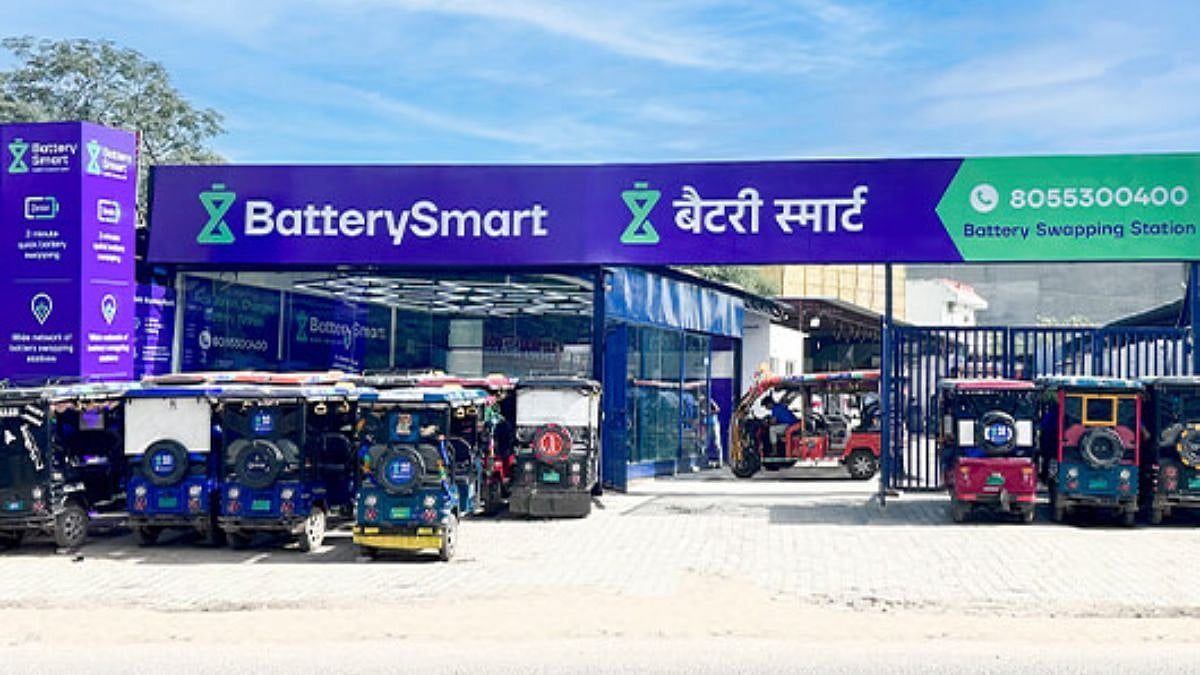
A Battery Smart swapping station serving electric three-wheelers Source: Free Press Journal (PTI)
Independent report content
| FY26 (REGULATORY-FILING REPORT) | Revenue about ₹358 crore (+44% from ₹249 crore) · loss about ₹23.55 crore (₹27 crore in FY25) · operational break-even reported |
|---|---|
| SERIES C | ₹185.5 crore (about US$19.2 million at ₹96.5) led by Rising Tide Ventures with Ecosystem Integrity Fund and Blume Ventures; post-money about ₹4,075 crore / US$430 million (Entrackr estimate) |
| DEBT | US$15 million from Mirova (April 2026); responsAbility facility reported (about US$13 million, July 2026; not verified) |
| NETWORK | More than 1,500 stations in 75+ cities (Aug 2026) versus 1,600 in 50 cities (Apr 2026); over 3 lakh batteries; nearly 1 lakh drivers; about 90% franchise-run |
| IPO PLAN | DRHP expected September–October 2026 using FY26 and June-quarter figures valid till December 2026; SBI Capital Markets reported lead; size not found |
| GROWTH TARGET | 70–80% annual growth for 3–5 years (sources familiar) |
| FUNDING TO DATE | US$186–211 million depending on source (ICRA: about US$192 million) |
| FOUNDERS | Pulkit Khurana (CEO) and Siddharth Sikka, IIT Kanpur graduates; founded 2019 or 2020 |
| THE ACCESS POINT Battery Smart is private. The reported plan is a DRHP filing in September–October 2026; none had been found at the time of writing. Access is through the IPO if it happens. |
|---|
Executive decision summary
| THE BOTTOM LINE Battery Smart runs a network of battery-swapping stations for electric two- and three-wheelers: a driver pulls in, swaps a depleted battery for a charged one in about two minutes and pays per swap, while the company owns the batteries and franchisees run about 90% of the stations. Revenue was about ₹358 crore in FY26 (up 44%) with a loss of about ₹23.6 crore and reported operational break-even, and a Series C valued it near ₹4,075 crore. The data have a trap: the dollar figures on Dealroom convert rupee numbers at about ₹73.7 to the dollar, not the ₹96.5 used in this archive, so US$48.6 million of revenue is actually about US$37 million. A DRHP was reportedly planned for September–October 2026, led by SBI Capital Markets, but none was found. The case rests on utilisation of a capital-heavy asset (3 lakh batteries) and on whether ₹358 crore of revenue can cover the cost of keeping those batteries charged, financed and swapped. |
|---|
| WHICH INVESTOR Fits you IF you want an EV-infrastructure company with a clear franchise model, a break-even claim and a likely near-term IPO. Look elsewhere IF you want audited profit: break-even is reported, not shown in a filing, and EBITDA is not disclosed. |
|---|
| COMFORT FIT Battery Smart = a petrol-pump network for electric three-wheelers where you swap a battery instead of filling a tank. Franchisees run the stations; Battery Smart owns the batteries and software. Yulu, Sun Mobility and Exponent = other swapping and charging players (Yulu is report 38, Exponent report 18). |
|---|
| THE RUPEIA NUMBER ₹73.7 per US$. The conversion rate that makes Dealroom's dollar figures match the rupee numbers; at today's ₹96.5 the same revenue is about 24% lower in dollars. |
|---|
1 CLAIM REGISTER: EVIDENCE GRADING
A = government or regulator record. B = statutory filing. C = independent press. D = company announcement.
| Claim | Source | Grade | Rupeia assessment |
|---|---|---|---|
| FY26 revenue about ₹358 crore (from ₹249 crore); loss about ₹23.55 crore (from ₹27 crore) | Regulatory-filing report cited by search result; Dealroom (US$ equivalents) | B/C | Dealroom US$48.6 million revenue equals ₹358 crore at ~₹73.7 per US$. |
| FY25 operating revenue about ₹250 crore (+52% from ₹164 crore) | ICRA via Free Press Journal | B | Consistent with ₹249 crore. |
| Series C ₹185.5 crore; valuation about ₹4,075 crore / US$430 million | Dealroom; Entrackr estimate | C | Valuation is an estimate, not disclosed. |
| Series C headline US$19.5 million vs body US$25.2 million | Dealroom | C | US$25.2 million uses the old rate; ₹185.5 crore ≈ US$19.2 million today. |
| Mirova US$15 million debt (28 Apr 2026) | Autocar Professional | B | Established. |
| DRHP planned September–October 2026; SBI Capital Markets; growth 70–80% | Inc42; Free Press Journal (PTI) | C | Sources familiar; company declined to comment. |
| 1,500+ stations in 75+ cities (Aug 2026) vs 1,600 stations in 50 cities (Apr 2026) | Inc42; Autocar Professional | C | Conflict. |
| Founded 2019 vs 2020 | Inc42; Dealroom | C | First partner station June 2020 (Autocar). |
2 COMPANY OVERVIEW & FOUNDING STORY
Battery Smart was founded by Pulkit Khurana (CEO) and Siddharth Sikka, both IIT Kanpur graduates, and is based in Delhi NCR. Inc42 dates the founding to 2019, Dealroom to 2020; the first partner-led station opened in New Delhi in June 2020. It owns the lithium-ion batteries and software, and station owners (franchisees, about 90% of stations) invest in the premises and earn per swap.
The network serves commercial drivers of electric two- and three-wheelers, mostly in last-mile delivery and passenger transport. Reported figures are more than 3 lakh batteries, nearly 1 lakh drivers and a swap time of about two minutes. Battery ownership stays with the company, which means the balance sheet carries the battery fleet and financing.
Investors named in coverage include Tiger Global, Orios Venture Partners, FAAD Network, Blume Ventures, Mirova, Trifecta Capital, LeapFrog Investments, Ecosystem Integrity Fund, responsAbility and Rising Tide Ventures.
3 TIMELINE
| Date | Event |
|---|---|
| 2019–20 | Founded; first partner station in New Delhi (June 2020) |
| FY24 | Revenue about ₹164 crore (ICRA) |
| FY25 | Revenue about ₹249–250 crore; loss about ₹27 crore |
| Mar 2026 | US$8.96 million round (Dealroom) |
| Apr 2026 | US$15 million debt from Mirova |
| FY26 | Revenue about ₹358 crore; loss about ₹23.55 crore; break-even reported |
| Aug 2026 | Series C of ₹185.5 crore; IPO plan reported |
| Sep–Oct 2026 | DRHP expected (not found filed) |
4 FUNDING, VALUATION AND THE CURRENCY TRAP
| Item | Detail | Amount | Comment |
|---|---|---|---|
| Series B | ICRA | US$65 million + US$29 million extension | Rising Tide led the extension |
| Series C (Aug 2026) | Rising Tide Ventures (lead), Ecosystem Integrity Fund, Blume Ventures | ₹185.5 crore (~US$19.2 million) | Dealroom body says US$25.2 million at ~₹73.7 per US$ |
| Valuation | Entrackr estimate | ~₹4,075 crore (~US$430 million at old rate; ~US$422 million today) | Not disclosed by the company |
| Debt | Mirova (Apr 2026) | US$15 million (~₹145 crore) | Urban and semi-urban rollout |
| Debt | responsAbility (Jul 2026) | US$13 million (reported, not verified) | Not found in sources read |
| Total funding | Sources | US$186–211 million | ICRA about US$192 million |
Series C figures differ on Dealroom's page because the headline uses current exchange rates and the body uses an older rate. The ₹185.5 crore figure divided by ₹96.5 per US$ is US$19.2 million, which matches the headline.
| RUPEIA CALCULATION Currency check. FY26 revenue of ₹358 crore ÷ ₹96.5 = US$37.1 million, not US$48.6 million. The ratio 358 ÷ 48.6 = ₹73.7 per US$, an old exchange rate. The same ratio fits FY25 (₹249 crore ÷ US$33.8 million = 7.37) and the loss (₹23.55 crore ÷ US$3.2 million = 7.36). All the Dealroom revenue and loss figures are therefore rupee numbers converted at about ₹73.7; this archive uses rupee figures and ₹96.5 for any new conversion. |
|---|
5 FINANCIAL FORENSICS: GROWTH AND A NARROWING LOSS
| ₹ crore | FY24 | FY25 | FY26 |
|---|---|---|---|
| Operating revenue | ~164 (ICRA) | ~249–250 | ~358 |
| Growth | — | +52% | +44% |
| Net loss | n/a | ~27 | ~23.55 |
| Loss as % of revenue | n/a | 10.8% | 6.6% |
| EBITDA | Not found | Not found | Not found |
| Operational break-even | — | — | Reported achieved in FY26 (Inc42; PTI) |
The loss shrank in absolute terms (₹27 crore to ₹23.55 crore) while revenue rose 44%. "Operational break-even" is not a defined accounting term; EBITDA, depreciation on batteries and finance cost are not in the sources. With 3 lakh batteries on the balance sheet, depreciation is likely a large cost between break-even and net loss.
| RUPEIA CALCULATION Crude unit economics with reported counts (stations about 1,550, batteries 3 lakh, drivers about 1 lakh, FY26 revenue ₹358 crore, Rupeia averages): revenue per station about ₹23 lakh a year (₹358 crore ÷ 1,550), about ₹11,900 per battery a year (₹358 crore ÷ 3 lakh), and about ₹35,800 per driver a year (₹358 crore ÷ 1 lakh), or about ₹3,000 a month. Year-end counts overstate averages for a growing network, but they show the asset base: if a battery costs, say, ₹25,000 (a Rupeia assumption), 3 lakh batteries would be ₹750 crore of assets against ₹358 crore of revenue. |
|---|
6 BUSINESS MODEL & UNIT ECONOMICS
Battery Smart earns a fee each time a driver swaps a battery, and shares it with the franchisee who runs the station.
| Line | How it earns | Pressure point |
|---|---|---|
| Swapping fees | Per-swap price (not found); about two minutes per swap | Utilisation and price competition |
| Franchise stations (~90%) | Franchisees invest in premises; Battery Smart provides batteries, software and operations | Franchise quality; revenue sharing |
| Company-owned batteries | 3 lakh lithium-ion batteries on the balance sheet | Capital intensity; cell prices; battery life |
| Commercial drivers | Nearly 1 lakh drivers of two- and three-wheelers | Dependence on driver adoption and EV sales |
| Debt financing | Mirova, responsAbility and others | Interest cost and covenants |
The model is a network business: more stations raise convenience, more drivers raise utilisation per battery, and utilisation decides whether capital employed earns its cost.
7 MARKET & COMPETITIVE ANALYSIS
| Peer | Status | Position |
|---|---|---|
| Sun Mobility | Private | Battery-swapping peer; not in sources read |
| Yulu | Private | Report 38 in this archive |
| Exponent Energy | Private | Report 18; fast charging rather than swapping |
| Tata Passenger Electric Mobility, PMI Electro, Chartered Speed | Various | Named by PTI as operating in the wider e-mobility space |
IMARC data quoted by Inc42 puts India's battery-swapping market at US$48.13 million in 2025, growing to US$517.92 million by 2034 (30.21% a year). That figure is below Battery Smart's own FY25 revenue in dollars (₹249 crore ≈ US$25.8 million is 54% of it) and FY26 revenue (US$37.1 million is 77% of 2025's estimate), so the third-party market-size estimate is unreliable.
8 1. HOW BATTERY SWAPPING WORKS FOR A DRIVER
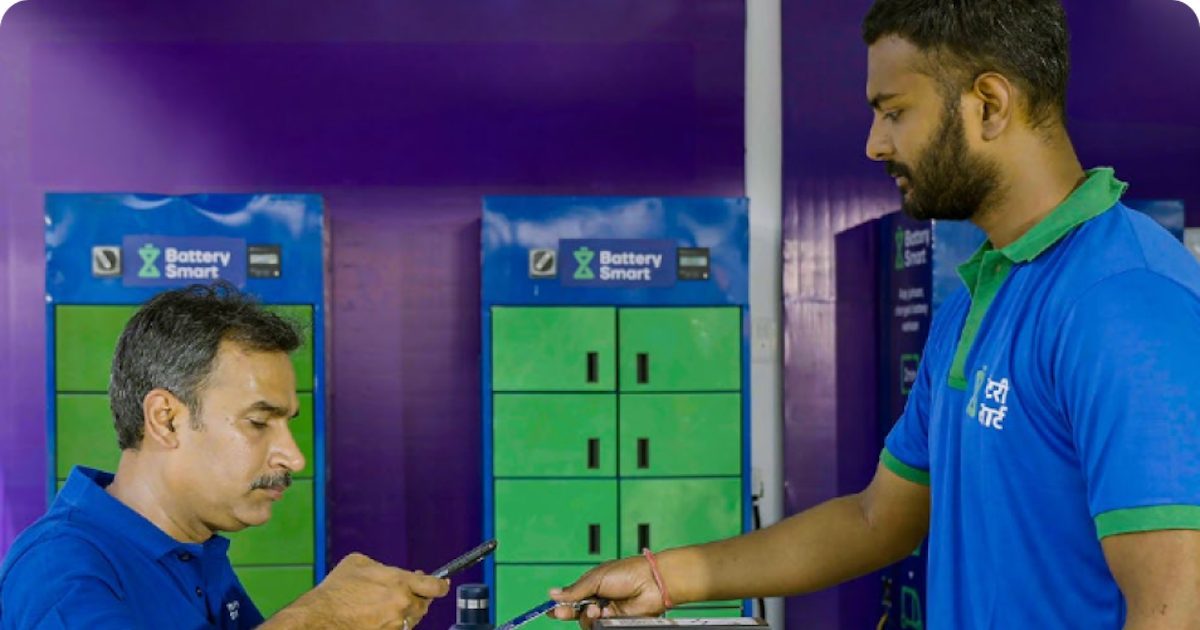
A three-wheeler driver in a city does not want to wait an hour to charge. At a Battery Smart station the driver hands in a depleted battery and receives a charged one in about two minutes, paying per swap. This turns the battery into a service: the driver buys the vehicle without the battery, and the company bears battery cost, charging, safety and replacement.
| Feature | Charging at home or a public charger | Swapping |
|---|---|---|
| Time | Hours | ~2 minutes |
| Battery ownership | Driver | Network operator |
| Upfront cost to driver | Higher (battery included) | Lower |
| Infrastructure | Power points | Stations with stock of charged batteries |
| Standardisation | Not needed | Needs compatible vehicles |
General description by Rupeia.
9 2. RECONCILING THE FIGURES
| Item | Version A | Version B | Rupeia treatment |
|---|---|---|---|
| FY25 revenue | US$33.8 million (Dealroom) | ~₹250 crore (ICRA); ₹249 crore (filing report) | Same number at ₹73.7 per US$; use ₹ |
| FY26 revenue | US$48.6 million (Dealroom) | ~₹358 crore | Use ₹358 crore (≈US$37.1 million today) |
| Series C | US$19.5 million (headline) / US$25.2 million (body) | ₹185.5 crore | Use ₹185.5 crore (≈US$19.2 million) |
| Stations / cities | 1,600 / 50 (Apr 2026) | 1,500+ / 75+ (Aug 2026) | Report both |
| Founding year | 2019 (Inc42) | 2020 (Dealroom) | Report both |
| Total funding | US$186 million | US$211 million | Range |
10 3. CAPITAL INTENSITY: THE CENTRAL QUESTION
| Metric | Figure | Source / note |
|---|---|---|
| Batteries | More than 3 lakh | Inc42; PTI |
| Stations | 1,500–1,600 | Inc42; Autocar |
| Drivers | Nearly 1 lakh | Inc42; PTI |
| Revenue per battery per year | ~₹11,900 | Rupeia |
| Assumed battery cost | ₹25,000 (assumption) | Rupeia assumption |
| Implied battery assets | ~₹750 crore | Rupeia |
| Revenue ÷ battery assets | ~0.48x | Rupeia |
| RUPEIA CALCULATION Rupeia calculation: at about ₹11,900 of revenue per battery per year and an assumed ₹25,000 cost, a battery earns back its cost in revenue terms in about 2.1 years; with a life of 4–5 years (an assumption) and after electricity, franchise share and maintenance, returns depend heavily on utilisation. The reported break-even is therefore plausible only at high swaps per battery per day, which the sources do not disclose. |
|---|
11 4. THE IPO PLAN AND WHAT IT COULD LOOK LIKE
| Item | Reported | Note |
|---|---|---|
| DRHP timing | September–October 2026 | Inc42; PTI; none found filed |
| Financials | FY26 and June-quarter 2026 | Valid till December 2026 (PTI) |
| Lead banker | SBI Capital Markets | PTI, citing sources |
| Issue size | Not found | — |
| Company response | "We do not comment on market speculation" | Inc42 |
If the filing slips beyond December 2026, the FY26 and June-quarter numbers would need updating with September-quarter figures, which may reset the timetable.
12 5. VALUATION SCENARIOS ON REVENUE
| Valuation (₹ crore) | x FY26 revenue (₹358 crore) | x FY27 revenue at +70% | Comment |
|---|---|---|---|
| 4,075 (Series C estimate) | 11.4x | 6.7x | Entrackr estimate |
| 6,000 | 16.8x | 9.9x | Needs growth above 70% |
| 8,000 | 22.3x | 13.1x | Rich for a loss-making network |
| 10,000 | 27.9x | 16.4x | Unlikely without profit |
Rupeia arithmetic; FY27 revenue = ₹358 crore × 1.7 = ₹608.6 crore (the lower end of the 70–80% growth target).
With a loss and heavy assets, the market will price on revenue and unit economics, not earnings. A listing valuation near the Series C mark would be 11.4 times FY26 revenue.
13 6. GOVERNANCE AND INVESTORS
Founders: Pulkit Khurana (CEO) and Siddharth Sikka; both IIT Kanpur graduates.
Key investors: Rising Tide Ventures (lead of Series C and the Series B extension), Tiger Global, Blume Ventures, Ecosystem Integrity Fund, LeapFrog, Trifecta, Orios, FAAD Network, Mirova and responsAbility.
Debt providers: Mirova (US$15 million) and responsAbility (reported).
Franchise reliance: about 90% of stations are franchise-run; station quality and compliance depend on partners.
Not found: per-swap price, swaps per day, EBITDA, FY23 revenue, IPO size.
14 7. RISK MAP
| Risk | Mechanism | What to watch |
|---|---|---|
| Capital intensity | 3 lakh batteries need financing and replacement | Debt/asset ratios in the DRHP |
| Utilisation | Revenue per battery drives returns | Swaps per battery per day |
| Battery safety and quality | Fires or degradation at scale | Incident disclosure |
| Vehicle compatibility | Needs OEMs that use swappable batteries | OEM partnerships |
| Competition | Charging networks and other swappers | Pricing |
| Policy | EV incentives and battery rules | Subsidy changes |
| Data conflicts | Station counts, funding totals and currency conversions differ | DRHP reconciliation |
15 8. QUESTIONS FOR THE DRHP
Revenue, EBITDA, depreciation and finance cost by year; definition of operational break-even.
Swaps per day, price per swap, utilisation per battery.
Battery cost, life, warranty and replacement schedule.
Franchise economics: capex per station, revenue share, churn.
Customer base: drivers, fleets, OEM relationships.
Debt schedule and covenants (Mirova, responsAbility).
Use of proceeds and issue size.
Related-party transactions and ESOP costs.
16 9. GLOSSARY
| Term | Meaning |
|---|---|
| BaaS | Battery-as-a-service |
| Swap | Exchange of a depleted battery for a charged one |
| Utilisation | Share of time or capacity actually used |
| Operational break-even | Company term for covering operating costs; not a formal measure |
| Franchisee | Independent operator running a station under the brand |
| DRHP | Draft red herring prospectus |
17 VALUATION SCENARIOS
| Scenario | Value (₹ crore) | x FY26 revenue | What must be true |
|---|---|---|---|
| Bear | ~4,000 | 11.2x | Growth below 50%; utilisation concerns |
| Base | ~6,000 | 16.8x | Growth 70% and a profit path |
| Bull | ~8,500 | 23.7x | Growth above 80% and positive EBITDA |
Rupeia scenarios; no IPO valuation has been reported.
18 SCENARIO ANALYSIS
| Scenario | Probability | What happens |
|---|---|---|
| Bull | 20% | DRHP filed by December; EBITDA positive; IPO in H1 2027 |
| Base | 45% | DRHP filed early 2027; listing at ₹5,000–6,500 crore |
| Bear | 35% | Weak market or utilisation concerns delay filing |
19 RISK ANALYSIS: RED FLAG LEDGER & KILL CONDITIONS
| Risk | Severity | Kill condition |
|---|---|---|
| Capital intensity and financing | High | Debt and battery depreciation |
| Utilisation and unit economics | High | Swaps per battery per day |
| Safety | Medium | Incident reports |
| IPO timing slippage | Medium | DRHP filing before December |
| Franchise dependence | Medium | Station quality |
| Source and currency conflicts | Medium | DRHP numbers |
20 INVESTOR CLASS ANALYSIS
HNIs and family offices
Unlisted prices should be checked against the Series C estimate of about ₹4,075 crore (11x revenue); do not use dollar figures converted at old rates.
Institutions
Institutions will dissect battery depreciation, utilisation and the debt stack once the DRHP is public.
NRIs
NRIs can hold unlisted Indian shares under FEMA pricing and reporting rules; repatriation depends on the account route used.
21 THE EARLY SIGNAL: EVENTS TO WATCH
| When | Event |
|---|---|
| By Dec 2026 | DRHP filing if the plan holds |
| H1 2027 | Possible IPO |
| Ongoing | New cities and station additions |
22 RUPEIA FINAL INDEPENDENT VIEW
Battery Smart has built a visible network and narrowed its loss while revenue grew 44%. The IPO case depends on showing that swapping can earn a return on a very large battery fleet.
| THE RUPEIA NUMBER ₹73.7 per US$. The conversion rate that makes Dealroom's dollar figures match the rupee numbers; at today's ₹96.5 the same revenue is about 24% lower in dollars. |
|---|
| RUPEIA VERDICT Real network, capital-heavy economics. Wait for the DRHP. |
|---|
Frequently asked questions
What is Battery Smart's FY26 revenue?
About ₹358 crore, up 44% from about ₹249 crore, with a loss of about ₹23.55 crore.
What is its valuation?
An Entrackr estimate puts the post-money after the ₹185.5 crore Series C near ₹4,075 crore (about US$430 million at an older exchange rate).
When is the IPO?
Reports say the DRHP was planned for September–October 2026 with SBI Capital Markets; none had been found.
How many stations?
More than 1,500 stations in 75+ cities (August 2026) according to Inc42 and PTI; Autocar reported 1,600 in 50 cities in April.
Why do dollar figures differ?
Dealroom converts rupee figures at about ₹73.7 per US$; at ₹96.5 the same figures are about 24% lower.
Source log
Inc42: Battery Smart to file DRHP in September–October
Dealroom: Battery Smart raises Series C at US$430 million valuation
Free Press Journal (PTI): Battery Smart gears up for IPO
Autocar Professional: Battery Smart secures US$15 million debt from Mirova
Newsbytes: Battery Smart raises ₹185.5 crore Series C
| DISCLAIMER This report is independent research by Rupeia Investments Co. built only from public sources as of the date shown. It is not an offer, solicitation or investment advice, and it is not a recommendation to buy or sell any security. Private-company figures are drawn from filings and media reports and may be revised. Unlisted and private-market investments are illiquid and carry a risk of total loss. Investors should take independent advice. |
|---|