Udaan: FY26 revenue up 13% to ₹5,134 crore, loss ₹852 crore
Independent report content
| FY26 | Operating revenue ₹5,134 crore (+12.6% from ₹4,561 crore; first growth in four years) · net loss about ₹852 crore (−19%); one outlet reports ₹1,055 crore |
|---|---|
| BALANCE SHEET NOTE | Going-concern uncertainty flagged; current liabilities exceeded current assets by ₹1,391 crore; the company says it raised more funding after year end |
| FUNDING | US$114m Series G in June 2025 at a valuation about 59% lower than before |
| TARGETS | IPO by late 2027 or early 2028; profitability by end of 2027 |
| BASIS | FY26 figures are from the consolidated statements of the Singapore parent |
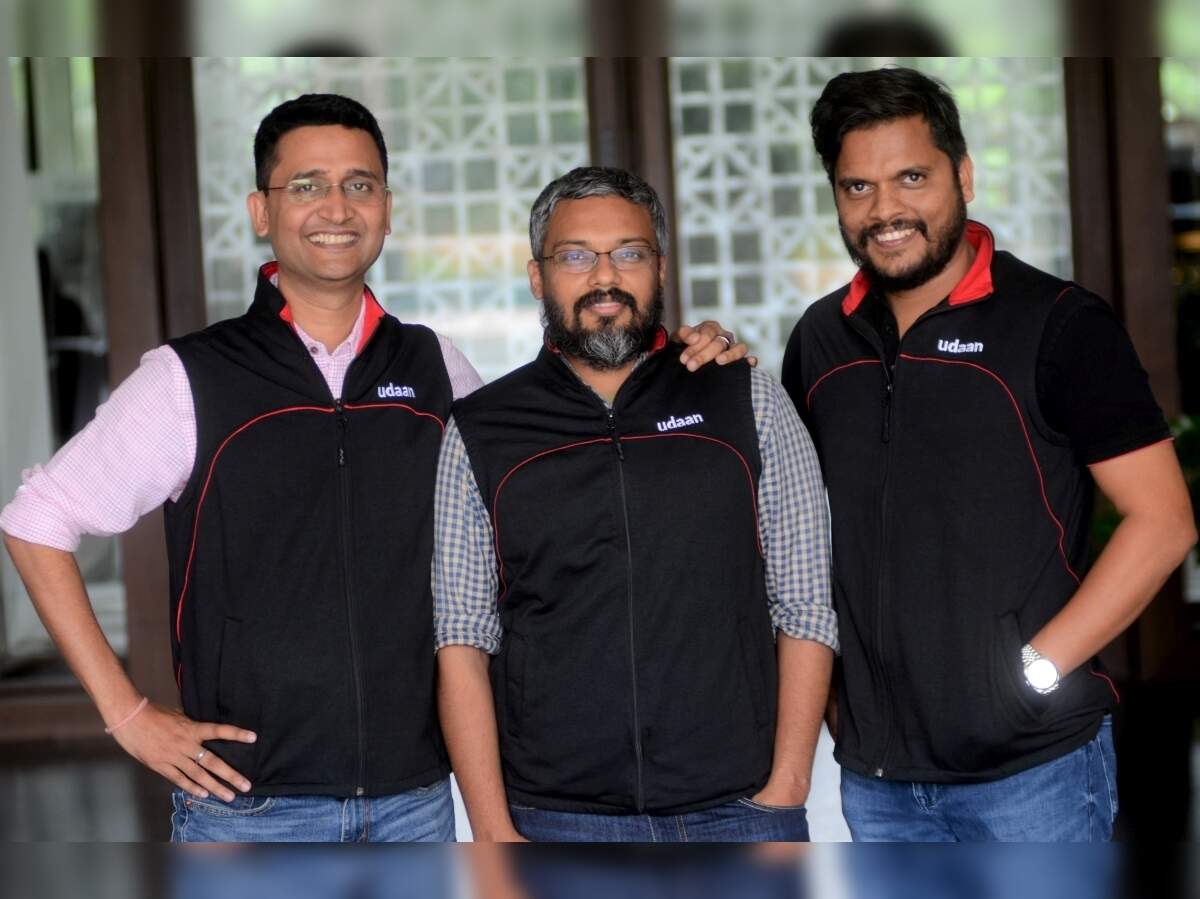
| FOUNDERS | Sujeet Kumar, Amod Malviya and Vaibhav Gupta, founded 2016 |
| THE ACCESS POINT Udaan is private. Investors include Lightspeed, Tencent, Microsoft, GGV and Octahedron. Individuals can reach it only via funds or unlisted marketplaces. |
|---|
Executive decision summary
| THE BOTTOM LINE Udaan is a wholesale marketplace where small retailers buy groceries, staples and general goods on credit. After a deep reset in FY25 when revenue fell 20%, FY26 revenue returned to growth at ₹5,134 crore (+12.6%) and the loss narrowed to about ₹852 crore. Its audited statements flag a going-concern uncertainty, with current liabilities ₹1,391 crore above current assets, and its last round cut the valuation by about 59%. Management targets profit by end-2027 and an IPO by late 2027 or early 2028. |
|---|
| WHICH INVESTOR Fits you IF you want a turnaround in Indian B2B commerce with a large retailer base and a credible path to profit. Look elsewhere IF you want balance-sheet comfort: the accounts carry a going-concern note and heavy losses. |
|---|
| COMFORT FIT Udaan = a giant wholesale mart for kirana stores, open on an app, selling on credit. Jumbotail, Metro Cash & Carry, DMart Ready = rivals. Infra.Market, OfBusiness = B2B platforms in other categories. |
|---|
| THE RUPEIA NUMBER ₹1,391 crore. The amount by which current liabilities exceeded current assets at March 2026, behind a going-concern note. |
|---|
1 CLAIM REGISTER: EVIDENCE GRADING
A = government or regulator record. B = statutory filing. C = independent press. D = company announcement.
| Claim | Source | Grade | Rupeia assessment |
|---|---|---|---|
| FY26 operating revenue ₹5,134 crore (+12.6%) | Inc42; Entrackr; Indian Retailer; Retail Intel | B/C | Established. |
| FY26 loss ₹852 crore (−19%) | Entrackr; Inc42 | B/C | One outlet reports ₹1,055 crore. |
| Going-concern note; ₹1,391 crore working-capital gap | Entrackr | B/C | Reported from statements. |
| US$114m Series G in June 2025 at a 59% valuation fall | Inc42 | C | Reported. |
| IPO by late 2027 or early 2028; profit by end-2027 | Press | D/C | Management target. |
2 COMPANY OVERVIEW & FOUNDING STORY
Udaan was founded in Bengaluru in 2016 by three former Flipkart executives, Sujeet Kumar, Amod Malviya and Vaibhav Gupta. It connects manufacturers and wholesalers to small retailers, who order on the app and receive goods the next day, usually with a short credit line. It became a unicorn within two years and raised over US$1bn from Tencent, Microsoft, Lightspeed and others.
The company grew fast, then hit a wall as investor money dried up and credit losses rose. It pulled back from some categories, closed or reorganised lines and cut costs, and revenue fell about 20% in FY25. FY26 is the first year of renewed growth.
B2B commerce is a large but thin-margin and credit-heavy business. Udaan has to earn enough on each order to cover delivery, discounts and credit risk; otherwise growth deepens losses.
3 TIMELINE
| Date | Event |
|---|---|
| 2016 | Founded in Bengaluru |
| 2018–21 | Rapid funding rounds; unicorn |
| FY24–FY25 | Revenue declines; cost cutting; FY25 revenue ₹4,561 crore (−20%) |
| Jun 2025 | US$114m Series G at a 59% lower valuation |
| FY26 | Revenue ₹5,134 crore (+12.6%); loss ~₹852 crore; going-concern note |
| Target | Profit by end-2027; IPO late 2027 or early 2028 |
4 FUNDING AND VALUATION RESET
| Item | Detail | Amount | Comment |
|---|---|---|---|
| Cumulative funding | Over 8 years | >US$1.1bn | Tencent, Microsoft, Lightspeed, GGV and others |
| Jun 2025 | Series G | US$114m | About 59% valuation cut |
| Post year-end | Additional funding | Not itemised | Referenced in the going-concern note |
| Peak valuation | 2021 | ~US$3.1bn (reported) | Rupeia note: a 59% fall implies about US$1.3bn |
A 59% fall from a US$3.1bn peak leaves the valuation at about US$1.27bn on Rupeia's arithmetic. On FY26 revenue of ₹5,134 crore (about US$532m) that is about 2.4x revenue.
| RUPEIA CALCULATION US$1.27bn at ₹96.5 is about ₹12,260 crore: 2.4x FY26 revenue and 14x the FY26 loss of ₹852 crore. Each year of losses at this level consumes about 7% of the valuation. |
|---|
5 FINANCIAL FORENSICS
| Metric | FY25 | FY26 | Change |
|---|---|---|---|
| Operating revenue | ₹4,561 crore | ₹5,134 crore | +12.6% |
| Net loss | ~₹1,052 crore (derived) | ~₹852 crore | −19% |
| Loss as % of revenue | ~23% | ~16.6% | Rupeia calculation |
| Working-capital gap | n/a | ₹1,391 crore | Current liabilities above current assets |
The loss ratio improved from about 23% to about 17% of revenue. The ₹852 crore loss is still more than 16 paise on every rupee of sales, which is more than a thin-margin wholesaler can sustain without new capital.
| RUPEIA CALCULATION A ₹1,391 crore shortfall of current assets against current liabilities is about 27% of revenue. Together with a ₹852 crore annual loss, it explains why the auditors flagged going-concern uncertainty and why new funding after year end matters for the accounts. |
|---|
6 BUSINESS MODEL & UNIT ECONOMICS
Udaan earns a margin on goods sold and fees on credit and delivery.
| Line | How it earns | Pressure point |
|---|---|---|
| Staples and FMCG | Trade margin on wholesale orders | Thin margin; competition from distributors |
| Fashion, electronics and general goods | Higher margin per order | Return rates; inventory |
| Credit to retailers | Interest or fees on short credit | Defaults |
| Logistics and fulfilment | Cost to serve; some fee income | Cost per delivery |
Each order must pay for picking, delivery and credit risk. As order size and frequency rise, unit costs fall; below a threshold the business loses money on each delivery.
7 MARKET & COMPETITIVE ANALYSIS
| Peer | Status | Position |
|---|---|---|
| Jumbotail | Private | B2B grocery marketplace; raised large rounds in 2025 |
| DMart Ready, Metro Cash & Carry (Reliance) | Listed parents | Wholesale and retail incumbents |
| Infra.Market, OfBusiness, Moglix | Private / IPO-bound | B2B platforms in other categories |
| Eternal (Blinkit), Zepto | Listed / private | Quick-commerce players supplying kirana demand |
There is no clean listed comparison. Investors will benchmark against distribution and retail companies, which trade at 1–3x revenue, and the IPO will have to show that Udaan can grow without deepening losses.
8 WHAT "GOING-CONCERN UNCERTAINTY" MEANS FOR AN INVESTOR
The auditors believe the accounts raise doubt about the ability to continue without further funding or action.
It does not mean the company will fail; it means the survival case depends on new capital or improved cash flow.
Management says additional funding was raised after year end; the amount and terms are not in the sources reviewed.
The flag must be cleared before an IPO, so a clean audit opinion is a milestone to watch.
For unlisted buyers, the note is a reason to treat any quoted price with extra care.
9 WHY FY26 MATTERS
FY26 is the first year of revenue growth in four years. Growth of 12.6% after a 20% fall means revenue is still below the FY24 level. Management ties profitability to growth in higher-margin categories and to a leaner cost base.
10 VALUATION ARITHMETIC
| Valuation | ₹ crore (₹96.5/US$) | x FY26 revenue |
|---|---|---|
| US$3.1bn (peak, reported) | ~29,900 | 5.8x |
| US$1.27bn (59% lower) | ~12,260 | 2.4x |
| US$0.8bn (illustrative) | ~7,720 | 1.5x |
Rupeia calculation. The US$3.1bn peak is a reported figure; the lower values are derived.
11 SCENARIO ANALYSIS
| Scenario | Probability | What happens |
|---|---|---|
| Bull | 20% | Profit by end-2027; going-concern flag removed; IPO at US$1.5bn+ |
| Base | 45% | Losses narrow slowly; another round before an IPO |
| Bear | 35% | Funding gap or credit losses force a deeper reset |
12 RISK ANALYSIS: RED FLAG LEDGER & KILL CONDITIONS
| Risk | Severity | Kill condition |
|---|---|---|
| Going-concern and funding gap | High | No fresh capital by mid-2027 |
| Continued large losses | High | FY27 loss above ₹600 crore |
| Credit losses on retailer lending | Medium | Rising write-offs |
| Competition from quick commerce and Jumbotail | Medium | Share loss |
| Valuation reset | Medium | Another round below US$1bn |
13 INVESTOR CLASS ANALYSIS
HNIs and family offices
Unlisted quotes need to be set against a going-concern note. Avoid paying for growth that the accounts do not yet show.
Institutions
Tencent, Microsoft, Lightspeed and GGV hold large preferred stakes and will influence terms.
NRIs
NRIs can hold unlisted Indian shares under FEMA pricing and reporting rules; repatriation depends on the account route used.
14 THE EARLY SIGNAL: EVENTS TO WATCH
| When | Event |
|---|---|
| Early 2027 | FY27 H1 results and funding news |
| 2027 | Going-concern status in audited accounts |
| Late 2027–early 2028 | IPO preparation |
15 RUPEIA FINAL INDEPENDENT VIEW
Udaan has stabilised and returned to growth, but the accounts show a fragile balance sheet. The IPO target of late 2027 depends on showing profit.
| THE RUPEIA NUMBER ₹1,391 crore. The amount by which current liabilities exceeded current assets at March 2026, behind a going-concern note. |
|---|
| RUPEIA VERDICT A turnaround in progress with balance-sheet risk. Not for investors who need safety. |
|---|
Frequently asked questions
What was Udaan's FY26 revenue?
₹5,134 crore, up 12.6%.
How much did Udaan lose?
About ₹852 crore, down 19% (one outlet reports ₹1,055 crore).
What is the going-concern note?
Auditors flagged uncertainty; current liabilities exceeded current assets by ₹1,391 crore.
When will Udaan list?
Management targets late 2027 or early 2028.
Source log
Inc42: Udaan FY26 revenue rises 13%
Entrackr: Udaan FY26 results
Indian Retailer: Udaan returns to growth
Retail Intel: Udaan FY26 revenue up 13%
Whalesbook: Udaan FY26 turnaround
Unicorn Magazine: Udaan FY26
| DISCLAIMER This report is independent research by Rupeia Investments Co. built only from public sources as of the date shown. It is not an offer, solicitation or investment advice, and it is not a recommendation to buy or sell any security. Private-company figures are drawn from filings and media reports and may be revised. Unlisted and private-market investments are illiquid and carry a risk of total loss. Investors should take independent advice. |
|---|