boAt (Imagine Marketing): updated DRHP for ₹1,500 crore IPO
Independent report content
| IPO PLAN | ₹1,500 crore (cut from ₹2,000 crore): fresh issue ₹500 crore and offer for sale ₹1,000 crore · updated DRHP filed Oct 2025 |
|---|---|
| USE OF FRESH ISSUE | ₹225 crore working capital; ₹150 crore brand and marketing; balance general purposes |
| FY25 | Revenue from operations about ₹3,070 crore · profit about ₹61 crore |
| FY24 | Revenue ₹3,117.6 crore (Inc42) · loss ₹79.6 crore |
| UNLISTED PRICE REFERENCE | About ₹1,372 per share (Planify); no official price |
| STATUS | No IPO date, red herring prospectus or price band found as of the latest tracker updates; one 2026 guide says the DRHP had not been refiled in April 2026 |
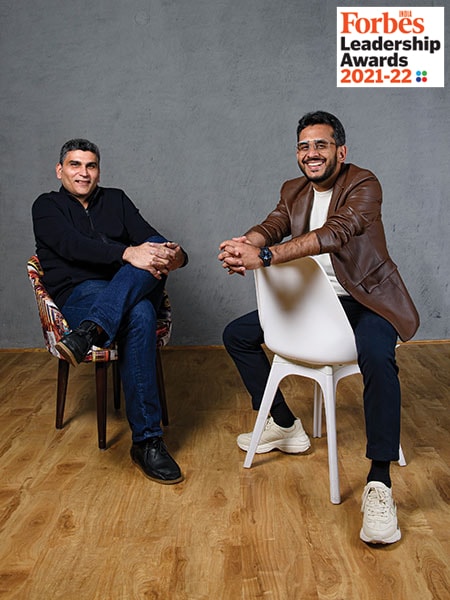
| FOUNDERS | Aman Gupta and Sameer Mehta; founding year reported as 2013 or 2015 |
| THE ACCESS POINT boAt shares trade in the unlisted market. The IPO has an SEBI-cleared draft but no launch date; listing is the way for most investors to buy. |
|---|
Executive decision summary
| THE BOTTOM LINE boAt is India's best-known audio and wearables brand, built on cheap, well-styled earphones and smartwatches. Revenue slipped slightly from about ₹3,118 crore in FY24 to about ₹3,070 crore in FY25, but the company swung from an ₹80 crore loss to a roughly ₹61 crore profit. It cut its IPO from ₹2,000 crore to ₹1,500 crore in October 2025, with two-thirds of the issue being existing investors selling. A year on, there is no launch date. The unlisted price near ₹1,372 per share is the market's verdict until a prospectus sets a price. |
|---|
| WHICH INVESTOR Fits you IF you want Indian consumer-hardware exposure, a profit turnaround and a strong brand, and you can wait for the IPO. Look elsewhere IF you need revenue growth: sales fell about 1.5% in FY25 and competition is fierce. |
|---|
| COMFORT FIT boAt = the Indian answer to Sony and JBL: affordable, trendy audio gear sold mostly online. Noise, Fire-Boltt, Realme, Samsung = rivals in earphones and wearables. Dixon (maker), Titan (watches) = listed names in adjacent businesses. |
|---|
| THE RUPEIA NUMBER ₹1,000 crore of the ₹1,500 crore IPO is existing investors selling. Only ₹500 crore goes into the company. |
|---|
1 CLAIM REGISTER: EVIDENCE GRADING
A = government or regulator record. B = statutory filing. C = independent press. D = company announcement.
| Claim | Source | Grade | Rupeia assessment |
|---|---|---|---|
| Updated DRHP: IPO cut to ₹1,500 crore (₹500 crore fresh, ₹1,000 crore OFS) | Business Standard; Inc42; Upstox; Planify | B/C | Established. |
| FY25 revenue about ₹3,070 crore; profit about ₹61 crore | Inc42; Business Standard | B/C | Established. |
| FY24 revenue ₹3,117.6 crore; loss ₹79.6 crore | Inc42 | B/C | Established; another guide cites ~₹3,400 crore. |
| Unlisted price about ₹1,372 | Planify | C | Marketplace reference only. |
| No IPO launch date | IPO trackers (Apr–Jul 2026) | C | As of the latest tracker updates found. |
2 COMPANY OVERVIEW & FOUNDING STORY
boAt was started by Aman Gupta, later a judge on the television show Shark Tank India, and Sameer Mehta. It sells wireless earphones, headphones, speakers and smartwatches, mainly through Amazon, Flipkart and its own website, with a growing offline presence. Its founders came from marketing and supply-chain backgrounds, which shaped a model that designs products in India and has them made by contract manufacturers.
The brand's edge was price and style: it sold earphones that looked and felt premium at a fraction of the price of Western brands, and promoted them with cricketers and celebrities. It became the leading Indian wearables brand by shipments within a few years of its launch.
The weakness is the same as the strength. Products are easy to copy, price cuts by rivals are quick, and the brand depends on online marketplaces for most sales. A strong brand has to turn into repeat customers and pricing power for the profit to last.
3 TIMELINE
| Date | Event |
|---|---|
| 2013–15 | Imagine Marketing founded; boAt brand launched |
| 2020–22 | Rapid growth; Warburg Pincus and other investors come in |
| FY24 | Revenue ₹3,117.6 crore; loss ₹79.6 crore |
| FY25 | Revenue about ₹3,070 crore; profit about ₹61 crore |
| Late 2025 | Updated DRHP; IPO cut to ₹1,500 crore |
| 2026 | No launch; trackers show no price band |
4 FUNDING, THE IPO STRUCTURE AND THE UNLISTED PRICE
| Item | Detail | Amount | Comment |
|---|---|---|---|
| Original plan | Fresh plus OFS | ₹2,000 crore | Confidential route |
| Revised plan | Updated DRHP (Oct 2025) | ₹1,500 crore | ₹500 crore fresh, ₹1,000 crore OFS |
| Working capital | From fresh issue | ₹225 crore | Stated use |
| Brand and marketing | From fresh issue | ₹150 crore | Stated use |
| Unlisted reference price | Marketplace | ~₹1,372 per share | Not an official price |
Cutting the issue by a quarter, and keeping two-thirds of it as secondary, is a sign that sellers priced the IPO at a level the market would accept, not at an earlier ambition. Investors buying in the IPO will mainly be paying early backers, not funding growth.
| RUPEIA CALCULATION ₹500 crore of fresh money against FY25 revenue of about ₹3,070 crore is 16%; against FY25 profit of about ₹61 crore it is eight times. The company is raising a large sum relative to its earnings. |
|---|
5 FINANCIAL FORENSICS
| Metric | FY24 | FY25 | Change |
|---|---|---|---|
| Revenue from operations | ₹3,117.6 crore | ~₹3,070 crore | −1.5% |
| Profit / (loss) | (₹79.6 crore) | ~₹61 crore | Swing of about ₹141 crore |
| Net margin | −2.6% | 2.0% | Rupeia calculation |
The turnaround came on flat revenue, which suggests cost control (lower advertising, better product mix and fewer discounts) rather than growth. That is real progress, but a 2% margin leaves little room for error in a price-competitive category.
| RUPEIA CALCULATION At the unlisted reference price of ₹1,372, the market value depends on the share count, which is not in the sources reviewed. As an illustration, if the company were valued at ₹6,000 crore, FY25 profit of ₹61 crore would be a price-to-earnings ratio of about 98x, and revenue 2.0x. If it were ₹4,000 crore, P/E would be 66x and revenue 1.3x. |
|---|
6 BUSINESS MODEL & UNIT ECONOMICS
boAt designs products, sources them from contract manufacturers and sells them through marketplaces, its own site and a growing set of stores.
| Line | How it earns | Pressure point |
|---|---|---|
| Audio (earphones, headphones, speakers) | Product margin on very high volumes | Price wars; fashion cycles; Chinese-brand rivals |
| Wearables (smartwatches, rings) | Higher ticket price and margin | Rapid commoditisation; component costs |
| Channels (online marketplaces) | Sales through Amazon and Flipkart | Marketplace fees; discounting at sale events |
| Brand and marketing | Celebrity endorsement and advertising | Cost of keeping share of voice |
A consumer-hardware brand lives on turnover: buyers replace earphones every 12–18 months, so repeat customers matter. Marketing spend of ₹150 crore from the fresh issue is meant to fix this by building brand loyalty rather than buying one-off sales.
7 MARKET & COMPETITIVE ANALYSIS
| Peer | Status | Position |
|---|---|---|
| Noise (Nexxbase) | Private | Smartwatch and audio rival; closest on product mix |
| Fire-Boltt | Private | Wearables leader at times |
| Samsung, Apple, Sony, JBL | Global listed | Premium audio brands; boAt competes below them |
| Dixon Technologies, Titan | Listed | Contract maker and watch brand; adjacent businesses |
No listed peer is a pure comparison. Investors tend to benchmark boAt against consumer-brand IPOs such as Honasa, Nykaa and Lenskart, which were rewarded for growth, and against electronics assemblers such as Dixon, which are valued on volume and margin.
8 WHAT A BUYER OF THE IPO IS ACTUALLY BUYING
| Piece | Amount | Goes to |
|---|---|---|
| Fresh issue | ₹500 crore | The company |
| Offer for sale | ₹1,000 crore | Selling shareholders |
| Total | ₹1,500 crore | |
| Share of IPO that is secondary | 67% | Rupeia calculation |
A buyer is mostly handing money to existing investors. That does not make the IPO a bad deal, but it removes the argument that the money will fund fast growth. The ₹225 crore for working capital and ₹150 crore for brand building are modest sums relative to a ₹3,000 crore revenue base.
9 COMPETITION AND WHAT COULD ERODE THE BRAND
Price competition: Noise, Fire-Boltt and Chinese brands sell near-identical products at similar or lower prices.
Marketplace dependence: most sales go through two online platforms; their fees and discounts decide margin.
Component costs: chips and batteries are largely imported; a weak rupee or supply shock raises costs.
Fashion risk: wearables go out of style quickly; the brand must refresh products every few months.
The positive counter is scale: boAt's volumes give it purchasing power, and its brand is among the most recognised in the category.
10 GOVERNANCE AND THE FOUNDER STORY
Aman Gupta's public profile as a television investor has been an asset for brand recall, and he is the face of the company. Sameer Mehta, a co-founder, runs operations. Because both are founders and shareholders, their selling in the IPO will be watched; the offer for sale includes sales by existing investors, and the prospectus lists who sells how much.
The company has dealt with leadership and strategic reviews as it prepared for listing, including the decision to resize the IPO. Investors should read the risk-factor section for customer concentration, related-party transactions and dependence on a few contract manufacturers.
11 WHY THE IPO HAS NOT LAUNCHED
Trackers show no launch date a year after the updated DRHP. The reasons are not stated in the sources reviewed. Plausible factors, to be read as Rupeia's interpretation, are weaker retail demand for consumer-hardware names, the reception of recent consumer IPOs and the sellers' view of price. A SEBI observation normally lapses after 12 months, so a refiling may be needed.
12 VALUATION ANALYSIS
| Illustrative value | x FY25 revenue (₹3,070 crore) | x FY25 profit (₹61 crore) |
|---|---|---|
| ₹3,000 crore | 1.0x | 49x |
| ₹4,000 crore | 1.3x | 66x |
| ₹6,000 crore | 2.0x | 98x |
Rupeia illustration; the share count and price band are not published. Profit multiples are high because margins are thin.
13 SCENARIO ANALYSIS
| Scenario | Probability | What happens |
|---|---|---|
| Bull | 25% | Margin rises to 5%; IPO prices at 2x revenue; strong listing |
| Base | 45% | IPO relaunched in 2027 at 1–1.5x revenue |
| Bear | 30% | Competition and weak demand delay the IPO again; price cut |
14 RISK ANALYSIS: RED FLAG LEDGER & KILL CONDITIONS
| Risk | Severity | Kill condition |
|---|---|---|
| Price competition and thin margin | High | FY26 profit falls back to a loss |
| Flat revenue | High | Revenue below ₹3,000 crore in FY26 |
| Marketplace and import dependence | Medium | Fee or tariff shocks |
| IPO delay and lapse of SEBI approval | Medium | No relaunch by mid-2027 |
15 INVESTOR CLASS ANALYSIS
HNIs and family offices
Price any unlisted purchase against the ₹1,372 reference and an earnings multiple you would accept for a 2%-margin hardware brand.
Institutions
Institutions will look for margin above 5% and revenue growth before anchoring.
NRIs
NRIs can hold unlisted Indian shares under FEMA pricing and reporting rules; repatriation depends on the account route used.
16 THE EARLY SIGNAL: EVENTS TO WATCH
| When | Event |
|---|---|
| Q4 2026–2027 | FY26 audited numbers and any refiled DRHP |
| 2027 | IPO launch and price band |
| Quarterly | Wearables share data (IDC, Counterpoint) |
17 RUPEIA FINAL INDEPENDENT VIEW
boAt has the brand and the turnaround, but not yet the growth or the margin to justify a premium. The smaller IPO and the long wait suggest the sellers know that.
| THE RUPEIA NUMBER ₹1,000 crore of the ₹1,500 crore IPO is existing investors selling. Only ₹500 crore goes into the company. |
|---|
| RUPEIA VERDICT Strong brand, thin profit, no date. Wait for a prospectus price before paying unlisted premiums. |
|---|
Frequently asked questions
How big is the boAt IPO?
₹1,500 crore: ₹500 crore fresh and ₹1,000 crore offer for sale, per the October 2025 updated DRHP.
Is boAt profitable?
Yes, about ₹61 crore in FY25 after an ₹80 crore loss in FY24.
What is boAt's revenue?
About ₹3,070 crore in FY25.
When will boAt list?
No launch date has been announced.
Who founded boAt?
Aman Gupta and Sameer Mehta.
Source log
Business Standard: boAt parent files updated DRHP, cuts issue to ₹1,500 crore
Inc42: boAt files updated DRHP
Upstox: five things to know about the boAt DRHP
Planify: boAt parent reduces IPO size
HDFC Sky: boAt parent files updated papers
IPO Market: boAt IPO 2026
Curved Trading: boAt IPO status
Precize: boAt unlisted shares 2026
| DISCLAIMER This report is independent research by Rupeia Investments Co. built only from public sources as of the date shown. It is not an offer, solicitation or investment advice, and it is not a recommendation to buy or sell any security. Private-company figures are drawn from filings and media reports and may be revised. Unlisted and private-market investments are illiquid and carry a risk of total loss. Investors should take independent advice. |
|---|