Simplismart: US$14m Series B with NVIDIA and Accel
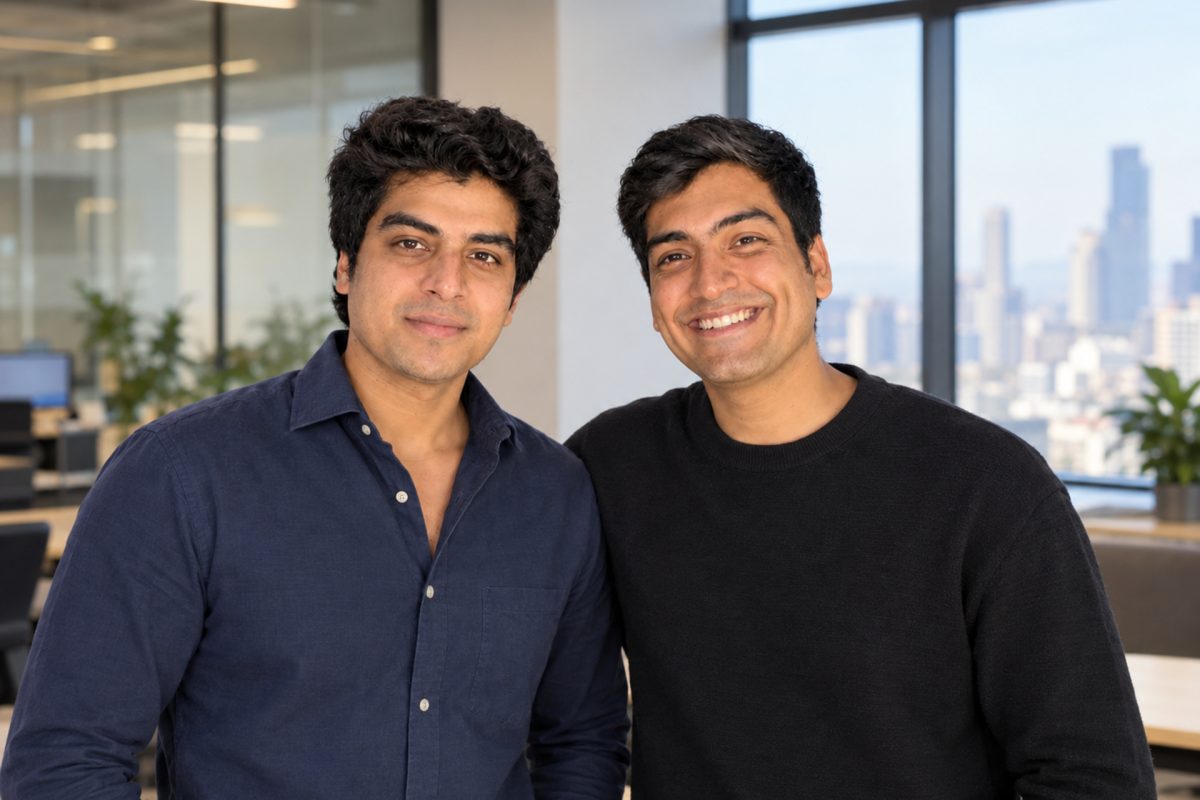
Amritanshu Jain (CEO, left) and Devansh Ghatak (CTO), co-founders of Simplismart Source: Simplismart AI, via TechCrunch (27 Oct 2026)
Independent report content
| ROUND | Series B · US$14m (about ₹133 crore) · announced 27 Oct 2026 · the company says the round is closed and will not be extended |
|---|---|
| LEADS | Dallas Venture Capital (about US$5m of the round, per the CEO) |
| CO-INVESTORS | NVIDIA, Accel, Shastra VC, Micromax Informatics and angel investors |
| TOTAL RAISED | About US$21m including the Series A (company-reported); Inc42 lists US$28m+, a figure that counts the August 2026 allotment on its own |
| VALUATION | About US$100m post-money (press reports). Filings reported by Entrackr put the August 2026 allotment at about ₹826 crore post-money |
| REVENUE | FY25 ₹1.4 crore (FY24 ₹61 lakh); net loss ₹9.0 crore (Inc42 extract of filed accounts). Company says annualised run-rate grew 14x in six months to an 'eight-figure' sum, base not disclosed |
| KEY METRIC | More than half of revenue from the US; customers include HeyGen, Higgsfield, InVideo, Shiprocket, Apna and Ema; Yotta runs its serverless inference on Simplismart |
| BUSINESS MODEL | Software only: shared endpoints (per token), dedicated endpoints (GPU time plus software) and bring-your-own-compute. Owns no GPUs |
| COMPETING TALKS | Economic Times (21 Oct 2026) reported talks for US$40–50m at US$300–400m with Peak XV and Damac Digital; the CEO declined to comment and said the company is not raising |
| COMPANY | Verute Technologies Pvt Ltd, trading as Simplismart · founded 2022 · Amritanshu Jain (CEO) and Devansh Ghatak (CTO) · 58 employees |
| THE ACCESS POINT Simplismart is a private company. The Series B was subscribed by Dallas Venture Capital, NVIDIA, Accel, Shastra VC, Micromax Informatics and angels. There is no listed proxy for the company itself. An individual investor can reach it only through a rare secondary transaction in its shares, or through the funds that hold it. Accel India is the largest institutional holder at 19.92% per the cap-table data published after the August 2026 allotment. The company says the Series B will not be extended, so there is no open primary round. |
|---|
Executive decision summary
| THE BOTTOM LINE Simplismart sells the software layer between an AI model and the GPUs that run it. Its inference engine tunes speed, cost and quality for each workload, and its orchestration platform deploys and scales across clouds and on-premises servers. It does not own GPUs. In October 2026 it announced a US$14m Series B led by Dallas Venture Capital with NVIDIA, Accel, Shastra VC and Micromax Informatics, at about US$100m post-money. The traction claim is strong: annualised run-rate up 14 times in six months, with video-AI customers such as HeyGen, Higgsfield and InVideo, and Yotta as a cloud-provider channel. The financial record is thin. FY25 revenue in filed accounts was ₹1.4 crore with a ₹9.0 crore loss, and the 14x claim has no disclosed base. The investment case is a bet that inference cost, not model access, becomes the main constraint for AI products, and that a software specialist survives against NVIDIA, the hyperscalers and well-funded US peers. |
|---|
| WHICH INVESTOR Simplismart fits you IF you want early exposure to the AI inference layer through an Indian-founded, US-revenue company, accept that the last disclosed accounts are a year old, and can hold a minority stake for 6–8 years through a fund or negotiated secondary. Look elsewhere IF you need audited recent revenue, a stable price history or a listed instrument. The valuation has been quoted at three levels within five months, and the base of the growth claim is not disclosed. |
|---|
| COMFORT FIT Simplismart = a fuel-injection specialist for AI engines. It does not make the engine (the model) or the petrol (the GPU). It tunes how the two work together so each trip costs less. NVIDIA / hyperscalers = the car makers who also sell tuning kits. They give away part of what Simplismart sells and also invested in it. Together AI, Fireworks, Baseten, Modal = the well-funded US tuning shops. Larger and faster-growing, but they mostly resell GPU capacity, while Simplismart sells software. Yotta, E2E Networks = Indian GPU landlords. They have the hardware and need a software layer to rent it as a service. That is Simplismart's cloud-provider pitch. |
|---|
| THE RUPEIA NUMBER ₹1.4 crore → about ₹826 crore. FY25 filed revenue was ₹1.4 crore. The August 2026 allotment priced the company at about ₹826 crore post-money, roughly 590 times that revenue. The 14x run-rate claim narrows the gap only if the base is large. If the 'eight-figure' run-rate is US$10m the multiple is about 10x; if it is ₹10 crore it is about 83x. The company has not said which. |
|---|
1 CLAIM REGISTER: EVIDENCE GRADING
Every material claim in this note is graded by the strength of its published source. A = government, regulator or customer record. B = statutory filing or financial statement (including extracts). C = independent press. D = company announcement.
| Claim | Source | Grade | Rupeia assessment |
|---|---|---|---|
| US$14m Series B led by Dallas Venture Capital with NVIDIA, Accel, Shastra VC, Micromax | Company release; YourStory, Inc42, TechCrunch, Global Corporate Venturing (27 Oct 2026) | C | Published by several independent outlets with the same investor list. |
| Dallas Venture Capital invested about US$5m | CEO to Inc42 | D | Management statement. Per-investor amounts are not otherwise disclosed. |
| Valuation about US$100m post-money | TechCrunch, Venture Intelligence, rootdata (aggregators citing TechCrunch) | C | Press figure. The company has not stated a valuation. |
| August 2026 allotment about ₹97 crore, post-money about ₹826 crore; Dallas ₹44.84 crore, Accel ₹24.09 crore | Entrackr report on filings, via StartupFeed (21 Oct 2026) | B | Based on a filing report. The ₹97 crore allotment is smaller than the US$14m (₹133 crore) headline, so part of the Series B was allotted later or in another instrument. The split is not published. |
| Cap table: Accel 19.92%, Dallas 6.23%, Shastra Fund II 2.69%, Micromax 0.63% | StartupFeed from filings | B | Percentages as published; they do not add to the full register. |
| FY25 revenue ₹1.4 crore, loss ₹9.0 crore, assets ₹53.7 crore | Inc42 financials page for Verute Technologies | B | Extract of filed standalone accounts. Audited copy not published. |
| Annualised run-rate up 14x in six months | Company; TechCrunch | D | Based on recent customer usage, excludes pass-through infrastructure revenue. Base not disclosed beyond 'eight-figure'. |
| InVideo GPU serving cost cut by 56% | Company claim, TechCrunch | D | Customer-specific outcome, not independently measured. |
| More than half of revenue from the US | CEO to TechCrunch and Inc42 (about 55%) | D | Management statement. |
| Talks for US$40–50m at US$300–400m | Economic Times via StartupFeed (21 Oct 2026) | C | Report of talks only. The CEO said the company is not actively raising. |
| NVIDIA to lead a US$20m round at about US$100m (May 2026) | Venture Intelligence (18 May 2026) | C | Pre-round talks. The final round was US$14m led by Dallas, with NVIDIA participating. |
2 COMPANY OVERVIEW & FOUNDING STORY
Simplismart was founded in 2022 by Amritanshu Jain and Devansh Ghatak. Its legal entity is Verute Technologies Private Limited. The two met at BITS Pilani. Jain, the chief executive, is a former Oracle engineer. Ghatak, the chief technology officer, is a former Google engineer. The company is headquartered in Bengaluru with an office in San Francisco, and it employs 58 people (CEO to TechCrunch, October 2026).
The pitch is a response to a change in where AI money is spent. Training a model is a one-off project for a few labs. Running a model, known as inference, happens every time a user asks a question, generates a video or processes a document, and the cost rises with usage. Open-weight models have also narrowed the quality gap between labs, so a business that uses AI is increasingly separated from its rivals by cost, speed and reliability rather than by access to a model. The CEO's own summary is that the company has spent four years building the software between the model and the GPU.
What the software does
Inference engine. Lets a customer configure the model, GPU type, serving framework, quantisation (reducing numerical precision to save compute), caching and other settings around its own speed, cost and quality needs.
Orchestration platform. Handles deployment, auto-scaling and monitoring across public clouds, specialist GPU clouds and on-premises servers.
Fine-tuning and training tools. Lets customers adapt models to their own data.
Cloud-provider offering. Lets a GPU cloud sell managed AI services under its own brand, built on Simplismart's stack and, per the company, in work with NVIDIA.
Planned dynamic GPU scheduling layer. The CTO said part of the new money will fund a layer that matches workloads with spare capacity across regions and time zones.
The tuning example the company uses
Simplismart cites a customer that needed responses in about 200 milliseconds at roughly 9 cents per million tokens. Its tool found several options, including 5 cents at 350 milliseconds and 12 cents at 100 milliseconds. The configuration actually deployed cost 7 cents per million tokens and answered in 180 milliseconds. This is a company-supplied example, but it shows the product's logic: the engine searches for the cheapest set-up that still meets a stated service level.
3 TIMELINE: 2022–2026
| Date | Milestone (company, filings and press) |
|---|---|
| 2022 | Founded as Verute Technologies Pvt Ltd by Amritanshu Jain and Devansh Ghatak; Simplismart brand launched |
| Oct 2022 – Sep 2024 | About US$8m raised in total from Anicut Capital, Shastra VC, Accel India, Dallas Venture Capital and others (Venture Intelligence) |
| Jul 2024 | Seed round reported at about US$1.5m post-money (e4m); investors named include Anicut Capital, Sunn91, First Cheque and Shastra VC |
| Aug 2024 | Sheryl Sandberg, former Meta chief operating officer, reported as investing for a second time |
| 17 Oct 2024 | US$7m Series A led by Accel, with Shastra VC, Titan Capital and angels including Notion co-founder Akshay Kothari; valuation about US$25m (Venture Intelligence) |
| Early 2025 | Accel says revenue tripled within months of its investment |
| 18 May 2026 | Venture Intelligence reports NVIDIA in talks to lead a US$20m round at about US$100m |
| 4 Aug 2026 | Filing reported by Entrackr: compulsory convertible preference shares allotted; about ₹97 crore, post-money about ₹826 crore; Dallas Venture Capital ₹44.84 crore, Accel India ₹24.09 crore |
| 21 Oct 2026 | Economic Times reports talks for US$40–50m at US$300–400m; Peak XV and Damac Digital reported as interested |
| 27 Oct 2026 | US$14m Series B announced; Dallas Venture Capital leads, NVIDIA participates; CEO says the round is closed and will not be extended |
4 FUNDING HISTORY & INVESTOR BEHAVIOUR FORENSICS
| Date | Round | Amount | Investors (as reported) | Valuation (as reported) |
|---|---|---|---|---|
| 2022–Jul 2024 | Seed and pre-seed | About US$1–2m (not itemised) | Anicut Capital, Sunn91, First Cheque, Shastra VC; angels | About US$1.5m post-money (Jul 2024 seed, e4m) |
| Aug 2024 | Angel top-up | Not disclosed | Sheryl Sandberg (second investment) | Not disclosed |
| 17 Oct 2024 | Series A | US$7m | Accel (lead), Shastra VC, Titan Capital, angels incl. Akshay Kothari | About US$25m (Venture Intelligence) |
| 4 Aug 2026 | Series B (first allotment per filings) | About ₹97 crore (about US$10m) | Dallas Venture Capital ₹44.84 crore; Accel India ₹24.09 crore; Micromax Informatics (new) | About ₹826 crore (about US$85m) |
| 27 Oct 2026 | Series B (announced) | US$14m (about ₹133 crore) | Dallas Venture Capital (lead, about US$5m), NVIDIA, Accel, Shastra VC, Micromax Informatics, angels | About US$100m post-money (press) |
What the investor pattern shows
Accel kept investing. Accel led the Series A and stayed in the Series B. As the largest institutional holder at 19.92%, its follow-on is the most useful signal that insiders liked the numbers they saw.
Dallas Venture Capital moved from participant to lead. It was an early investor and took the lead in 2026 with the largest cheque, about US$5m of US$14m, or 36% of the round.
NVIDIA's role is strategic, not just financial. The CEO says NVIDIA's engineers and solutions architects work with Simplismart on technical integrations, including NVIDIA's Dynamo inference software, and have helped introduce customers and partners. NVIDIA has not publicly explained the investment. Simplismart is also an early member of the NVIDIA Inception programme.
The valuation moved fast. About US$25m (October 2024), about US$100m (May to October 2026), and a reported US$300–400m in talks that the company says it is not pursuing. A fourfold step-up in 24 months, and a further reported tripling within weeks, mean price discovery is still volatile.
| RUPEIA CALCULATION US$14m on a US$100m post-money valuation is 14% dilution. Dallas's roughly US$5m buys about 5%. The Entrackr-reported cap table shows Dallas at 6.23% after the first allotment, so its stake across both closes can be expected to be higher than 6.23%; the final figure is not published. |
|---|
The unconfirmed higher-price talks
On 21 October 2026, six days before the Series B announcement, the Economic Times reported talks for US$40–50m at US$300–400m, with Peak XV and Damac Digital looking at stakes. Neither appears among the Series B investors. On 27 October the CEO told TechCrunch that the company was not actively fundraising and that the Series B had closed and would not be extended. Investors should treat the US$300–400m figure as a report of talks, not as a price at which shares changed hands.
5 FINANCIAL FORENSICS: WHAT THE FILINGS SHOW
| Metric (standalone, Verute Technologies) | FY24 | FY25 | Change / reading |
|---|---|---|---|
| Revenue from operations | ₹61.0 lakh | ₹1.4 crore | +135.6% |
| Total expenses | About ₹1.3 crore (derived) | ₹10.4 crore | Up about 709% (Inc42) |
| Profit after tax | About –₹0.7 crore (derived) | –₹9.0 crore | Loss widened from a small base |
| Total assets | About ₹4.5 crore (derived) | ₹53.7 crore | Up about 1,092%; reflects the Series A cash |
| Net margin | n/a | –627.8% | Loss is about 6.3 times revenue |
Three observations. First, FY25 revenue was tiny. ₹1.4 crore is about US$145,000 at ₹96.5. The Series A closed in October 2024, so FY25 is the first full year with that money, and the company spent about ₹10 crore to earn it. Second, the revenue base is entity-specific. The standalone filing is for the Indian company. The CEO says more than half of revenue comes from the US, and TechCrunch notes the company has an office in San Francisco. Revenue billed through a US entity or on a gross basis would not appear in these figures. Third, the run-rate claim is deliberately defined. The company says it is based on recent customer usage rather than contracted recurring revenue and excludes revenue passed through to infrastructure providers.
| Illustrative reading of the run-rate claim | If run-rate is… | Implied multiple of US$100m valuation | Comment |
|---|---|---|---|
| 'Eight-figure' in US dollars (minimum) | US$10m | 10x | Would be about 70 times FY25 revenue; a very large jump in 18 months |
| 'Eight-figure' in rupees (minimum) | ₹10 crore (about US$1.04m) | About 96x | Consistent with 14x growth from about ₹0.7 crore six months earlier |
| Midpoint of the rupee reading | ₹50 crore (about US$5.2m) | About 19x | Would require a ₹3.6 crore starting base |
| RUPEIA READING The most useful number to appear next will be FY26 revenue in the accounts due with the registrar by about November 2026, followed by the first FY27 half-year. If FY26 revenue on the Indian entity is in the tens of crores, the 14x claim is credible. If it is below ₹10 crore, the run-rate is concentrated in the most recent months. |
|---|
6 BUSINESS MODEL & UNIT ECONOMICS
Simplismart says it sells in three ways (CEO to Inc42).
| Model | How customers pay | Who it suits | Margin character |
|---|---|---|---|
| Shared endpoints | Per token used, no minimum fee | Start-ups, developers, spiky workloads | Software plus GPU resale; margin depends on GPU utilisation |
| Dedicated endpoints | Rent GPU capacity plus Simplismart's optimisation software; charged on GPU usage and run time | Production AI products with steady load (video, voice) | Mixed; software uplift on top of rented GPU cost |
| Bring your own compute | Software licence or usage fee on the customer's own infrastructure | Banks, financial services, insurers and others with data-residency rules | Highest software margin; no GPU pass-through |
| Cloud-provider offering | Platform fee to GPU clouds that resell managed AI services under their own brand | Yotta (Shakti Studio serverless inference), other GPU clouds, sovereign AI programmes | Software margin; slower sales cycle; works with NVIDIA |
The company says it does not own compute. That separates it from inference providers that buy or reserve GPUs and resell capacity. The advantage is a lighter balance sheet. The disadvantage is that, in shared and dedicated models, it still carries GPU cost on its income statement or at least passes it through, which is why its run-rate figure excludes pass-through revenue. Investors should read gross revenue and net software revenue as two different numbers.
Why the 56% InVideo claim matters, and what it does not show
Simplismart says it helped InVideo cut GPU serving costs by 56%. If a customer's inference bill is a large share of its cost of goods, a cut of that size justifies a contract. It does not show how much of the saving Simplismart keeps. Pricing per token, GPU hour and software fee are not published. A customer that saves 56% and pays Simplismart a share of the saving is a good business; one that saves 56% against a price Simplismart set below cost to win the account is not. The disclosed numbers cannot distinguish these cases.
7 CUSTOMER & CONTRACT INTELLIGENCE
| Customer / partner | What is published | Grade | Commercial reading |
|---|---|---|---|
| InVideo | AI video platform; Simplismart says it cut GPU serving costs by 56% | D | Flagship case study; contract value not disclosed |
| HeyGen, Higgsfield | AI video-generation companies; named customers (company, TechCrunch) | C/D | Heavy GPU users; strong fit for inference optimisation; also the segment most exposed to model-provider change |
| Shiprocket | Indian logistics-tech company (also an IPO-bound name in this series) | C/D | Enterprise workload on Indian side; contract not disclosed |
| Apna, Ema | Indian jobs platform and enterprise-AI start-up | C/D | Mix of consumer and enterprise AI workloads |
| Tata 1mg, Mindtickle, Dashtoon | Earlier named customers (Venture Intelligence, May 2026) | C | Evidence that the customer list has broadened beyond video |
| Yotta | Simplismart powers the serverless inference layer of Yotta's Shakti Studio (Inc42, TechCrunch) | C | First named cloud-provider channel; gives Simplismart access to Indian sovereign-AI demand |
| NVIDIA | Investor, integration partner (Dynamo), customer and partner introductions | C/D | Strategic ally; also a potential competitor with its own inference software |
Revenue geography matters here. About 55% of revenue comes from the US even though the company says it has more customers in India (TechCrunch). That is typical of an AI-tools start-up: US customers spend more per account. It also exposes revenue to US AI-video companies, whose own funding and model choices can change quickly.
8 MARKET & COMPETITIVE ANALYSIS
The market for inference software is crowded. Three forces compete with Simplismart: the GPU maker, the hyperscalers and specialist inference clouds. TechCrunch lists NVIDIA itself, Amazon Web Services, Google Cloud and Microsoft Azure among the rivals, and notes that a growing number of start-ups are building tools to make models faster and cheaper to run.
| Player | Type | Overlap with Simplismart | Edge vs Simplismart |
|---|---|---|---|
| NVIDIA (Dynamo, NIM, TensorRT-LLM) | Chip maker and software vendor | Inference serving and optimisation | Owns the hardware stack; but invested in and integrates with Simplismart |
| AWS Bedrock / SageMaker, Google Vertex AI, Azure AI Foundry | Hyperscalers | Managed model hosting and scaling | Existing enterprise contracts and credits; less tuning per workload |
| Together AI, Fireworks AI, Baseten, Modal | US inference clouds | Direct: managed model endpoints and dedicated deployments | Larger funding, faster US sales, own GPU access |
| Groq, Cerebras, SambaNova | Alternative chip clouds | Fast inference on custom silicon | Different hardware route; compete on speed rather than tuning |
| vLLM, SGLang, TensorRT-LLM (open source) | Open-source engines | The engines inside many inference stacks | Free; Simplismart's engine builds on this family of techniques |
| Yotta, E2E Networks, Netweb | Indian GPU and server providers | Customers and channel for Simplismart; some build their own serving layers | Own the hardware and Indian government contracts |
| Sarvam AI, Krutrim | Indian model builders | Run their own serving; Sarvam is covered in a separate Rupeia report | Own models; potential customers for tuning |
Market context
Demand is driven by the shift from AI training to AI use. India's IndiaAI Mission had put more than 38,000 GPUs under subsidised access by 2025 (Inc42), and Tata Communications announced on 26 October 2026 plans to invest US$400–450m in 10,000 km of AI-ready connectivity. Both raise the volume of capacity that needs software to turn it into services. Specific market-size figures for inference software in India are not published in a form Rupeia can rely on, so none is quoted here.
Listed benchmarks
No listed company is a pure play on independent inference optimisation. Useful reference points are NVIDIA (the demand driver and a Simplismart investor), E2E Networks (an NSE-listed Indian GPU cloud, a possible customer type) and global names such as CoreWeave, which rent GPU capacity. Their revenue multiples are volatile and reflect hardware or capacity businesses rather than software.
9 MOAT ANALYSIS: WHAT PROTECTS SIMPLISMART, AND FOR HOW LONG
| Moat source | Strength | Durability | Comment |
|---|---|---|---|
| Per-workload tuning know-how | Medium | 1–3 years | Real engineering skill, but the techniques (quantisation, speculative decoding, caching) are widely published and are built into open-source engines |
| Cloud-provider integrations (Yotta, NVIDIA) | Medium | 2–4 years | Hard to replace once a GPU cloud has built a product on top. Only one named provider so far |
| Customer switching costs | Weak–medium | Unproven | Customers can run the same model elsewhere; the saving, not the lock-in, keeps them |
| NVIDIA relationship | Medium | Uncertain | Technical access and customer introductions help; NVIDIA has no obligation to stay supportive if it sells competing software |
| Neutral, multi-cloud position | Medium | 3–5 years | Does not own GPUs, so can sit across clouds, which a GPU-owning rival cannot easily match |
| Compliance certifications | Low | Short | The website lists SOC 2, ISO 27001, GDPR, HIPAA and CPRA badges; useful for enterprise sales but common among peers |
The honest summary is that Simplismart's moat is speed of execution and distribution, not a patent or dataset. That is common at this stage in AI infrastructure and can be enough if the company grows faster than larger rivals can copy it. It is not a durable moat in the way a regulated licence or a manufacturing plant is.
10 FOUNDERS' PATH
| Founder | Role | Background (published) | Why it matters |
|---|---|---|---|
| Amritanshu Jain | Co-founder and CEO | BITS Pilani graduate; former Oracle engineer; leads sales, fundraising and the public narrative | Product and enterprise-sales credibility from a large software vendor |
| Devansh Ghatak | Co-founder and CTO | BITS Pilani graduate; former Google engineer; leads the inference engine and the planned GPU-scheduling layer | Systems-engineering background suited to performance work |
The founders met as students and built the company from their experience deploying machine-learning systems at scale, according to TechCrunch. They have raised from Indian seed funds (Anicut, Sunn91, First Cheque, Shastra), a US-linked seed investor (Dallas Venture Capital, whose managing partner Dayakar Puskoor is quoted on the Series B), a top-tier Indian venture firm (Accel) and, now, NVIDIA. The investor list is stronger than most Indian software companies at this stage. It also reflects a deliberate US positioning: the San Francisco office, the 55% US revenue share and the Dallas-led round all point towards North America as the main market.
11 TEAM, GOVERNANCE & PEOPLE
| Item | Published fact | Reading |
|---|---|---|
| Headcount | 58 employees (CEO to TechCrunch, Oct 2026) | Small team for the revenue claim; engineering-heavy |
| Founders | Jain (CEO), Ghatak (CTO) | Both founders still run the company; no external chief financial officer or president named in the sources reviewed |
| Investor representation | Accel, Dallas Venture Capital, Shastra VC hold institutional stakes | Board seats and composition not disclosed |
| Legal entity | Verute Technologies Private Limited (Indian); US presence in San Francisco | US contracting entity and its accounts are not published |
| Certifications | Website lists SOC 2, ISO 27001, GDPR, HIPAA and CPRA badges | Needed for US enterprise sales; company-stated |
Governance reading: this is a founder-led company with strong investors and little disclosed detail on board composition, auditors or the US entity. That is normal for a Series B start-up but it means outside readers must rely on press for anything beyond the Indian entity's filings.
12 POLICY & REGULATORY SURFACE
IndiaAI Mission. Government-subsidised GPU access (38,000+ GPUs by 2025) creates a pool of capacity that needs software to be rented as services. Simplismart pitches directly to cloud providers and sovereign-AI programmes.
Data protection. The Digital Personal Data Protection Act, 2023 and its rules shape how banks, insurers and healthcare companies can use external AI services. Bring-your-own-compute exists largely because these sectors want models to run in their own environments.
RBI and sector rules. Regulated lenders face outsourcing and data-localisation expectations that push towards on-premises or sovereign deployment.
US export controls. US rules on advanced GPUs and model weights can change which chips and regions customers can use. Simplismart does not own chips, but its customers' access to them affects demand.
Foreign investment. NVIDIA, Dallas Venture Capital and Damac Digital (reported as interested) are foreign investors. AI infrastructure software is generally open to automatic-route FDI, but a Gulf investor in a sovereign-AI vendor may attract policy attention.
13 VALUATION ANALYSIS
Three prices are in the public record, and they differ by a factor of four.
| Reference point | Valuation | Date | Multiple of FY25 revenue (₹1.4 crore, about US$0.145m) |
|---|---|---|---|
| Series A post-money (Venture Intelligence) | About US$25m | Oct 2024 | About 172x |
| Entrackr-reported allotment | About ₹826 crore (about US$85.6m) | Aug 2026 | About 590x |
| Series B headline (press) | About US$100m | Oct 2026 | About 690x |
| Reported talks (not closed, per company) | US$300–400m | Oct 2026 | About 2,070–2,760x |
Run-rate-based view
| If run-rate is… | US$100m is… | US$350m (talks midpoint) is… |
|---|---|---|
| US$10m | 10x | 35x |
| US$5m | 20x | 70x |
| US$2m | 50x | 175x |
| US$1m (about ₹10 crore) | 100x | 350x |
| RUPEIA READING At US$100m the Series B price is reasonable if the run-rate is US$5m or more, which would be 20x or lower. It is expensive if the run-rate is nearer ₹10 crore (about US$1m). Listed software multiples are typically a fraction of these figures, so the price rests on very high growth continuing. A secondary price near US$300–400m would pay for several more years of growth than the filed numbers support. |
|---|
14 SCENARIO ANALYSIS: WHAT MOVES THE NEXT VALUATION
| Scenario | Probability (Rupeia) | What has to happen | FY27 run-rate | Next-round effect |
|---|---|---|---|---|
| Bull | 25% | Two or more further GPU-cloud or sovereign-AI channels sign; US video-AI customers expand; NVIDIA relationship deepens | US$20m+ | Series C at US$300m+; Peak XV or a Gulf investor joins |
| Base | 45% | Run-rate keeps growing 3–5x a year; Yotta and one more cloud provider go live; Indian BFSI customers adopt bring-your-own-compute | US$6–12m | Series C at US$150–250m in 2027–28 |
| Bear | 30% | US video-AI customers consolidate or switch; NVIDIA and hyperscalers bundle comparable tuning free; growth stalls at a low base | Under US$4m | Flat or down round; sale to a GPU cloud or infrastructure software company |
15 ENTRY MATHS: HOW AN INVESTOR MIGHT GET EXPOSURE
There is no open round. The Series B is closed, and there is no listed security. The routes below are the only ones realistic for an outside investor.
| Route | Practicality | What to ask for | Comment |
|---|---|---|---|
| Secondary purchase from an angel or early fund | Low–medium | Share class, price per share, the latest allotment filing and any transfer restrictions | Angels from the 2022–24 rounds may hold small stakes; Indian start-up shares usually carry right-of-first-refusal clauses |
| Funds that hold it | Medium | The fund's stated stake and the fund's own fees and lock-in | Accel India, Shastra VC Fund II and Dallas Venture Capital are institutional holders; their funds are mostly closed to new retail capital |
| Future Series C | Medium | Pro-rata rights and information rights; minimum cheque | Most likely in 2027–28, typically institutional |
| NVIDIA-linked and AI infrastructure exposure through listed shares | High | Not an equivalent, but a way to hold the theme | NVIDIA and listed GPU clouds are far larger and trade on different drivers |
| RUPEIA CALCULATION A 0.1% stake at the headline US$100m post-money is worth US$100,000, about ₹96.5 lakh. If the company reaches the reported US$350m, the same stake would be worth about US$350,000. The reverse also holds: a 60% fall to US$40m would reduce it to US$40,000. Early-stage minority stakes carry no assurance of liquidity. |
|---|
16 EXIT ANALYSIS
| Route | Likelihood (5–8 yrs) | Precedent | Comment |
|---|---|---|---|
| Acquisition by an infrastructure or cloud company | Medium–high | Cloud and data-platform companies have bought inference and MLOps tools; large AI-infrastructure start-ups attract acquirers | Most likely route for a sub-scale software specialist |
| Acquisition by a GPU cloud or chip maker | Medium | NVIDIA and AMD have bought software and inference-tooling teams | NVIDIA's investment creates both a possible acquirer and a conflict |
| US IPO or Indian IPO | Low | No Indian AI-infrastructure software company has listed yet | Needs US$100m+ revenue; unlikely before 2031 |
| Secondary sale to later-stage funds | Medium | Common for fast-growing Indian software companies | Most realistic liquidity for early holders |
17 RISK ANALYSIS: RED FLAG LEDGER & KILL CONDITIONS
| Risk | Severity | Evidence | Kill condition |
|---|---|---|---|
| Thin filed revenue | High | FY25 revenue ₹1.4 crore, loss ₹9.0 crore | FY26 revenue on the Indian entity below ₹10 crore |
| Run-rate definition | High | Based on recent usage, excludes pass-through, base undisclosed | No audited or filed figure supports the claim by mid-2027 |
| Platform competition | High | NVIDIA, hyperscalers and US inference clouds sell overlapping tools | A major customer moves to a bundled NVIDIA or hyperscaler product |
| Customer concentration | High | Video-AI customers named repeatedly; US share above 50% | Loss of one top-three customer |
| Valuation volatility | Medium | US$25m, US$100m and reported US$300–400m within 24 months | A priced round below US$100m |
| Commodity techniques | Medium | Optimisation methods are largely open-source | Customers adopt open-source engines in-house |
| Key-person dependence | Medium | Two founders, 58 staff | Departure of either founder |
| Gross versus net revenue | Medium | Shared and dedicated models carry GPU pass-through cost | Gross margin on filed accounts below 30% |
18 INVESTOR CLASS ANALYSIS
For HNIs
Direct access is rare. If shares are offered in the unlisted market, ask for the price per share, the class (equity or compulsory convertible preference) and the date of the latest allotment. The August 2026 allotment was in compulsory convertible preference shares. Expect to hold for six to eight years and plan for a possible total loss.
For family offices
The sensible route is a co-investment in a Series C alongside Accel or Dallas Venture Capital, or a commitment to an AI-infrastructure fund. Diligence should focus on FY26 accounts, the US entity's revenue and the share of revenue that is GPU pass-through.
For institutions
Strategic investors (cloud providers, data-centre operators, telecom groups) are natural. Damac Digital's reported interest shows Gulf capital is looking at the same theme. Banks and insurers are more natural customers than investors.
For NRIs
NRIs can hold unlisted Indian shares under FEMA non-debt instrument rules, on a repatriable or non-repatriable basis, subject to pricing guidelines. A secondary purchase from a resident requires a valuation certificate.
19 COMFORT FIT: THE DECISION PAGE
| If you want… | Best fit | Why | Caution |
|---|---|---|---|
| Early exposure to AI inference software with Indian roots | SIMPLISMART | NVIDIA, Accel and Dallas backing; US revenue | Thin filed revenue; volatile pricing |
| Indian GPU infrastructure | E2E Networks (listed), Yotta (unlisted) | Own hardware; benefit from IndiaAI Mission | Capital-heavy; depend on GPU supply |
| Global AI infrastructure demand | NVIDIA, listed GPU clouds | Liquid; large revenue | Very different risk and valuation |
| Indian AI deep tech through a fund | AI and deep-tech AIFs | Diversified across models, chips and infrastructure | 10-year lock-in |
| Indian AI chips | See the Agrani Labs report in this series | A hardware layer below Simplismart's software | Pre-revenue; round still in talks |
20 THE EARLY SIGNAL: EVENTS TO WATCH
| When | Event | Why it matters |
|---|---|---|
| Nov 2026 – Jan 2027 | FY26 accounts filed with the registrar of companies | First filed figure after the 14x run-rate claim |
| Q4 2026 | Final allotment filing (Form PAS-3) for the Series B | Shows the exact price per share and the split between ₹97 crore and the US$14m headline |
| Q1 2027 | Further cloud-provider announcements (beyond Yotta) | Tests the channel strategy |
| 2027 | NVIDIA GTC announcements involving Dynamo and partner software | Shows whether NVIDIA keeps Simplismart in its ecosystem |
| 2027 | Peak XV, Damac Digital or other investors taking stakes | Would be the first evidence for the US$300–400m price |
| Ongoing | Named customers beyond video AI | Tests whether growth is broad |
21 RUPEIA FINAL INDEPENDENT VIEW
Simplismart sells the right product at the right time. As AI use grows, cost per answer becomes a boardroom issue, and a neutral software layer that lowers that cost has a clear job. The founders have a credible technical background, the investor list is unusually strong for a company of its size, and a named GPU cloud, Yotta, already runs a service on its software. Against that, the filed numbers are a year old and tiny, the 14x run-rate claim has no stated base, and the price has been quoted at US$25m, about US$100m and a reported US$300–400m inside 24 months. The competition includes the company's own investor.
| THE RUPEIA NUMBER ₹1.4 crore of FY25 filed revenue against a roughly ₹826 crore post-money allotment price. The FY26 filing and the Series B allotment form are the next tests. |
|---|
| RUPEIA VERDICT Strong team, strong backers and a real market, but priced ahead of its disclosed numbers. Suitable only for patient venture capital that can absorb a total loss, through a fund or a negotiated minority stake. Do not pay a secondary premium to the US$100m price until FY26 accounts and the Series B allotment price are public. |
|---|
Frequently asked questions
How much did Simplismart raise in 2026?
US$14m (about ₹133 crore) in a Series B announced on 27 October 2026, led by Dallas Venture Capital with NVIDIA, Accel, Shastra VC, Micromax Informatics and angels. The company says the round is closed and will not be extended.
What is Simplismart's valuation?
Press reports put it at about US$100m post-money after the Series B. A filing reported by Entrackr put the August 2026 allotment at about ₹826 crore. The company has not stated a valuation. A report of talks at US$300–400m is not a completed round.
Did NVIDIA invest in Simplismart?
Yes. NVIDIA took part in the US$14m Series B. The CEO says NVIDIA also works with Simplismart's engineers on integrations including its Dynamo inference software.
What is Simplismart's revenue?
FY25 revenue was ₹1.4 crore (FY24 ₹61 lakh) with a ₹9.0 crore loss, per an extract of filed accounts. The company says its annualised run-rate has grown 14 times in six months to an eight-figure sum, without giving the base.
What does Simplismart do?
It sells software that tunes and runs AI models on GPUs. Customers use its inference engine and orchestration platform to cut cost and delay. It also lets cloud providers offer managed AI services on their own GPUs.
Who founded Simplismart?
Amritanshu Jain (CEO, ex-Oracle) and Devansh Ghatak (CTO, ex-Google), both BITS Pilani graduates, in 2022.
Who are Simplismart's customers?
HeyGen, Higgsfield, InVideo, Shiprocket, Apna and Ema, plus Yotta as a cloud-provider partner. Earlier named customers include Tata 1mg, Mindtickle and Dashtoon.
Who are Simplismart's competitors?
NVIDIA's own inference software, the hyperscalers' managed AI services, and specialist inference clouds such as Together AI, Fireworks AI, Baseten and Modal.
Can I buy Simplismart shares?
Only through rare private secondary transactions or through funds that hold it. There is no listed route and no open primary round.
Source log
Inc42: Simplismart bags $14 Mn to expand AI inference platform (27 Oct 2026)
YourStory: AI startup Simplismart raises $14M from Dallas Venture Capital, Nvidia, and others (27 Oct 2026)
TechCrunch: Nvidia backs Indian startup helping companies run AI models with fewer GPUs (27 Oct 2026)
Global Corporate Venturing: Nvidia backs AI inference optimisation startup Simplismart (27 Oct 2026)
StartupFeed: Simplismart funding talks, $40-50 Mn, valuation may triple (21 Oct 2026)
Venture Intelligence: Nvidia may lead Simplismart's $20-M fundraise at $100-M valuation (18 May 2026)
Inc42: Simplismart financials (Verute Technologies Private Limited)
YourStory: Simplismart bags $7 million in Series A funding round led by Accel (Oct 2024)
Entrepreneur: Simplismart secures USD 7 Mn Series A led by Accel (Oct 2024)
exchange4media: Sheryl Sandberg invests again in Simplismart (19 Aug 2024)
Bar and Bench: Goyel and Goyal advises Simplismart on USD 7mn Series A
StartupTalky: NVIDIA backs Simplismart in USD 14 million Series B (Oct 2026)
Analytics Insight: NVIDIA backs Bengaluru AI startup in USD 14 million funding round (Oct 2026)
Simplismart website
NVIDIA Dynamo inference framework
IndiaAI Mission (Ministry of Electronics and IT)
Digital Personal Data Protection Act, 2023 (MeitY)
Yotta Shakti Studio
Together AI
Fireworks AI
Baseten
| DISCLAIMER This report is independent research by Rupeia Investments Co. built only from public sources as of the date shown. It is not an offer, solicitation or investment advice, and it is not a recommendation to buy or sell any security. Private-company figures are drawn from filings and media reports and may be revised. Unlisted and private-market investments are illiquid and carry a risk of total loss. Investors should take independent advice. |
|---|