Razorpay: Confidential DRHP 12 June 2026

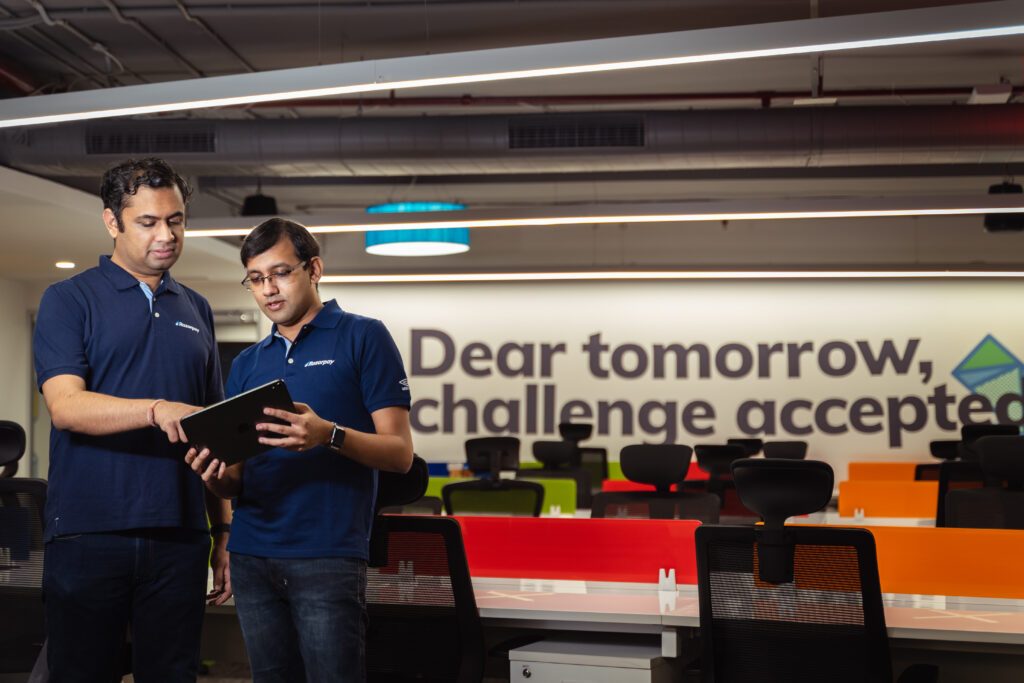
The Razorpay team Source: Razorpay
Independent report content
| BUSINESS | Payment gateway, business banking, lending and payroll for Indian merchants and start-ups |
|---|---|
| FOUNDERS | Harshil Mathur and Shashank Kumar · founded 2014 |
| IPO | Confidential DRHP filed 12 Jun 2026 · reported size ₹5,000–6,000 crore (about ₹2,700 crore fresh and ₹3,000 crore offer for sale) |
| FY25 | Revenue ₹3,783 crore (+65%) · gross profit ₹1,277 crore (+41%) · net loss about ₹1,209 crore (partly one-off ESOP cost, per the company) |
| PROFITABILITY | Core payments business EBITDA-positive in FY25; India profit targeted FY26 |
| VALUATION | US$7.5bn (Series F, Dec 2021) · IPO talk US$5–6bn |
| STATUS | SEBI approval reported on 4 Nov 2026 (press, sources not named) for an IPO of about ₹5,000–6,000 crore at a valuation near US$5bn · listing targeted Jan–Mar 2027 · price band not fixed |
| THE ACCESS POINT Razorpay is private. After the IPO, pre-IPO holders face lock-in. Until then, individuals can buy only through the unlisted market or funds that hold it. Listed peers include Pine Labs and Paytm. |
|---|
Executive decision summary
| THE BOTTOM LINE Razorpay processes payments for lakhs of Indian businesses and sells them banking, loans and payroll on top. FY25 revenue rose 65% to ₹3,783 crore, and its core payments business turned profitable at EBITDA level, a first. The company filed a confidential draft prospectus on 12 June 2026, and on 4 November 2026 press reported SEBI approval for an IPO of about ₹5,000–6,000 crore, with a listing targeted for January–March 2027, aiming at US$5–6bn, below its 2021 peak of US$7.5bn. That means a reset: early buyers at 2021 prices may not break even. |
|---|
| WHICH INVESTOR Fits you IF you want a growing B2B payments platform at a lower price than 2021 and can wait for the listing. Look elsewhere IF you need disclosed profit: the net loss for FY25 was about ₹1,209 crore. |
|---|
| COMFORT FIT Razorpay = the cash register and back office for online businesses. PhonePe = the consumer-side payments leader. Pine Labs (listed) = the offline merchant-payments peer. PayU, Cashfree = direct gateway rivals. |
|---|
| THE RUPEIA NUMBER 12x. A US$5bn valuation (about ₹45,000 crore) divided by FY25 revenue of ₹3,783 crore. |
|---|
1 CLAIM REGISTER: EVIDENCE GRADING
| Claim | Source | Grade | Assessment |
|---|---|---|---|
| Confidential DRHP filed 12 June 2026 | Press and IPO trackers | C | Established; disclosed by newspaper advertisement three days later. |
| FY25 revenue ₹3,783 crore; gross profit ₹1,277 crore; net loss about ₹1,209 crore | Company filings as reported | B/C | Established. |
| Issue size ₹5,000–6,000 crore | Press | C | Reported range. |
| US$5–6bn target vs US$7.5bn Series F | Press | C | Reported. |
| SEBI approval received | One outlet | C | Single source; not relied on. |
2 COMPANY OVERVIEW & FOUNDING STORY
Razorpay was founded in 2014 by Harshil Mathur and Shashank Kumar, IIT Roorkee classmates, after they struggled to take online payments for a previous venture. It began as a gateway for developers and grew into a full stack: payments, RazorpayX business banking, lending, payroll and POS for stores. It joined Y Combinator and has served companies from start-ups to large enterprises.
The company moved its holding company to India from the United States, a step many Indian start-ups take before listing.
3 TIMELINE
| Date | Event |
|---|---|
| 2014 | Founded in Bengaluru; Y Combinator |
| 2015–19 | Seed and Series A–C rounds; gateway scales |
| Dec 2021 | US$375m Series F at US$7.5bn valuation |
| 2022–25 | Launches banking and lending; reverse flip to India |
| FY25 | Revenue ₹3,783 crore; core payments EBITDA-positive |
| 12 Jun 2026 | Confidential DRHP filed |
4 FUNDING & INVESTORS
Razorpay's investors include Tiger Global, GIC, Sequoia (now Peak XV), Lightspeed, Matrix Partners India, Y Combinator, Salesforce Ventures and others. The 2021 round priced the company at US$7.5bn. The IPO target of US$5–6bn is a 20–33% discount to that mark.
| RUPEIA CALCULATION US$5bn is about ₹48,250 crore at ₹96.5 per US$ (the source quotes ₹45,000 crore at an older rate). US$6bn is about ₹57,900 crore, or 15.3x FY25 revenue; US$5bn is about 12.8x. Both are below the 2021 mark, but still well above where listed payment peers trade on revenue. |
|---|
5 FINANCIAL FORENSICS
| Metric | FY24 (derived) | FY25 | Change |
|---|---|---|---|
| Revenue | ~₹2,293 crore | ₹3,783 crore | +65% |
| Gross profit | ~₹906 crore | ₹1,277 crore | +41% |
| Gross margin | ~39.5% | 33.8% | Lower |
| Net loss | n/a | ~₹1,209 crore | Includes one-off ESOP cost (company) |
FY24 values derived from reported growth rates; Rupeia calculation.
Revenue growth beat gross-profit growth, so the margin on each rupee of revenue fell. That is common when payments volume rises faster than higher-margin products. The ESOP charge explains part of the loss but is a company explanation; the filings carry the split.
6 BUSINESS MODEL
| Line | How it earns | Comment |
|---|---|---|
| Payment gateway | Small percentage fee per transaction | Largest line; competitive pricing |
| RazorpayX banking and payroll | Fees on accounts, payouts, payroll | Higher margin; growing |
| Lending | Working-capital loans and credit distribution | Regulated by RBI; credit risk |
| POS and offline | Terminals and software | Competes with Pine Labs and banks |
7 MARKET & COMPETITIVE ANALYSIS
| Rival | Status | Position |
|---|---|---|
| PayU | Prosus-owned | Large gateway for e-commerce |
| Cashfree | Private | Gateway and payouts for start-ups |
| Juspay | Private | Payments orchestration for large brands |
| Pine Labs | Listed (2025) | Offline and merchant commerce |
| PhonePe PG, Paytm PG | Consumer-led players | Merchant gateways |
| Banks (HDFC, ICICI, Axis) | Listed | Traditional acquiring banks |
8 MOAT ANALYSIS
| Source | Strength | Comment |
|---|---|---|
| Developer brand and integrations | Strong | Easy-to-use APIs; wide adoption |
| Cross-sell of banking and lending | Medium | Raises revenue per customer |
| Regulatory licences (PA, PA-CB) | Medium | Required; rivals have them |
| Pricing power | Weak | Gateways compete on fees |
9 VALUATION ANALYSIS & UNLISTED-SHARE MATHS
| Valuation | Equity value | x FY25 revenue |
|---|---|---|
| US$7.5bn (2021) | ~₹72,400 crore | 19.1x |
| US$6bn | ~₹57,900 crore | 15.3x |
| US$5bn | ~₹48,250 crore | 12.8x |
Rupeia calculation at ₹96.5 per US$.
A buyer at the 2021 price needs a listing above US$7.5bn to break even, which the target range does not offer. At US$5bn a buyer needs a 40% rise to US$7bn to earn about 12% a year over three years.
10 PRODUCTS AND CUSTOMERS
Razorpay began as a payment gateway for developers and now sells a wider stack to businesses of every size. The offer can be grouped into four layers.
| Layer | Products | Who buys |
|---|---|---|
| Accept | Payment gateway, payment links, subscriptions, UPI and cards, international payments | Online merchants, SaaS and marketplaces |
| Offline | Point-of-sale terminals and QR from the Ezetap acquisition | Shops, restaurants, field staff |
| Bank | RazorpayX current accounts, payouts, payroll, tax and vendor payments | Start-ups and SMEs |
| Lend | Working-capital loans and credit lines for merchants | Merchants with payment history |
The cross-sell logic is that a business that already runs its payments on Razorpay can be offered banking, payroll and loans using data nobody else has. That raises revenue per customer without extra acquisition cost.
11 ACQUISITIONS AND INTERNATIONAL REACH
| Date | Target | What it added | Terms reported |
|---|---|---|---|
| Early 2022 | IZealiant Technologies | Technology capability | Undisclosed |
| Feb 2022 | Curlec (Malaysia) | First foreign market; majority stake | About US$19–20m |
| Aug 2022 | Ezetap | Point-of-sale and offline payments; Razorpay reportedly holds over 80% | Reported at different values; one tracker says US$200m, another undisclosed |
| Sep 2022 | PoshVine | Loyalty and rewards management; 100% stake | Undisclosed |
| Later | BillMe and POP (rewards-first UPI) | Digital receipts and rewards | Per company recruiting pages |
The buying spree in 2022 was financed by the US$375m raised in December 2021. It broadened the product line quickly, at the cost of integration work and some of the extra cost that shows up in the FY25 loss.
12 REGULATION: RBI PAYMENT-AGGREGATOR LICENCE
Razorpay holds an RBI payment-aggregator (PA) authorisation, which lets it collect payments for merchants and settle them. PA rules require minimum net worth, escrow arrangements and merchant due diligence, and the RBI has tightened them repeatedly since 2020. A cross-border licence (PA-CB) governs international collections. Compliance is a cost for all gateways and also a barrier to new entrants.
The DRHP, once public, will list pending regulatory matters. Rupeia notes that rules on card storage, settlement timing and merchant onboarding have all been changed by the RBI in recent years, each time raising compliance spending.
13 TAKE RATE AND THE PROFIT BRIDGE
The relationship between revenue, gross profit and loss is the heart of the Razorpay story. Revenue includes the gross fee collected on payments, while the cost of processing (bank and network fees) comes out to give gross profit.
| FY25 | ₹ crore | As % of revenue |
|---|---|---|
| Revenue | 3,783 | 100% |
| Gross profit | 1,277 | 33.8% |
| Net loss | (1,209) | (32.0%) |
| Implied costs below gross profit | 2,486 | 65.7% |
Rupeia calculation from reported figures. Costs below gross profit are the difference between gross profit and net loss, and include staff, ESOP, marketing and technology.
| RUPEIA CALCULATION Costs below gross profit were ₹2,486 crore. If one-off ESOP charges were, say, ₹500–700 crore (the company has not disclosed the amount in the sources reviewed), the underlying loss would be roughly ₹500–700 crore. For breakeven, gross profit must grow about 95% on FY25 with costs held flat, or costs must fall. |
|---|
14 FOUNDERS AND LEADERSHIP
Harshil Mathur (chief executive) and Shashank Kumar (chief operating officer) met at IIT Roorkee and started Razorpay in 2014 after struggling to collect online payments themselves. They have led the company through its growth from a developer tool to a group with thousands of employees, and remain its public faces.
The investor base is mostly global venture and growth funds, which is typical for Indian fintech and means the IPO will include meaningful selling by early backers.
15 PEER COMPARISON: HOW RAZORPAY DIFFERS
| Dimension | Razorpay | Pine Labs (listed) | PhonePe | PayU / Cashfree |
|---|---|---|---|---|
| Core strength | Online gateway and developer tools | Offline POS and enterprise | Consumer UPI app | Gateways |
| Customer | Businesses | Large merchants and retailers | Consumers and merchants | E-commerce and start-ups |
| Profit status | Core EBITDA-positive; group loss | Listed since 2025 | Loss | Varies |
| Regulatory exposure | RBI PA rules | RBI PA rules | UPI cap | RBI PA rules |
16 SCENARIO ANALYSIS
| Scenario | Probability | What happens |
|---|---|---|
| Bull | 25% | Group profit by FY27; lists at US$6–7bn with strong demand |
| Base | 50% | Lists near US$5–6bn in 2027 |
| Bear | 25% | Market weakness or margin pressure; delay or lower price |
17 RISK ANALYSIS
| Risk | Severity | Kill condition |
|---|---|---|
| Thin payments margins | High | Gross margin falls below 30% |
| Losses | Medium | No group profit by FY27 |
| RBI regulation of aggregators | Medium | New norms raising compliance cost |
| Competition from banks and PhonePe | Medium | Merchant churn rises |
18 INVESTOR CLASS ANALYSIS
HNIs and family offices
Pre-IPO buyers should price against US$5–6bn and plan for the post-listing lock-in.
NRIs
FEMA rules apply to unlisted purchases.
19 COMFORT FIT: THE DECISION PAGE
| If you want… | Best fit | Caution |
|---|---|---|
| B2B payments at a reset price | RAZORPAY | Net loss; margin |
| Listed merchant payments | PINE LABS | Different model |
| Consumer payments | PHONEPE (when listed) | Zero-fee UPI |
20 THE EARLY SIGNAL: EVENTS TO WATCH
| When | Event |
|---|---|
| Q4 2026 | SEBI observation and updated DRHP |
| Early 2027 | FY26 audited numbers |
| 2027 | Price band and listing |
21 RUPEIA FINAL INDEPENDENT VIEW
Razorpay is a high-quality fintech with real revenue growth, a profitable core and a more realistic price target. It still reports a net loss, and a thin gross margin on payments limits profit upside.
| THE RUPEIA NUMBER 12.8x FY25 revenue at US$5bn. |
|---|
| RUPEIA VERDICT Good company, fair price only if listing is at US$5bn or lower. |
|---|
Frequently asked questions
When did Razorpay file for its IPO?
A confidential DRHP was filed on 12 June 2026.
How big is the IPO?
Reports put it at ₹5,000–6,000 crore, about ₹2,700 crore fresh and ₹3,000 crore offer for sale.
What is Razorpay's valuation?
US$7.5bn in 2021; IPO talk at US$5–6bn.
What was Razorpay's FY25 revenue?
₹3,783 crore, up 65%.
Who founded Razorpay?
Harshil Mathur and Shashank Kumar in 2014.
Source log
Dhan: Razorpay files confidential IPO
IPO Market: Razorpay IPO 2026 DRHP
Jainam: Razorpay IPO details
Tradejini: Razorpay files confidentially with SEBI
Nifty Trader: Razorpay IPO plan
Coinlaw: Razorpay statistics 2026
| DISCLAIMER This report is independent research by Rupeia Investments Co. built only from public sources as of the date shown. It is not an offer, solicitation or investment advice, and it is not a recommendation to buy or sell any security. Private-company figures are drawn from filings and media reports and may be revised. Unlisted and private-market investments are illiquid and carry a risk of total loss. Investors should take independent advice. |
|---|