River Mobility: US$120m (equity plus venture debt) Series C
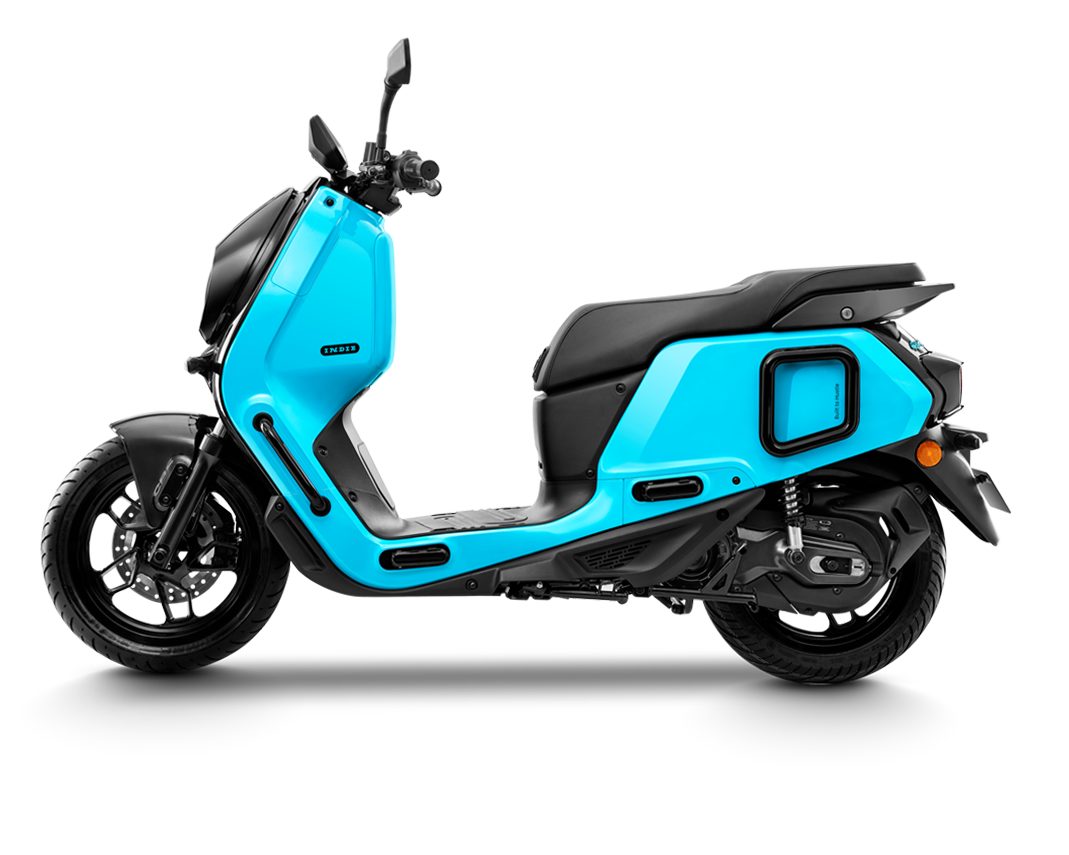
The River Indie utility electric scooter (Gen 2 model, Monsoon Blue), River's only product Source: River, Indie product page (rideriver.com)
Independent report content
| ROUND | Series C · US$120m (about ₹1,050 crore) · announced 5 Aug 2026 · equity entirely primary; venture debt under 10–12% (CEO to TechCrunch) |
|---|---|
| LEADS | Elev8 Venture Partners (about US$25m per Inc42) and Claypond Capital |
| CO-INVESTORS | New: Singularity AMC, Anicut Capital, 360 ONE Asset, JIIF, HDFC AMC · Returning: Yamaha Motor, Al-Futtaim, Mitsui · Debt: Alteria, InnoVen, Stride Ventures |
| TOTAL RAISED | US$144m per TechCrunch; US$188m per other trackers; Rupeia's round-by-round sum is about US$188m including debt |
| VALUATION | Not disclosed. Dealroom shows a US$500m–1bn range; Rupeia arithmetic suggests about US$430–720m post-money |
| REVENUE | FY25 ₹104 crore (FY24 ₹5 crore); FY25 net loss ₹176 crore (Inc42: ₹195.7 crore) · FY26 up 330% per the CEO; monthly revenue about ₹100 crore in mid-2026 |
| VOLUMES | October 2026: 6,796 units (+273% year on year), about 3% of India's electric two-wheeler market · 50,000th Indie built July 2026 |
| PRODUCT | One model: Indie utility scooter, 4 kWh, 160 km claimed IDC range, ₹1.52–1.55 lakh ex-showroom |
| CAPACITY | Hoskote plant about 10,000 vehicles a month; greenfield plant of 700,000–800,000 a year targeted for mid-2027 |
| COMPANY | River Mobility Pvt Ltd · founded 2021 by Aravind Mani (CEO) and Vipin George (CTO) · 75+ stores; 200+ targeted by March 2027 |
| THE ACCESS POINT River is a private company. The Series C was taken by venture funds, mutual-fund houses' private arms (HDFC AMC, Singularity AMC, 360 ONE) and strategic investors. Individual investors can reach River only through Category II AIFs that hold it (Elev8, Anicut, 360 ONE and Singularity run such funds), or through rare private secondary transactions. There is no listed proxy. Ather Energy is the nearest listed pure-play comparison. |
|---|
Executive decision summary
| THE BOTTOM LINE River has done something rare in Indian electric two-wheelers: it grew fast with one model, one variant and a small store network. Monthly sales rose from about 1,800 in late 2025 to 6,796 in October 2026, and the company now holds about 3% of the market. The US$120m Series C, led by Elev8 and Claypond, is River's first big round from Indian institutions. It pays for a second plant, two new models and a store network that is meant to grow from 75 to 350 outlets by March 2028. The weakness is the cost of getting there. FY25 lost ₹176 crore on ₹104 crore of revenue, gross margins are only approaching double digits, and management does not expect operating profit until it builds 20,000–25,000 vehicles a month around 2028–29, three to four times today's output. |
|---|
| WHICH INVESTOR River fits you IF you want exposure to a fast-growing, design-led challenger in India's largest EV segment, can hold for 5–8 years, and can reach it through an AIF that holds it. Look elsewhere IF you need profits, a disclosed valuation or liquidity. River still loses more than it earns in revenue on filed numbers, and it must spend heavily on a new plant and stores before scale arrives. |
|---|
| COMFORT FIT River = the utility-vehicle maker that chose to build one rugged, roomy scooter for working riders rather than a range of lifestyle gadgets. Ather Energy = the listed premium cousin. Bigger, listed, close to break-even at the EBITDA level, and priced by the market every day. TVS iQube / Bajaj Chetak = the incumbents with dealer networks of thousands. They can match River's price and out-distribute it. Ola Electric = the cautionary tale. Fast scale without service capacity led to a collapse in share. River's slower store build is the opposite approach. |
|---|
| THE RUPEIA NUMBER 6,796 → 20,000–25,000. River sold 6,796 scooters in October 2026. Management says operating profit arrives at 20,000–25,000 vehicles a month. That is 3–3.7 times the current run-rate, needs the second plant, at least two new models and roughly four times today's store count. Rupeia calculation. |
|---|
1 CLAIM REGISTER: EVIDENCE GRADING
Every material claim in this note is graded by the strength of its published source. A = government, regulator or customer record. B = statutory filing or financial statement (including extracts). C = independent press. D = company announcement.
| Claim | Source | Grade | Rupeia assessment |
|---|---|---|---|
| US$120m Series C led by Elev8 and Claypond | Company release; TechCrunch, Business Today, Inc42 (5 Aug 2026); Goodwin release | C | Established as an announced round. Allotment filings (PAS-3), share class and price per share not yet public. |
| Equity entirely primary; debt under 10–12% | CEO interview with TechCrunch | D | Management statement. Implies equity of roughly US$105–108m. Lender names (Alteria, InnoVen, Stride) appear in Business Today and Inc42. |
| Total raised US$144m | TechCrunch (company figure) | D | Conflicts with the US$188m tracker figure and with Rupeia's own round-by-round sum. See the funding section. |
| FY25 revenue ₹104 crore; net loss ₹176 crore | Mint via Tofler (MCA filings); Startup Atlas | B | Established from secondary extracts. Inc42 shows a ₹195.7 crore loss, probably on a different basis (consolidated or including other items). Rupeia has not inspected the audited PDF. |
| FY26 revenue up 330% | CEO to TechCrunch | D | No filing yet. Means FY26 revenue of about ₹343–447 crore depending on how '330%' is read. |
| October 2026 sales 6,796 units (+273%) | Business Today, citing Vahan-based data | A/C | Vahan registration data is a government record; the compilation is press. Strong evidence. |
| June 2026 record of 4,436 units; 43,805 cumulative | Autocar Professional (Vahan) | A/C | Established. |
| 50,000th Indie produced at Hoskote | Autocar India (27 Jul 2026) | C | Established production milestone. |
| Plant capacity about 10,000 a month; new plant 700,000–800,000 a year by mid-2027 | CEO to TechCrunch | D | Management plan. Site not yet announced as of the round. |
| Gross margin approaching double digits; operating profit at 20,000–25,000 a month by 2028–29 | CEO to TechCrunch | D | Management guidance. No audited gross margin disclosed. |
| Hoskote line also builds Yamaha's EC-06 | MeraEV brand article (Jul 2026) | C | Single, weak source. Plausible given Yamaha's stake. Needs confirmation from Yamaha or River. |
2 COMPANY OVERVIEW & FOUNDING STORY
River Mobility Private Limited was founded in Bengaluru in 2021 (some profiles say 2020, when the founders began work). Its founders came from India's earlier wave of premium EV startups. Aravind Mani, the chief executive, was vice president of operations and strategy at Ultraviolette Automotive, the electric-motorcycle maker covered in Report 15. Vipin George, the chief technology officer, is a vehicle designer who worked at Honda. Toyota Ventures, an early investor, describes the pair as having more than 20 years of combined two-wheeler experience.
Their thesis was contrarian. Most Indian electric-scooter makers chased urban commuters with sleek, light scooters and long feature lists. River built a heavier, boxier 'SUV of scooters' for people who use a scooter to work: delivery riders, self-employed traders, tradespeople and families who carry loads. The CEO says the typical buyer is self-employed and aged 28 to 35. The Indie has 55 litres of storage, front and rear crash guards, 14-inch wheels and a large footboard. It was designed and engineered at River's own Bengaluru R&D centre.
The Indie in numbers
| Parameter | Detail |
|---|---|
| Price | About ₹1.52–1.55 lakh ex-showroom (Bengaluru); ₹1,46,799 effective while the PM E-Drive subsidy applied |
| Battery and range | 4 kWh; 160 km claimed IDC range; about 70–110 km real-world depending on mode |
| Performance | 6.7 kW peak motor, 26 Nm, 90 km/h top speed |
| Utility | 43 litres under the seat plus 12-litre lockable glovebox; 14-inch alloys; front and rear discs |
| Gen 2.5 update (2025) | Belt drive replaced by chain and sprocket, lowering running costs; kerb weight 135 kg; ground clearance 177 mm |
| Warranty | 3 years / 30,000 km standard; extended 'Plus Five' programme offered |
Commercially, River is a single-product manufacturer that also owns much of its retail. That keeps the product focused and the brand consistent, but it concentrates risk: any recall, battery issue or competitive price cut on a comparable scooter hits 100% of revenue.
3 TIMELINE: 2021–2026
| Date | Milestone |
|---|---|
| 2021 | River founded in Bengaluru by Aravind Mani and Vipin George; seed round of about US$2m from Maniv Mobility and Trucks VC |
| Aug 2022 | US$11m Series A led by Lowercarbon Capital, with Toyota Ventures, Maniv, Trucks VC and Siix (Entrackr reported US$13m) |
| Feb 2023 | Indie unveiled |
| Jun 2023 | US$15m led by Al-Futtaim Group of Dubai |
| Oct 2023 | Indie deliveries begin from the Hoskote plant near Bengaluru |
| Feb 2024 | US$40m (about ₹335 crore) Series B led by Yamaha Motor; total raised reaches about US$68m |
| Jul 2024 | Mitsui and Marubeni Ventures invest (amount undisclosed) |
| FY25 | Revenue ₹104 crore (from ₹5 crore); net loss ₹176 crore; around 25 stores |
| 2025 | Gen 2.5 Indie with chain drive; monthly sales cross 1,800 in November 2025 |
| Mar 2026 | Record month of 4,273 units |
| Jun 2026 | New record of 4,436 units; 43,805 delivered since launch |
| Jul 2026 | 50,000th Indie produced; about 6,500 retailed in July; 75+ stores; PM E-Drive subsidy ends 31 July |
| 5 Aug 2026 | US$120m Series C led by Elev8 Venture Partners and Claypond Capital |
| Oct 2026 | 6,796 units sold, +273% year on year, fastest growth among major makers |
4 FUNDING HISTORY & INVESTOR BEHAVIOUR FORENSICS
| Date | Round | Amount | Investors (as reported) | Classification |
|---|---|---|---|---|
| 2021 | Seed | ~US$2m | Maniv Mobility, Trucks VC | Equity |
| Aug 2022 | Series A | US$11m (Entrackr: US$13m) | Lowercarbon Capital (lead), Toyota Ventures, Maniv, Trucks VC, Siix | Equity |
| Jun 2023 | Extension | US$15m | Al-Futtaim Group (lead) | Equity |
| Feb 2024 | Series B | US$40m | Yamaha Motor (lead), Al-Futtaim, Lowercarbon, Toyota Ventures, Maniv | Equity |
| Jul 2024 | Strategic | Undisclosed | Mitsui & Co., Marubeni Ventures | Equity |
| Aug 2026 | Series C | US$120m | Elev8, Claypond (leads); Singularity AMC, Anicut, 360 ONE, JIIF, HDFC AMC; Yamaha, Al-Futtaim, Mitsui; debt from Alteria, InnoVen, Stride | Primary equity plus under 10–12% venture debt |
| RUPEIA CALCULATION US$2m + US$11m + US$15m + US$40m = US$68m before the Series C, which matches the company's own February 2024 figure. Adding US$120m gives US$188m, the figure several trackers use. TechCrunch's US$144m therefore cannot be a simple sum. The most likely explanation is that it counts only the equity portion of the Series C (about US$76m added) or excludes earlier convertible or debt instruments. The gap of about US$44m matters: an investor using US$144m will understate how much capital River has consumed. Ask for the cap table before relying on either figure. |
|---|
What the investor pattern shows
From foreign to Indian money. Every investor before 2026 was foreign: US climate VCs, Toyota, Yamaha, Al-Futtaim and two Japanese trading houses. The Series C is the first time Indian institutions led. The CEO says the new money backs proven traction, not technology.
Strategics stayed in. Yamaha, Al-Futtaim and Mitsui all returned. Yamaha is the most important: it is a customer (if the EC-06 contract-manufacturing report is correct), an investor and a possible acquirer.
Mutual-fund houses' private arms. HDFC AMC, Singularity AMC and 360 ONE Asset usually invest from pre-IPO or private-credit pools. Their presence suggests the round was priced with a listing in mind within four to five years.
Venture debt is small but real. Under 10–12% of the round means up to about US$12–14m of debt, usually with warrants. That debt will rank ahead of equity if the plant build goes wrong.
Elev8's ticket. Inc42 puts Elev8's cheque at about US$25m, roughly one-fifth of the round. Claypond's share is not disclosed.
5 FINANCIAL FORENSICS: WHAT THE FILINGS SHOW
| Metric | FY24 | FY25 | FY26 (company indication) | Reading |
|---|---|---|---|---|
| Revenue from operations | ~₹5 crore | ₹104 crore | +330% → about ₹343–447 crore | Twenty-fold growth in FY25 off a tiny base |
| Net loss | ₹82 crore | ₹176 crore (Inc42: ₹195.7 crore) | Not disclosed | Loss more than doubled |
| Loss per ₹1 of revenue | ~₹16 | ~₹1.7 | Not available | Improving fast, still deeply negative |
| Stores | Handful | ~25 | ~45 (Mar–Jun 2026) | Retail build is a large fixed cost |
| Monthly revenue | ~₹100 crore (mid-2026, CEO) | Annualised run-rate about ₹1,200 crore |
| RUPEIA CALCULATION Units sold in FY26 (April 2025 to March 2026) were roughly 22,000–25,000, based on Vahan monthly data (calendar 2025 about 20,000; Q1 2026 9,607). FY26 revenue of ₹343–447 crore therefore implies ₹1.4–1.9 lakh per unit. The lower end matches the Indie's net price after GST. The upper end is above the scooter's price and would need other revenue, such as accessories, extended warranties or contract manufacturing for Yamaha. The FY26 filing will show which. Investors should ask for revenue split by own vehicles, accessories and services, and any contract manufacturing. |
|---|
The mid-2026 run-rate tells a better story than FY25. At about ₹100 crore a month, River is now booking roughly in one month what it booked in the whole of FY25. If gross margins are near 10%, gross profit is about ₹10 crore a month, or ₹120 crore a year. Fixed costs include R&D (40% of the new money is earmarked for it), the store network and a growing workforce. On those figures, Rupeia estimates River still loses ₹10–15 crore a month at the operating level. That is consistent with management not expecting operating profit until 2028–29.
6 BUSINESS MODEL & UNIT ECONOMICS
River makes money by selling a scooter, then accessories, extended warranties and service. It is a manufacturer-retailer: most stores are River-branded experience centres, some run by partners. Unlike Ola Electric's early online-only model, River insists every buyer can see, test and service the vehicle locally.
| Per Indie (illustrative) | ₹ | Comment |
|---|---|---|
| Ex-showroom price | 1,55,000 | Bengaluru, post-subsidy era |
| Less GST at 5% | –7,400 | EVs taxed at 5% |
| Net revenue to River (if sold in own store) | ~1,47,600 | Partner stores take a dealer margin of perhaps 5–8% |
| Battery pack (4 kWh, imported cells, assembled at Hoskote) | ~50,000–60,000 | At US$120–140 per kWh at pack level; the largest single cost |
| Motor, controller, frame, body, electronics, tyres, other | ~65,000–75,000 | Rupeia estimate; most parts sourced in India |
| Gross margin at about 8–10% | ~12,000–15,000 | Consistent with the CEO's 'approaching double digits' |
| Warranty provision, freight, marketing | ~5,000–8,000 | 3-year warranty raises long-tail cost |
| Contribution before fixed costs | ~5,000–10,000 | Thin; scale and localisation are needed |
| RUPEIA READING At ₹5,000–10,000 of contribution per scooter, River needs 15,000–25,000 units a month to cover fixed costs of perhaps ₹100–150 crore a month at scale. That is the arithmetic behind the CEO's 20,000–25,000 threshold. It also explains why the new plant, which lowers per-unit overheads, and cell-cost declines matter more than headline sales growth. |
|---|
What changed in 2026: subsidies and petrol competition
Two policy shifts squeezed EV economics in the past year. The PM E-Drive demand incentive for electric two-wheelers, ₹2,500 per kWh capped at ₹5,000 per vehicle, ended on 31 July 2026 unless further extended. And GST on petrol two-wheelers under 350cc was cut from 28% to 18% in September 2025, which narrowed the price gap with EVs taxed at 5%. River's sales nonetheless rose in August–October 2026. That suggests demand is driven by running-cost savings and product appeal, not subsidies. It is the strongest evidence of product-market fit in this report.
7 CUSTOMER, DISTRIBUTION & RETAIL INTELLIGENCE
River sells to individuals, not fleets, so there are no named contracts. The evidence of customer demand is registration data from the government's Vahan portal.
| Period | Units (Vahan retail) | Growth | Source |
|---|---|---|---|
| Jul 2025 | 1,518 | Then a record | Autocar Professional |
| Nov 2025 | 1,801 | Then a record | Autocar Professional |
| Q1 2026 | 9,607 | +62% on Q4 2025 | Autocar Professional |
| Q2 2026 | 11,776 | +23% on Q1 | Autocar Professional |
| Jun 2026 | 4,436 | +234% year on year | Autocar India |
| Jul 2026 | ~6,500 | Company figure; ~3% share | Business Today |
| Oct 2026 | 6,796 | +273% year on year | Business Today |
Store network
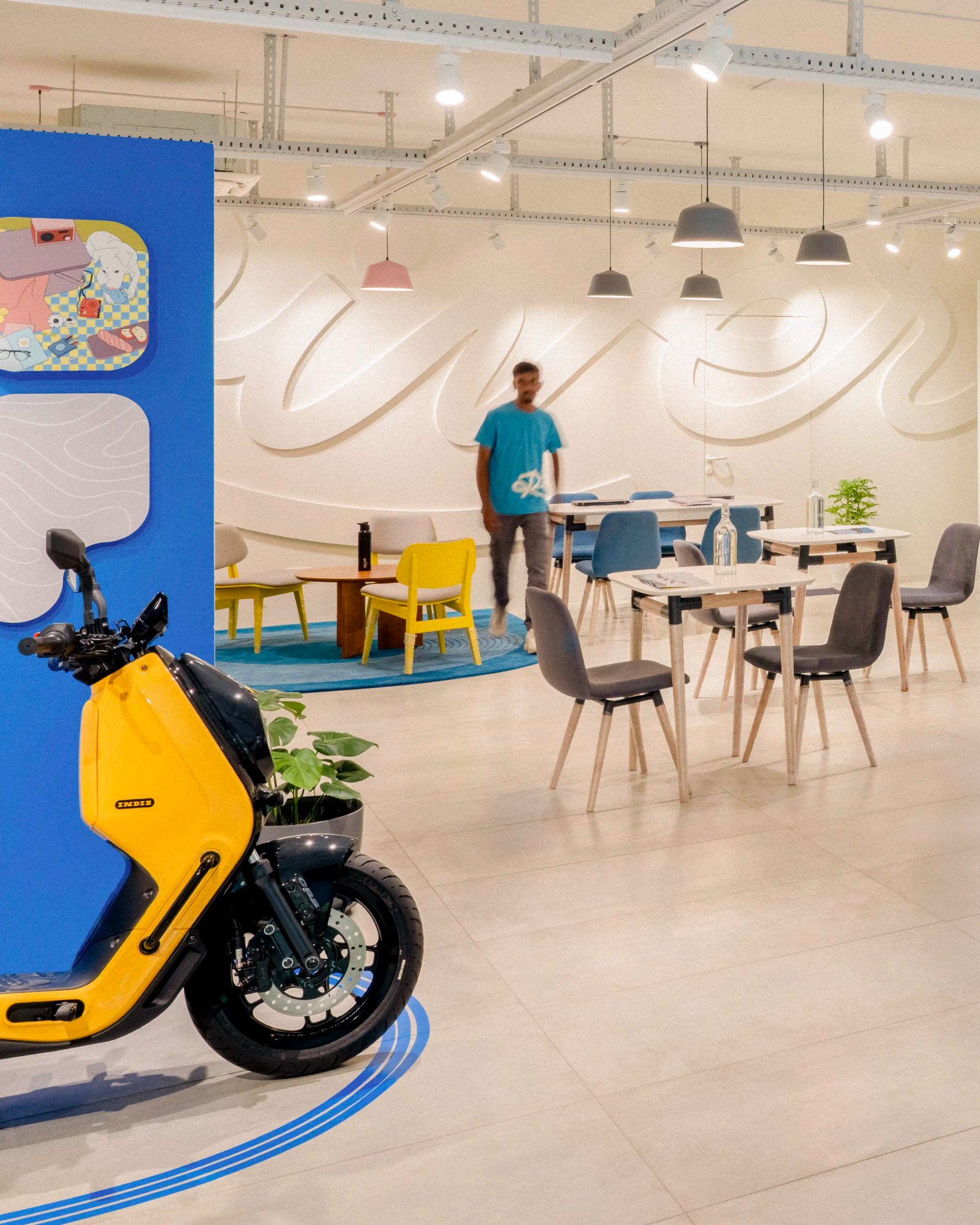
River had about 25 stores in FY25, about 45 by mid-2026 and more than 75 by August 2026. It plans more than 200 by March 2027 and 350–400 by March 2028, adding about ten a month. For comparison, TVS and Bajaj each sell through thousands of dealers, and Ather had over 500 experience centres by 2026. Sales per store have been high: about 6,800 units across 75–100 stores is 70–90 scooters per store per month, a strong figure for Indian two-wheeler retail. The risk is that new stores in smaller cities sell fewer units and carry the same rent and staff.
| RUPEIA CALCULATION If River reaches 350 stores and each sells 60 units a month, monthly volume is 21,000, inside the 20,000–25,000 profit band. If productivity falls to 40 per store, volume is 14,000 and the profit target slips. Store productivity is therefore the single best indicator to track. |
|---|
8 MARKET & COMPETITIVE ANALYSIS
India sold a record 1.4 million electric two-wheelers in FY26, 57% of all EVs sold. October 2026 set an all-time monthly high of 2,23,847 electric two-wheelers across more than 200 makers. Electric two-wheelers are still only about 6–8% of total two-wheeler sales, so most growth remains ahead.
| Maker | Oct 2026 units | Share | Listed? | Edge vs River |
|---|---|---|---|---|
| TVS Motor (iQube) | 60,429 | 27% | Yes (TVS Motor) | Thousands of dealers, profit pool from petrol, multiple battery sizes |
| Bajaj Auto (Chetak) | 49,067 | 22% | Yes | Metal body, brand trust, distribution, balance sheet |
| Ather Energy | 31,796 | 14% | Yes (listed May 2025) | Rizta family scooter competes directly; 24% gross margin in FY26 |
| Hero MotoCorp (Vida) | 29,901 | 13% | Yes | Battery-as-a-service pricing, largest two-wheeler dealer network |
| Ola Electric | 12,096 | 5% | Yes | Lower prices, own cell plant; share falling after service problems |
| River (Indie) | 6,796 | 3% | No | Fastest growth; distinctive utility design; single model |
Listed benchmark: Ather Energy
| Metric | Ather Energy (FY26) | River (latest) |
|---|---|---|
| Revenue | ₹3,672 crore (+63%) | FY25 ₹104 crore; FY26 ~₹343–447 crore (company indication) |
| Net loss | ₹517 crore (FY25 ₹812 crore) | FY25 ₹176 crore |
| EBITDA | –₹257 crore | Not disclosed |
| Gross margin | 24% (21% without incentives) | Approaching 10% (CEO) |
| Market value | About ₹65,000 crore (Oct 2026 close of ₹1,756) | Undisclosed; Rupeia range ₹3,800–6,300 crore |
The gap in gross margin is the key comparison. Ather earns about 24 rupees of gross profit on every 100 rupees of sales; River earns under 10. Ather got there through scale, in-house battery packs and software and accessory revenue. River's case rests on making the same journey with a cheaper, simpler product.
9 MOAT ANALYSIS: WHAT PROTECTS RIVER, AND FOR HOW LONG
| Moat source | Strength | Durability | Comment |
|---|---|---|---|
| Distinct utility design and brand | Medium–strong | 2–4 years | No large rival sells a scooter as boxy and load-friendly; incumbents could copy it in one model cycle |
| Store productivity and service experience | Medium | 3–5 years | Owned retail gives control; it is costly to scale |
| Strategic shareholders (Yamaha, Mitsui, Al-Futtaim) | Medium | Long | Yamaha link may bring contract work, export channels and supplier leverage |
| In-house battery-pack assembly and localisation | Medium | 3–5 years | Everything except cells sourced in India; cells remain imported |
| Manufacturing know-how (20 to 300 a day) | Medium | Short | Hard-won but replicable by any funded rival |
| Technology or patents | Weak | n/a | No disclosed proprietary cell or motor technology |
The honest reading is that River's moat is product taste plus execution, not technology. That can be valuable, as Royal Enfield showed in petrol motorcycles, but it is easier to erode than a technology lead.
10 FOUNDERS' PATH
| Founder | Before River | Role at River | What it brings |
|---|---|---|---|
| Aravind Mani | Vice president, operations and strategy, Ultraviolette Automotive | Co-founder and CEO | Operations and supply-chain experience in Indian EV manufacturing; public face with investors |
| Vipin George | Vehicle designer at Honda; profiles also cite a design lead role at Ultraviolette | Co-founder and CTO | Industrial design, the source of the Indie's distinctive look |
Both founders came out of Ultraviolette's early team, which makes River and Ultraviolette (Report 15) a useful pair. Ultraviolette chose low-volume, high-price motorcycles and exports. River chose high-volume, mid-price utility scooters for Indian roads. Mani's own description of the hardest lesson is manufacturing scale: from 20 vehicles a day to 300. Neither founder has run a listed company or a business of River's planned size. The governance section shows why board strength matters.
11 TEAM, GOVERNANCE & PEOPLE
Board. Not fully published. Expect seats for the founders and for major investors such as Yamaha, Lowercarbon, Al-Futtaim and now Elev8. The current board list is not published in the sources reviewed, from public sources; check the MCA director list before investing.
Strategic influence. Yamaha's position matters. If River contract-manufactures Yamaha's EC-06, River depends partly on a shareholder for revenue, a related-party relationship investors should see priced at arm's length.
Auditor and filing discipline. FY25 accounts reached the registrar and were picked up by data platforms, which is a basic positive. Two different loss figures (₹176 crore and ₹195.7 crore) suggest standalone and consolidated statements or a restatement. Ask which is which.
People. Headcount is not published. A plant running at about 300 vehicles a day, R&D and 75+ stores imply well over 1,000 people including contract staff.
12 POLICY & REGULATORY SURFACE
PM E-Drive. The demand incentive (₹5,000 cap per scooter) ended on 31 July 2026. River's sales kept rising after it ended, which reduces subsidy risk.
GST. EVs pay 5% GST. Petrol two-wheelers under 350cc moved to 18% from 28% in September 2025, which cut the EV price advantage by roughly ₹8,000–10,000 on a ₹1 lakh petrol scooter.
PLI for automobiles and advanced chemistry cells. River is not a named beneficiary of the auto PLI. Domestic cell plants under the ACC PLI (Ola, Reliance, Amara Raja) could lower cell costs, but River currently imports cells.
Safety rules. Battery safety standards AIS-156 (amended after 2022 fires) apply. A proposed requirement for anti-lock brakes on all new two-wheelers would raise costs for every maker; River already fits combined braking.
Rare-earth magnets. China's 2025 export curbs on rare-earth magnets disrupted Indian EV motor supply. River has not disclosed its magnet sourcing; it is a supply risk to ask about.
State incentives. Karnataka's EV policy offers capital subsidies for manufacturing. The location of the new plant will decide which state incentives River can claim.
13 VALUATION ANALYSIS
River has not disclosed the Series C price. Dealroom shows a US$500m–1bn range, and other databases show figures that are clearly wrong (one equals the round size). Rupeia does not adopt a database figure. The table below shows what the round would imply at different dilution levels, using about US$106m of primary equity (the round less about 12% debt).
| If US$106m of equity bought… | Post-money (US$) | Post-money (₹, at ₹88/$) | x FY26 revenue (~₹400 cr) | x run-rate (~₹1,200 cr) |
|---|---|---|---|---|
| 15% | US$707m | ₹6,220 crore | 15.6x | 5.2x |
| 20% | US$530m | ₹4,660 crore | 11.7x | 3.9x |
| 25% | US$424m | ₹3,730 crore | 9.3x | 3.1x |
| RUPEIA READING Ather trades at about 17–18 times FY26 revenue on a ₹65,000 crore market value, with 24% gross margins. A River post-money of US$450–700m (₹4,000–6,200 crore) would be 3–5 times its current annualised run-rate. That is a discount to Ather that reflects lower margins, private status and single-product risk. Any secondary offer above about US$800m is paying for the second plant before it exists. |
|---|
14 SCENARIO ANALYSIS: WHAT MOVES THE NEXT VALUATION
| Scenario | Probability (Rupeia) | What has to happen | Monthly units (Mar 2028) | Next-round or IPO effect |
|---|---|---|---|---|
| Bull | 25% | New plant commissioned on time in 2027; two new models launch well; stores reach 350 with 60+ sales each; gross margin above 15% | 20,000+ | Pre-IPO round at US$1.2bn+; IPO filing in 2028–29 |
| Base | 50% | Plant slips by 6–9 months; one new model succeeds; store productivity falls to about 45 | 12,000–16,000 | Flat-to-modest step-up; another private round before profits |
| Bear | 25% | Incumbents cut prices or copy the design; new-model launch weak; plant capex overruns; debt covenants bite | <9,000 | Down round or strategic sale, most likely to a shareholder such as Yamaha |
15 ENTRY MATHS FOR A SECONDARY OR AIF INVESTOR
Few River shares trade. If one is offered, the arithmetic below tests the price against a plausible exit.
| Entry post-money | Exit value in 2030 | Multiple | Approx. IRR (4 years) |
|---|---|---|---|
| US$500m | US$1.5bn (about 2.2x revenue of ~₹6,000 crore) | 3.0x | ~32% |
| US$700m | US$1.5bn | 2.1x | ~21% |
| US$1bn | US$1.5bn | 1.5x | ~11% |
| US$700m | US$700m (base case stalls) | 1.0x | 0% |
16 EXIT ANALYSIS
| Route | Likelihood (5–7 yrs) | Precedent | Comment |
|---|---|---|---|
| Indian IPO | Medium | Ather Energy (May 2025), Ola Electric (Aug 2024) | Needs ₹2,000 crore+ revenue and a visible path to EBITDA profit; HDFC AMC and Singularity in the cap table suggest this is the plan |
| Strategic sale to Yamaha or another OEM | Medium | Hero MotoCorp's stake in Ather; Bajaj's acquisition of KTM control | Yamaha already owns a stake and may build its own EVs at Hoskote |
| Secondary to growth or pre-IPO funds | Medium–high | Common in Indian consumer hardware | Most realistic liquidity for early holders |
| Distressed sale | Low–medium | Okinawa, Hero Electric failures (2024–25) | If the plant build outruns sales |
17 RISK ANALYSIS: RED FLAG LEDGER & KILL CONDITIONS
| Risk | Severity | Evidence | Kill condition |
|---|---|---|---|
| Single-product concentration | High | 100% of own-brand sales from the Indie | New model launches slip beyond end-2027 |
| Thin gross margin | High | Approaching 10% vs Ather's 24% | FY27 gross margin below 10% |
| Capex and execution of the new plant | High | 700,000–800,000 capacity plant targeted for mid-2027; site not yet named at the round | No site announcement or construction start by mid-2027 |
| Incumbent response | Medium–high | TVS, Bajaj and Hero each sell 4–9 times River's volume | A major launches a utility scooter at or below ₹1.3 lakh |
| Store productivity dilution | Medium | Store count to grow 4–5 times by 2028 | Units per store below 40 a month for two quarters |
| Funding conflict and debt | Medium | US$144m vs US$188m totals; venture debt in the round | Debt covenant breach or a bridge round within 18 months |
| Related-party revenue (Yamaha) | Low–medium | Reported contract manufacturing of the EC-06 | Material revenue from a shareholder without arm's-length disclosure |
| Battery safety or recall | Medium | Industry history of fires in 2022 | Any fire-related recall of the Indie |
18 INVESTOR CLASS ANALYSIS
For HNIs
Direct access is rare. If shares are offered, ask for the Series C price per share from the PAS-3 filing and the latest audited accounts. Compare any price with Ather's listed multiple, and assume a 4–6 year hold.
For family offices
The best route is co-investment alongside Elev8, Anicut or 360 ONE in a pre-IPO round, or commitments to their funds. Diligence should cover store-level profit and loss, warranty claims per 1,000 vehicles, the new plant's capex budget and the terms of the venture debt.
For institutions
Mutual-fund houses already hold River through private vehicles. A pre-IPO round in 2027–28 is the likely entry point for more insurers and pension funds once FY27 accounts show margin improvement.
For NRIs
Manufacturing of two-wheelers is under the automatic route for foreign investment, with no sectoral cap. NRIs can hold unlisted shares on a repatriable or non-repatriable basis under FEMA non-debt instrument rules. Check pricing guidelines for transfers between residents and non-residents.
19 COMFORT FIT: THE DECISION PAGE
| If you want… | Best fit | Why | Caution |
|---|---|---|---|
| Fast-growing private EV two-wheeler challenger | RIVER | Fastest growth among top makers; distinctive product; strong strategics | Thin margins; single model; heavy capex ahead |
| Listed pure-play EV scooter maker | Ather Energy | Disclosed financials, 24% gross margin, liquid | Rich multiple; still loss-making |
| EV exposure with profits | TVS Motor, Bajaj Auto | Profitable petrol businesses fund EV growth | EV is a small share of earnings |
| Premium EV motorcycles | Ultraviolette (Report 15) | Different segment and export story | Smaller volumes; earlier stage |
| EV charging and infrastructure | Exponent Energy (Report 18) | Picks-and-shovels exposure to commercial EVs | Asset-heavy model |
20 THE EARLY SIGNAL: EVENTS TO WATCH
| When | Event | Why it matters |
|---|---|---|
| Nov 2026–Jan 2027 | FY26 accounts filed with the MCA | Confirms FY26 revenue, loss and whether revenue includes contract manufacturing |
| Q4 2026 | PAS-3 allotment filing for the Series C | Reveals price per share and the implied valuation |
| Monthly | Vahan registrations | 6,000–7,000 a month is the current base; sustaining growth with stores is the test |
| By early 2027 | New plant site named and construction started | Mid-2027 commissioning depends on it |
| 2027 | Launch of the second and third models | Ends single-product concentration |
| March 2027 | 200-store target | Checks the retail plan and store productivity |
| Ongoing | Any further PM E-Drive extension or replacement scheme | Affects price competitiveness against petrol |
21 RUPEIA FINAL INDEPENDENT VIEW
River is a genuine growth story. It built a scooter that looks and works differently, sold it through a small store network, and more than tripled monthly sales in a year in which subsidies ended and petrol scooters became cheaper. Its Series C is large, almost all primary and backed by both strategic and Indian institutional investors. What it has not yet shown is a business that makes money on each scooter after warranty and retail costs. The next two years require three hard things at once: a new plant, new models and four times as many stores. Each is a known execution risk in Indian EVs.
| THE RUPEIA NUMBER 6,796 scooters in October 2026 against a 20,000–25,000 monthly profit threshold. The gap is the investment case. |
|---|
| RUPEIA VERDICT Strong product-market fit, unproven economics. Suitable for growth capital through AIFs or negotiated co-investment with a 5–7 year horizon. Do not pay above about US$700m post-money in a secondary until the FY26 filing shows gross margin and the new plant has a site and a budget. |
|---|
Frequently asked questions
How much did River Mobility raise in 2026?
US$120 million (about ₹1,050 crore) in a Series C announced on 5 August 2026, led by Elev8 Venture Partners and Claypond Capital. The CEO said the equity was entirely primary and venture debt made up less than 10–12% of the round.
What is River Mobility's valuation?
Not disclosed. Rupeia's arithmetic suggests about US$430–720 million post-money if the equity diluted holders by 15–25%. Dealroom shows a US$500 million–1 billion range.
What is River Mobility's revenue?
FY25 revenue was ₹104 crore, up from about ₹5 crore, with a net loss of ₹176 crore. The CEO says FY26 revenue rose 330% and monthly revenue reached about ₹100 crore in mid-2026.
How many River Indie scooters are sold each month?
6,796 in October 2026, up 273% year on year, according to Vahan-based data. River has about 3% of India's electric two-wheeler market.
Who founded River Mobility?
Aravind Mani (CEO), formerly of Ultraviolette Automotive, and Vipin George (CTO), a vehicle designer who worked at Honda. The company was founded in Bengaluru in 2021.
Who are River's investors?
Elev8, Claypond, Yamaha Motor, Al-Futtaim, Mitsui, Marubeni Ventures, Lowercarbon Capital, Toyota Ventures, Maniv, Trucks VC, Anicut, 360 ONE, Singularity AMC, HDFC AMC and JIIF, plus venture lenders Alteria, InnoVen and Stride.
Who are River's competitors?
TVS iQube, Bajaj Chetak, Ather Energy (especially the Rizta), Hero Vida and Ola Electric.
When will River Mobility be profitable?
Management expects operating profit at 20,000–25,000 vehicles a month, targeted for 2028–29. River currently makes about 6,000–7,000 a month.
Can I buy River Mobility shares?
Only through rare private secondary transactions or AIFs that hold the company. It is not listed. Ather Energy is the nearest listed comparison.
Source log
TechCrunch: River raises $120M Series C to scale production, launch more models (5 Aug 2026)
Business Today: River Mobility raises $120 mn; 40% of funds to go into R&D (5 Aug 2026)
Inc42: EV startup River Mobility bags $120 Mn to expand manufacturing capacity (Aug 2026)
Moneycontrol: River raises $120 million from Elev8, Claypond, Anicut and others (Aug 2026)
YourStory: River Mobility raises $120M Series C co-led by Elev8 and Claypond (Aug 2026)
Goodwin: Goodwin guides River on $120 million Series C financing (Aug 2026)
Mint (via Magzter): E-scooter co faces losses amid expansion (FY25 financials)
Inc42: River financials
Startup Atlas: River financials
Business Today: Ola Electric sales crash 26% as TVS surges (October 2026 e-2W data) (3 Nov 2026)
Autocar India: River Mobility crosses 50,000 production milestone (27 Jul 2026)
Autocar Professional: River Indie hits highest sales in June, 43,805 units since launch (Jul 2026)
Autocar Professional: River Mobility clocks best-ever monthly sales in November (1,801) (Dec 2025)
Auto Punditz: River Indie sales June 2026 dispatches
MeraEV: River Mobility in 2026, record Indie sales, Yamaha's backing and the road to 350 stores (28 Jul 2026)
Inc42: E-scooter maker River raises $40 Mn from Yamaha (Feb 2024)
YourStory: River raises $11M Series A from Lowercarbon Capital, Toyota Ventures (Aug 2022)
Toyota Ventures: Our investment in River
Autocar Professional: River secures US$15 million led by Al-Futtaim (Jun 2023)
Autocar Professional: Ather Energy FY26 revenue climbs 66%, net loss at ₹517 crore (May 2026)
Autocar Professional: Record 1.4 million electric 2Ws sold in FY2026
Dealroom: River company profile
River: Indie product page
| DISCLAIMER This report is independent research by Rupeia Investments Co. built only from public sources as of the date shown. It is not an offer, solicitation or investment advice, and it is not a recommendation to buy or sell any security. Private-company figures are drawn from filings and media reports and may be revised. Unlisted and private-market investments are illiquid and carry a risk of total loss. Investors should take independent advice. |
|---|