QNu Labs: ₹200 crore Series A1
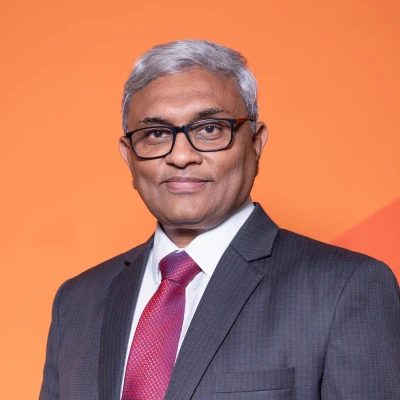
Sunil Gupta, co-founder and CEO, QNu Labs Source: QNu Labs, About Us page
Independent report content
| ROUND | Series A1 · ₹200 crore (about US$21–23m) · announced 9 Sep 2026 |
|---|---|
| LEADS | National Quantum Mission (Government of India) and Speciale Invest |
| CO-INVESTORS | Sony Innovation Fund, Gaja Capital, Artha Ventures · company says ~80% of the round came from new investors |
| TOTAL RAISED | ₹375 crore per the company (databases show ₹344 crore / US$41–51m depending on classification) |
| SEPARATE GOVERNMENT SUPPORT | ₹150 crore optionally convertible debt from the Technology Development Board (16 Oct 2026) for a ₹300 crore quantum-secure network project |
| VALUATION | Not disclosed by the company; databases mask the figure |
| REVENUE | FY25 ₹40.5 crore (FY24 ₹24.7 crore, +64%); net loss ₹6.2 crore; EBITDA ~₹0.3 crore (filing extracts, not audited copies) |
| GUIDANCE | FY27 revenue target ₹80 crore; QShield 2.0 pipeline ₹10–15 crore at ₹1–2 crore per deal (CEO to CNBC-TV18) |
| PRODUCTS | Armos (QKD), Tropos (QRNG), QShield 2.0 platform, Hodos (PQC), Q-ORE drone encryptor, QConnect VPN, QVerse messaging, KyntraQ key management |
| COMPANY | QuNu Labs Pvt Ltd · founded 2016 at IIT Madras Research Park · HQ Bengaluru · US arm enQase (Austin, Texas) · ~160 engineers |
| THE ACCESS POINT QNu Labs is a private company. The Series A1 was taken by the Government of India's National Quantum Mission and institutional venture funds. Individual investors can only reach QNu through private secondary transactions in its shares (rare and illiquid for a company of this size) or through Category I/II AIFs that hold it, such as Speciale Invest's deep-tech funds and Gaja Capital's funds. There is no listed proxy. |
|---|
Executive decision summary
| THE BOTTOM LINE QNu Labs is India's only full-stack quantum-security vendor. It sells physical quantum key distribution (QKD) links, quantum random-number generators (QRNG) and a software platform that helps organisations find and replace cryptography that quantum computers could break. The ₹200 crore Series A1, led by the Government of India's own National Quantum Mission, makes it the state's chosen domestic champion in the category. India's February 2026 quantum-safe task force report gives the business a policy calendar: critical sectors are to lay the groundwork in 2027 and complete migration by 2029. The weakness is commercial. FY25 revenue was ₹40.5 crore against the ₹100 crore the CEO forecast in October 2024, and the new FY27 target is ₹80 crore. The money is raised and the technology is credible. The open question is whether software renewals can replace lumpy defence hardware orders. |
|---|
| WHICH INVESTOR QNu fits you IF you want exposure to sovereign deep tech with government as anchor customer and anchor investor, can hold for 7–10 years, and can reach it through a deep-tech AIF or a negotiated secondary. Look elsewhere IF you need visible revenue compounding, disclosed valuation or near-term liquidity. Revenue has missed management's own forecast once, and the company has not disclosed its valuation. |
|---|
| COMFORT FIT QNu Labs = the locksmith fitting quantum-proof locks. It makes the physical lock (QKD), the key-cutting machine (QRNG) and now the audit service that checks every lock in the building (QShield 2.0). Toshiba / ID Quantique = the global lock manufacturers. Better known, better funded, but not domestic suppliers for Indian defence procurement. IBM Quantum Safe / Thales / Entrust = the facilities-management giants. They sell the software-only migration that most banks will buy first. Skyroot / Pixxel = fellow strategic deep-tech champions where the Indian state is both customer and policy-maker (see Reports 03–04). |
|---|
| THE RUPEIA NUMBER ₹100 crore → ₹40.5 crore → ₹80 crore. In October 2024 the CEO told PTI that FY25 revenue would reach ₹100 crore. Filed accounts show ₹40.5 crore, a 59% shortfall. The new FY27 target is ₹80 crore. Reaching it from FY25 needs about 40% compound annual growth. That is plausible, but it is the number the next round will be priced on. |
|---|
1 CLAIM REGISTER: EVIDENCE GRADING
Every material claim in this note is graded by the strength of its published source. A = government, regulator or customer record. B = statutory filing or financial statement (including extracts). C = independent press. D = company announcement.
| Claim | Source | Grade | Rupeia assessment |
|---|---|---|---|
| ₹200 crore Series A1 led by National Quantum Mission and Speciale Invest | QNu release (9 Sep 2026); Moneycontrol; The Quantum Insider | C | Established as an announced round. Allotment filings, share price and per-investor amounts not yet public. |
| ₹375 crore raised in total | QNu release | D | Company figure. Databases show ₹344 crore (The Company Check), US$41.4m (Tracxn) and US$50.9m (Dealroom). The differences come from how grants, debt and secondaries are counted. |
| ₹150 crore optionally convertible debt from TDB for a ₹300 crore project | PIB / Technology Development Board (16 Oct 2026) | A | Established. Debt, not equity; a sanction, not proof of drawdown. The ₹300 crore is the project budget, not extra funding. |
| FY25 revenue ₹40.53 crore, net loss ₹6.16 crore, EBITDA ₹0.34 crore | The Company Check (MCA filing extract); Inc42 | B | Established from secondary extracts of filed accounts. Rupeia has not inspected the audited PDF. |
| FY25 revenue forecast of ₹100 crore | PTI interview with CEO (16 Oct 2024) | C | Established as a past forecast. Actual came in 59% lower. |
| FY27 target ₹80 crore; QShield 2.0 pipeline ₹10–15 crore | CNBC-TV18 via QNu newsroom (2026) | D | Management target. No FY26 actuals published yet. |
| 25 QKD systems delivered to the Indian Navy in 2024 | PIB (25 Mar 2025) | A | Established. Contract value not disclosed. |
| Armos QKD: 200 km of standard fibre at up to 40 dB loss without amplification | QNu / VIAVI Solutions study (2026) | D | Company-published study with a recognised test vendor. Not an independent certification by a standards body. |
| 545 km intercity QKD network live (2025); 1,000 km quantum-safe network demonstrated (2026) | QNu website milestones | D | Company claims; route, customer and operator not named. |
| Global QKD and PQC leader | MarketsandMarkets / CB Insights rankings cited by QNu | D | Paid-for or vendor-supplied analyst rankings; treat as marketing. |
2 COMPANY OVERVIEW & FOUNDING STORY
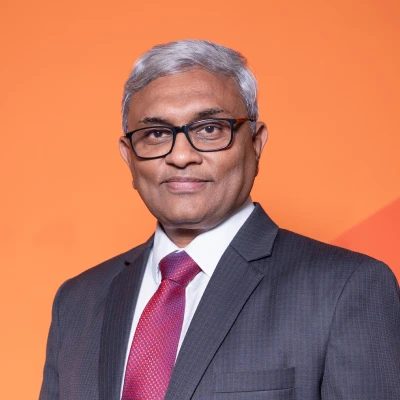
QNu Labs (legal name QuNu Labs Private Limited, CIN U72900KA2016PTC096629) was incubated at IIT Madras Research Park in Chennai in 2016 and later moved its headquarters to Bengaluru. Its founders are older than the typical Indian startup team. Sunil Gupta (co-founder and CEO) and Srinivasa Rao Aluri (co-founder and chairman) each had more than three decades in corporate technology before QNu. Mark Mathias heads production. Professor Anil Prabhakar of IIT Madras's electrical engineering department, a specialist in photonics, is technical adviser. The company describes itself as India's first quantum-cryptography company.
The company's pitch is simple: most of today's encryption (RSA, elliptic-curve) can in principle be broken by a large enough quantum computer. Adversaries can record encrypted traffic today and decrypt it later (harvest now, decrypt later). Governments, militaries and banks with long-lived secrets therefore need to move to quantum-safe methods before such a computer exists. Gartner, quoted by QNu, places a cryptographically relevant quantum computer in the 2030–2035 window.
Two ways to become quantum-safe, and why QNu sells both
| Route | How it works | Who buys it | QNu product |
|---|---|---|---|
| Quantum key distribution (QKD) | Keys are sent as single photons over fibre or free space. Any eavesdropping disturbs the photons and is detected. Needs dedicated optical hardware at both ends and trusted nodes every ~100–200 km. | Defence, government backbones, telecom core, data-centre interconnects | Armos; QKD Network (QKDN); free-space and satellite QKD |
| Quantum random numbers (QRNG) | Hardware that uses quantum effects to produce truly random numbers for keys | HSM makers, banks, telecom, chip and device makers | Tropos; Entropy-as-a-Service (Qosmos) |
| Post-quantum cryptography (PQC) | New mathematical algorithms (NIST FIPS 203/204/205, Aug 2024) that run on ordinary computers. Migration means finding every use of old cryptography and replacing it. | Banks, insurers, enterprises, government IT | Hodos; QShield 2.0 (discover, assess, assure); KyntraQ key management; QConnect VPN; Vedic Kavach browser encryption |
Commercially these are three different businesses. QKD is project hardware with long tender cycles. QRNG is a component business. PQC migration is software and services with potential renewals. The bull case is that QNu can enter large accounts through any of the three doors and cross-sell. The bear case is that each product line is sub-scale on its own.
3 TIMELINE: 2016–2026
| Year | Milestone (company and government records) |
|---|---|
| 2016 | Incubated at IIT Madras Research Park, Chennai |
| 2018 | Launched QKD; first QKD field trial for the Indian Army |
| 2019 | Deployed QRNG; DSCI Most Innovative Product award; YourStory Tech30 |
| 2020 | Armos (QKD) and Tropos (QRNG) launched commercially; won iDEX Open Challenge 2.0 (Ministry of Defence); first defence and enterprise deliveries |
| 2021 | 100 km QKD network demonstrated; Entropy-as-a-Service launched; first QKD lab for Indian defence; first hub-and-spoke QKD order |
| 2022 | 150 km trusted-node QKD system; 300 km+ QKD network with the armed forces; DST National Technology Award; first US patent |
| 2023 | Indian Navy orders 150 km QKD systems; second and third US patents; quantum-secure VPN for the armed forces; Forbes Select 200; pre-Series A round (Dec) |
| 2024 | QShield platform launched; quantum hardware security module (QHSM); PQC algorithm support; free-space QKD; 25 QKD systems delivered to the Navy. Oct: CEO forecasts ₹100 crore FY25 revenue and ₹200 crore FY26 |
| 2025 | ₹60 crore Series A (Apr); 545 km intercity QKD network live; claimed first quantum-safe satellite communication link; FY25 revenue ₹40.5 crore filed |
| Feb 2026 | DST task force report 'Implementation of Quantum Safe Ecosystem in India' sets a 2027–2029–2033 migration path |
| 2026 | 1,000 km quantum-safe network demonstrated; KyntraQ key management launched; Armos and Tropos listed on GeM (government e-marketplace); VIAVI field-performance study |
| 9 Sep 2026 | ₹200 crore Series A1 led by National Quantum Mission and Speciale Invest |
| 19 Sep 2026 | QShield 2.0 and the National Cryptographic Assessment Assurance Framework launched at the 10th-anniversary event |
| 16 Oct 2026 | TDB signs ₹150 crore optionally convertible debt for a ₹300 crore quantum-secure and sensing network project |
4 FUNDING HISTORY & INVESTOR BEHAVIOUR FORENSICS
| Date | Round | Amount | Investors (as reported) | Classification |
|---|---|---|---|---|
| 2016–2022 | Seed / angel / grants | Not consolidated | Angels; iDEX and DST grants | Mixed equity and non-dilutive |
| Dec 2023 | Pre-Series A | Not disclosed publicly | Reported by databases | Equity |
| Apr 2025 | Series A | ₹60 crore (reported) | Led by Speciale Invest per media reports | Equity |
| 9 Sep 2026 | Series A1 | ₹200 crore | National Quantum Mission, Speciale Invest (leads); Sony Innovation Fund, Gaja Capital, Artha Ventures | Equity (allotment filings pending) |
| 16 Oct 2026 | TDB RDI support | ₹150 crore | Technology Development Board under the RDI scheme | Optionally convertible debt; not equity |
What the investor pattern shows
The government is now an equity holder. The National Quantum Mission (₹6,003.65 crore outlay, 2023–24 to 2030–31) leading a round is unusual. It signals that QNu is the state's preferred domestic supplier. It also means government priorities, such as domestic deployment and export controls, will shape strategy.
Speciale Invest re-upped. Speciale, a Chennai deep-tech VC, is the insider that kept investing. Insider follow-on is a positive signal.
Sony Innovation Fund is the only strategic foreign investor. That may help with Japanese telecom and device partners and with QRNG component sales.
Gaja Capital is a growth-oriented PE manager. Its entry suggests the round was priced for later growth, not as a pure venture bet.
80% new money (company figure) means the price was set by outsiders, not just insiders topping up.
| RUPEIA CALCULATION The company says ₹375 crore in total. The Company Check lists ₹344.21 crore across 16 rounds, 12 secondary transfers and 9 convertible or debt financings. The ₹31 crore gap most likely reflects grants, debt or timing. Do not add the ₹150 crore TDB debt to either figure: if it were counted, 'total funding' would read ₹525 crore, which mixes equity with debt. |
|---|
5 FINANCIAL FORENSICS: WHAT THE FILINGS SHOW
| Metric | FY24 | FY25 | Change / reading |
|---|---|---|---|
| Revenue from operations | ₹24.7 crore | ₹40.53 crore | +64% |
| Total expenses | ~₹30.0 crore (Inc42) | Not separately confirmed | FY24 operating gap ~₹5 crore |
| EBITDA | n/a | ₹0.34 crore | Margin 0.8%: roughly break-even before depreciation |
| Net loss | n/a | ₹6.16 crore | Net margin –15.2% |
| Open charges registered | ₹24.26 crore | Security registered over assets; not the same as debt outstanding | |
| EPFO-linked employees | 58 (database) | Company says 160 engineers; contractors and the US subsidiary likely explain the gap |
Two things stand out. First, QNu is not a cash furnace by deep-tech standards. A ₹6 crore net loss on ₹40 crore of revenue is small. Even with the new hiring, the ₹200 crore equity gives a long runway. Second, the forecasting record is poor. The CEO forecast ₹100 crore for FY25 and ₹200 crore for FY26 in October 2024. FY25 came in at ₹40.5 crore. The 2026 target is ₹80 crore for FY27, a year later than the original ₹100 crore. That is a 20% lower number delivered two years later than first promised.
| Path to the ₹80 crore FY27 target | FY25 actual | FY26 needed | FY27 target | Implied CAGR |
|---|---|---|---|---|
| Even growth path | ₹40.5 crore | ₹57 crore | ₹80 crore | ~40% a year |
| If FY26 repeats FY25's +64% | ₹40.5 crore | ₹66 crore | ₹80 crore needs only +21% | — |
6 CUSTOMER & CONTRACT INTELLIGENCE
| Customer / programme | What is known | Grade | Commercial reading |
|---|---|---|---|
| Indian Navy | 25 QKD systems delivered in 2024; 150 km QKD systems ordered in 2023 | A | Anchor defence account; value undisclosed |
| Indian Army | First QKD field trial (2018); 300 km+ network; quantum-secure VPN | A/D | Long relationship; repeat trials |
| DRDO, WESEE, BEL | Deliveries listed by DST/PIB | A | Defence R&D and system integrators; BEL is also a channel to larger programmes |
| iDEX (Ministry of Defence) | Open Challenge 2.0 winner | A | Grant-funded prototype route into defence procurement |
| TDB / DST quantum-secure network project | ₹300 crore project with ₹150 crore TDB debt | A | Builds a national quantum-secure and sensing network; QNu contributes part of the Series A1 money |
| GeM listing | Armos and Tropos buyable on the government e-marketplace | A | Shortens small government purchases; signals product standardisation |
| Enterprise / BFSI | Website lists banking, telecom and automotive verticals; no named bank customer published | D | The proof point still missing for the software story |
The 2024 PTI interview said most revenue then came from government buyers, and management expected private enterprises to exceed 50% later. No subsequent disclosure confirms that shift. Until QNu names a bank, telecom operator or large enterprise as a paying QShield customer, Rupeia treats the business as defence-led.
7 PIPELINE-TO-REVENUE: HOW QNU MAKES MONEY
| Revenue line | Unit of sale | Indicative deal size | Margin character | Recurring? |
|---|---|---|---|---|
| Armos QKD links and networks | Pair of endpoints plus integration, per link or network | ₹ crores per network (undisclosed) | Hardware: imported photonics, detectors, lasers | Low; AMC 10–15% possible |
| Tropos QRNG | Module or appliance; entropy service | ₹ lakhs per unit | Component margins | Partly (EaaS) |
| QShield 2.0 / NCAAF | Platform licence plus assessment | ₹1–2 crore per deal (CEO) | Software margins after implementation | Yes, if renewed |
| Services (migration, training, QNu Academy) | Project hours; courses | Small | Services margins | No |
| RUPEIA CALCULATION A ₹10–15 crore QShield 2.0 pipeline at ₹1–2 crore per deal is roughly 5–15 deals. Even if all closed, it would add 12–37% to FY25 revenue. The software line is promising but far too small to carry the ₹80 crore target. FY27 still depends mostly on hardware and government projects. |
|---|
8 THE POLICY ENGINE: INDIA'S QUANTUM-SAFE ROADMAP
The single biggest change since the draft note is policy. In February 2026 the Department of Science and Technology, under the National Quantum Mission, published 'Implementation of Quantum Safe Ecosystem in India – Report of the Task Force'.
| Phase | Who | What the task force asks for |
|---|---|---|
| 2027 | Critical infrastructure: defence, power, telecom, space (ISRO), DRDO, oil and gas (ONGC) | Build foundations: inventory cryptography, set up governance, begin formal PQC implementation |
| By end-2029 | Critical infrastructure | Complete migration to quantum-safe cryptography |
| By 2033 | Broader enterprise | Wider adoption |
| Funding | Critical sectors | Commentators cite a need for about ₹5,000 crore of dedicated spend; the recommendation is not yet a budget line |
Two points matter for QNu. The report prefers PQC as the default and recommends QKD only where higher assurance is needed. That is good for QShield and Hodos, and it narrows the QKD market to defence and backbone links. Second, QNu's National Cryptographic Assessment Assurance Framework is named and timed to plug straight into the 2027 'build foundations' phase. If ministries and regulators (RBI, SEBI, TRAI, CERT-In) turn the roadmap into binding circulars, QNu's addressable market moves from a defence niche to every regulated entity.
| WATCH A binding RBI or CERT-In circular requiring a cryptographic inventory by a fixed date would be the most valuable single event for QNu's software line. None has been issued as of 6 November 2026. |
|---|
9 TECHNOLOGY: WHAT THE EVIDENCE SHOWS
Protocol. Armos uses a proprietary decoy-state differential phase shift (DPS) protocol. QNu says this roughly doubles the usable range compared with standard QKD.
Range. In a 2026 study with VIAVI Solutions on VIAVI's MAP-300 test platform, Armos distributed keys over 200 km of standard telecom fibre at up to 40 dB channel loss without amplification. It ran alongside live classical traffic with no degradation and recovered automatically from disruptions. Toshiba's published spec, for comparison, quotes about 300 kb/s key rate at 10 dB loss. The two are measured differently, so they cannot be ranked.
Networks. A 150 km trusted-node system (2022), a 545 km intercity network (2025) and a 1,000 km demonstration (2026). Long QKD networks need trusted nodes, which are physically secured relay sites. Those are a cost and a security assumption.
Patents. At least three US patents (2022–23). In 2019 the company had filed three patents and planned eight more.
Free-space and satellite. Free-space QKD achieved in 2024; a claimed quantum-safe satellite link in 2025. This links QNu to India's space and defence programmes (see Pixxel and Skyroot reports).
10 MARKET & COMPETITIVE ANALYSIS
| Vendor | Home | Scope | Overlap with QNu | Edge vs QNu |
|---|---|---|---|---|
| Toshiba | Japan | Fibre QKD systems; multiplexed QKD with classical traffic | Direct (Armos) | Scale, telecom references (BT, KDDI); not a domestic Indian supplier |
| ID Quantique (majority-owned by IonQ since 2025) | Switzerland / US | QKD, QRNG chips (used in Samsung phones) | Direct (Armos, Tropos) | QRNG volume in consumer devices; IonQ balance sheet |
| QuantumCTek | China | QKD backbone (Beijing–Shanghai) | Not available to India | World's largest QKD deployments; shows the state-backed model |
| IBM Quantum Safe | US | Crypto discovery, inventory, remediation | Indirect (QShield) | Enterprise trust and existing bank relationships |
| Thales, Entrust, Utimaco | Europe / US | PQC-ready HSMs and PKI | Indirect (QHSM, PKI) | Installed HSM base in every Indian bank |
| QuSecure, SandboxAQ, PQShield | US / UK | Software PQC migration | Indirect (QShield, Hodos) | Funding (SandboxAQ raised >US$450m); global enterprise sales |
| C-DOT, DRDO labs, IIT/RRI teams | India | Government QKD R&D | Partner and competitor | Own the national programmes; QNu can be the industrial partner |
Indian quantum ecosystem position
Among the startups backed by the National Quantum Mission, QpiAI builds quantum computers, BosonQ Psi builds quantum simulation software and QNu Labs is the security specialist. In quantum communication, QNu is the only domestic vendor with defence production orders. That status is both the moat and the risk: much depends on a single customer, the Indian state.
11 MOAT ANALYSIS: WHAT PROTECTS QNU, AND FOR HOW LONG
| Moat source | Strength | Durability | Comment |
|---|---|---|---|
| Domestic sovereign supplier status | Strong | 5+ years | Defence prefers Indian-designed crypto; foreign QKD faces trust and import hurdles |
| Government as investor (NQM) | Strong | Medium | Aligns incentives; may also invite rival state-backed entrants |
| Field heritage (Army, Navy, 1,000 km) | Medium–strong | 3–5 years | Hard for a new entrant to replicate quickly |
| Patents and DPS protocol | Medium | 3–5 years | Protocols can be designed around |
| Software platform (QShield 2.0) | Weak–medium | Unproven | Competes with IBM, Thales and global PQC specialists that already sell to Indian banks |
12 TEAM, GOVERNANCE & PEOPLE
| Role | Name | Note |
|---|---|---|
| Co-founder & CEO | Sunil Gupta | Public face; three decades in technology businesses |
| Co-founder & Chairman | Srinivasa Rao Aluri | Board chair |
| Head of Production | Mark Mathias | Founding team |
| Technical Adviser | Prof. Anil Prabhakar (IIT Madras) | Photonics; academic anchor |
| CFO | Samir Kulshrestha | Finance lead ahead of growth rounds |
| CPO / CGO / CDO / CMO / CHRO | Dilip Singh / Rahil Patel / Sunil Bhide / Sudiptaa Paul Choudhury / Neeti Arora | A full C-suite, unusual for a ₹40 crore revenue company |
| Board | Aluri, Gupta, Sushil Mehta, Rostow Ravanan, Vishesh Rajaram (Speciale), Dimple Sadhwani, Lt Gen Rajesh Pant (retd), Vinay Khattar | Lt Gen Pant was India's National Cyber Security Coordinator; Ravanan is ex-CEO of Mindtree |
| Advisory board | Dr Ajay Kumar (ex-Defence Secretary), Dr Subir Sachdev, Senthil Sambandam, Arun Seth, Vinod Sood, Varun Chopra | Strong defence and policy access |
Governance reading: the board is heavy with defence and policy credentials. That helps with procurement but means few directors have run a software business at scale. A full C-suite on a ₹40 crore revenue base raises fixed costs ahead of revenue, which explains why the round was needed.
13 VALUATION ANALYSIS
QNu has not disclosed the Series A1 price. Tracxn and PitchBook carry a figure but mask it. Rupeia does not reverse-engineer a valuation from database estimates. The table below shows what the round would imply under different dilution assumptions, so investors can test any secondary price they are offered.
| If ₹200 crore bought… | Implied post-money | x FY25 revenue (₹40.5 cr) | x FY27 target (₹80 cr) |
|---|---|---|---|
| 15% of the company | ₹1,333 crore | 33x | 17x |
| 20% | ₹1,000 crore | 25x | 12.5x |
| 25% | ₹800 crore | 20x | 10x |
| 30% | ₹667 crore | 16x | 8x |
| RUPEIA READING A Series A1 led by a government mission and a deep-tech VC is typically priced at dilution of 15–25%. That would put post-money at roughly ₹800–1,300 crore (US$90–150m), 10–17x the FY27 target. Any secondary offer above that range is paying for the software story before it is proven. |
|---|
14 SCENARIO ANALYSIS: WHAT MOVES THE NEXT VALUATION
| Scenario | Probability (Rupeia) | What has to happen | FY27 revenue | Next-round effect |
|---|---|---|---|---|
| Bull | 25% | RBI/CERT-In circulars make cryptographic inventory mandatory; QShield 2.0 signs 15+ BFSI and telecom accounts; TDB network project awards follow-on QKD orders | ₹100 crore+ | Series B at a premium; strategic interest from Thales, IBM or a defence PSU |
| Base | 50% | Defence orders continue; software adds ₹10–20 crore; target roughly met | ₹65–85 crore | Flat-to-modest step-up; Series B in 2028 |
| Bear | 25% | Procurement slips, private PQC buyers choose global vendors, hardware margins compress | <₹55 crore | Down round or dependence on government debt conversion |
15 REGULATORY & EXPORT-CONTROL SURFACE
Export controls. Quantum cryptography and QKD equipment are dual-use items under the Wassenaar Arrangement and India's SCOMET list. Exports (including via the US entity enQase) need licences. That limits the speed of global expansion.
Government-linked capital. NQM equity and TDB debt usually carry reporting, domestic-manufacturing and milestone covenants. Optionally convertible debt can convert into equity and dilute other shareholders.
Procurement. Defence buys through DAP-2020 and iDEX; civil buyers through GeM. Long tender cycles create lumpy revenue and receivables.
Standards. NIST FIPS 203/204/205 (2024), ETSI QKD standards and the Telecommunication Engineering Centre's (TEC) Indian QKD standards. Certification against the TEC and ETSI standards will decide eligibility for telecom tenders.
16 EXIT ANALYSIS
| Route | Likelihood (5–7 yrs) | Precedent | Comment |
|---|---|---|---|
| Strategic sale to a global security vendor | Medium | IonQ acquired a majority of ID Quantique (2025) | Defence-sensitive IP may need government approval for a foreign buyer |
| Sale to an Indian defence or IT major | Medium | BEL, L&T, Tata Advanced Systems building defence electronics portfolios | Most likely route if defence stays dominant |
| Indian IPO (Mainboard or SME) | Low–medium | Data Patterns, ideaForge, Zen Technologies listed with ₹100–300 crore revenue | Needs ₹150 crore+ revenue and profits; 2029+ |
| Secondary to later-stage funds | Medium | Common in Indian deep tech | Most realistic liquidity for early holders |
17 RISK ANALYSIS: RED FLAG LEDGER & KILL CONDITIONS
| Risk | Severity | Evidence | Kill condition |
|---|---|---|---|
| Forecasting credibility | High | FY25 ₹40.5 crore vs ₹100 crore forecast | FY26 filing below ₹50 crore |
| Customer concentration (government) | High | Defence-led revenue; no named private customers | No named BFSI or telecom QShield customer by end-FY27 |
| QKD market narrowed by policy | Medium | Task force favours PQC; QKD only for higher assurance | Defence QKD orders stall for two consecutive years |
| Global software competition | Medium | IBM, Thales, SandboxAQ already in Indian banks | Banks select global PQC vendors in the first RBI-led wave |
| Dilution from convertible debt | Medium | ₹150 crore optionally convertible TDB debt | Conversion terms disclosed at a discount to the Series A1 price |
| Working capital | Medium | ₹24 crore registered charges; government receivables | Receivable days above 180 |
| Fixed-cost build | Medium | Full C-suite and US entity on ₹40 crore revenue | Net loss above ₹40 crore in FY27 without matching revenue |
18 INVESTOR CLASS ANALYSIS
For HNIs
Direct access is rare. If shares are offered in the unlisted market, ask for the Series A1 price per share in writing and check the latest MCA allotment filing (PAS-3) before paying. Expect to hold for at least 5–7 years.
For family offices
The best route is co-investment alongside Speciale Invest or Gaja Capital in a Series B, or a commitment to their funds. Diligence should cover FY26 accounts, the TDB conversion terms and the defence receivables ageing.
For institutions
Banks and insurers are more natural customers than investors. Strategic corporate venture arms (telecom, defence PSUs) could use a minority stake to secure supply.
For NRIs
NRIs can hold unlisted Indian shares under FEMA non-debt instrument rules on a repatriable or non-repatriable basis. Defence-linked sectors may face sectoral FDI caps and security clearance. Check before buying any secondary.
19 COMFORT FIT: THE DECISION PAGE
| If you want… | Best fit | Why | Caution |
|---|---|---|---|
| Indian sovereign quantum security | QNU LABS | Only domestic full-stack vendor; government anchor | Revenue missed forecast; valuation undisclosed |
| Listed quantum exposure | IonQ (owns ID Quantique), Arqit | Liquid; global | Extreme volatility; US-listed |
| Indian defence electronics with profits | Data Patterns, BEL | Listed, profitable, order books disclosed | Not pure-play quantum |
| Diversified Indian deep tech | Deep-tech AIFs (e.g. Speciale, IITM Frontier Fund I) | Portfolio across space, quantum, semis | 10–12 year lock-in |
20 THE EARLY SIGNAL: EVENTS TO WATCH
| When | Event | Why it matters |
|---|---|---|
| Nov 2026–Jan 2027 | FY26 accounts filed with the MCA | Shows whether FY26 moved toward the ₹80 crore FY27 path |
| Q4 2026 | PAS-3 allotment filing for the Series A1 | Reveals the price per share and implied valuation |
| 2027 | RBI, SEBI or CERT-In circulars on PQC migration | Turns the task-force roadmap into budgets |
| 2027 | Drawdowns and milestones under the TDB ₹300 crore project | Tests execution on a national network |
| Ongoing | First named BFSI or telecom QShield 2.0 customer | The proof point for the software thesis |
21 RUPEIA FINAL INDEPENDENT VIEW
QNu Labs has done the hard part of deep tech. Its products work in the field, the Indian military uses them, and the government has invested in it directly. The February 2026 task force has handed the industry a migration calendar. What QNu has not done is turn that position into predictable revenue: the company missed its own FY25 forecast by 59% and has reset expectations to ₹80 crore for FY27. The ₹200 crore round buys time and a sales force. The next 12 months will show whether QShield 2.0 can win enterprise renewals or whether QNu stays a defence-hardware supplier with a software ambition.
| THE RUPEIA NUMBER ₹40.5 crore of FY25 revenue against a ₹100 crore forecast. The FY26 filing is the next test. |
|---|
| RUPEIA VERDICT Strategically important, commercially unproven. Suitable only for patient deep-tech capital through funds or negotiated co-investment. Do not pay a secondary premium until FY26 accounts and the Series A1 allotment price are public. |
|---|
Frequently asked questions
How much did QNu Labs raise in 2026?
₹200 crore (about US$21–23m) in a Series A1 announced on 9 September 2026, led by the National Quantum Mission and Speciale Invest. Separately, the Technology Development Board agreed ₹150 crore of optionally convertible debt on 16 October 2026.
What is QNu Labs' valuation?
Not disclosed. Rupeia's arithmetic suggests ₹800–1,300 crore post-money if the round diluted holders by 15–25%, but this is illustrative, not reported.
What is QNu Labs' revenue?
₹40.5 crore in FY25, up 64% from ₹24.7 crore, with a ₹6.2 crore net loss. The company targets ₹80 crore in FY27.
Who founded QNu Labs?
Sunil Gupta (CEO) and Srinivasa Rao Aluri (chairman), with Mark Mathias and IIT Madras professor Anil Prabhakar, at IIT Madras Research Park in 2016.
What does QNu Labs sell?
Armos quantum key distribution, Tropos quantum random-number generators, the QShield 2.0 quantum-safe platform, Hodos post-quantum cryptography and related VPN, messaging and drone-security products.
Who are QNu Labs' customers?
Mainly Indian defence: the Navy, Army, DRDO, WESEE and BEL. It targets banks, telecom and enterprises through QShield 2.0, but has not named private customers.
Who are QNu Labs' competitors?
Toshiba and ID Quantique in QKD hardware; IBM, Thales, SandboxAQ, QuSecure and PQShield in post-quantum software.
Can I buy QNu Labs shares?
Only through rare private secondary transactions or funds that hold it. There is no listed route.
Source log
QNu Labs: ₹200 crore round announcement (9 Sep 2026)
Moneycontrol: QNu Labs raises Rs 200 crore (9 Sep 2026)
The Quantum Insider: QNu Labs raises ₹200 crore led by National Quantum Mission and Speciale Invest (9 Sep 2026)
Dealroom: QNu Labs raises $21M Series A1
PIB / Technology Development Board: ₹150 crore RDI agreement (16 Oct 2026)
QNu Labs newsroom: FY27 ₹80 crore target and QShield 2.0 pipeline (CNBC-TV18)
QNu Labs: QShield 2.0 and NCAAF launch (19 Sep 2026)
QNu Labs: Armos QKD carrier-grade performance study with VIAVI
QNu Labs: About Us (team, board, milestones)
DST: Quantum Safe Ecosystem in India, task force report (Feb 2026)
ORF: India's post-quantum cryptography migration roadmap
PIB: QNu Labs deliveries to defence (25 QKD systems to Navy) (25 Mar 2025)
DST: QNu Labs quantum-safe heterogeneous network
The Company Check: QuNu Labs Pvt Ltd financial summary
Inc42: QNu Labs financials
Tracxn: QNu Labs company profile
YourStory: Tech30 profile of QNu Labs (Oct 2019)
NIST: FIPS 203, 204 and 205 approved (13 Aug 2024)
Toshiba QKD products
ID Quantique
IBM Quantum Safe
QuSecure QuProtect
| DISCLAIMER This report is independent research by Rupeia Investments Co. built only from public sources as of the date shown. It is not an offer, solicitation or investment advice, and it is not a recommendation to buy or sell any security. Private-company figures are drawn from filings and media reports and may be revised. Unlisted and private-market investments are illiquid and carry a risk of total loss. Investors should take independent advice. |
|---|